
- All
- Recipe
- Uncategorized
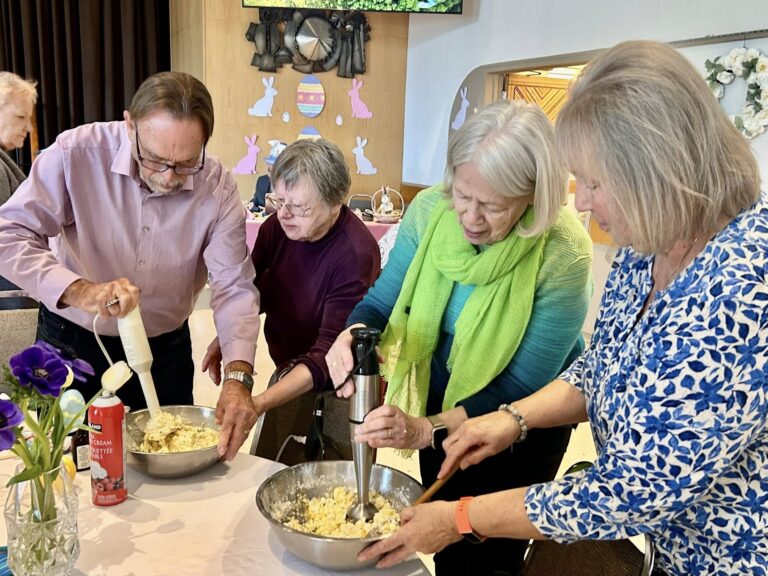
The ‘Truly Latvian Easter Paska Competition,’ led by Māra Gulēna and Elizabete Ludvika, was held at the Toronto Latvian Seniors Association (TLPA) gathering on April 17, 2025.
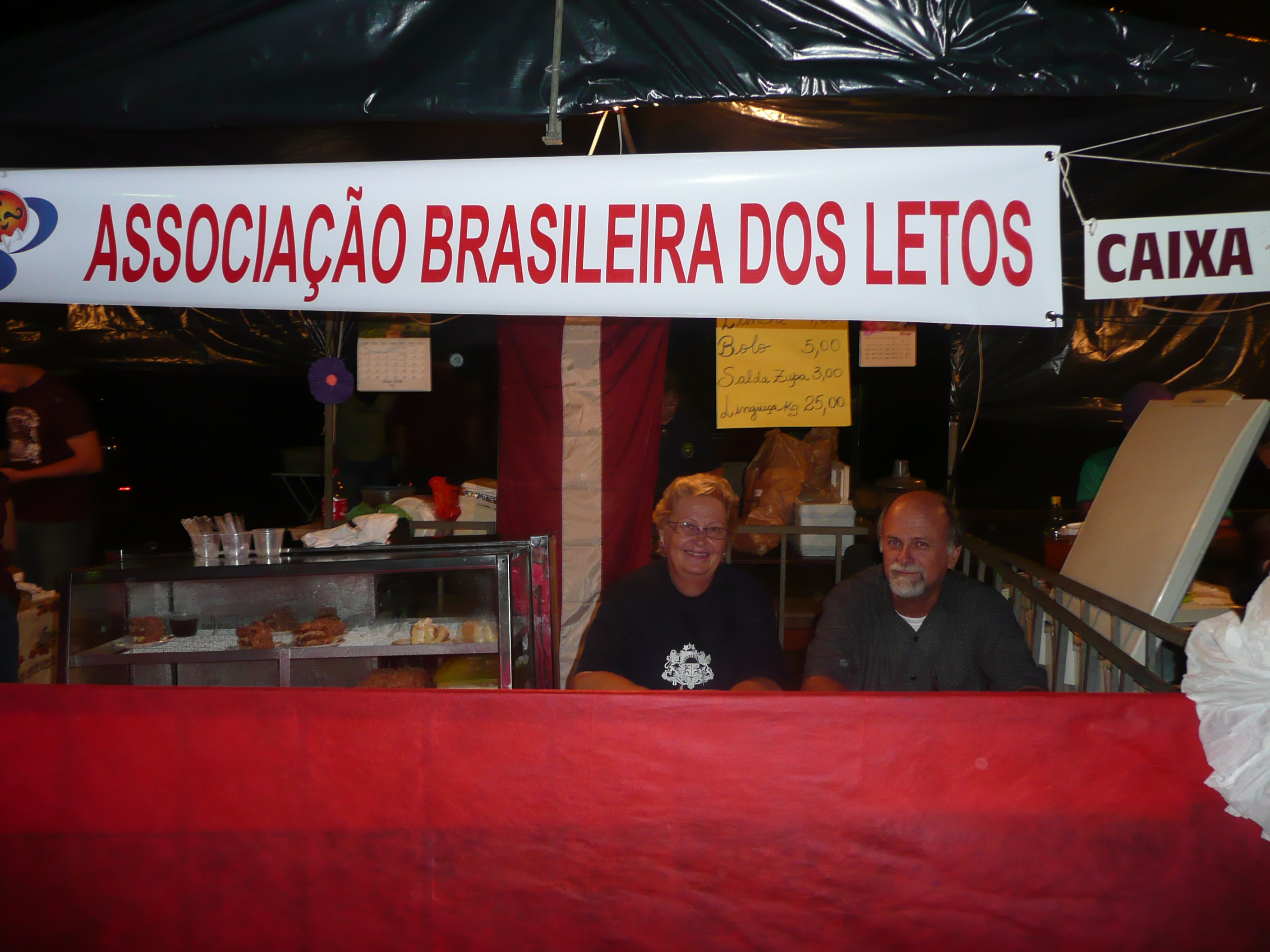
In 2009, the museum went on an expedition to Brazil. During the expedition, a multicultural food market in the city of Americana was also visited, where local Brazilian Latvians had their own stand offering traditional Latvian dishes. One of the dishes available for purchase was “sweet soup.” The photo shows Erliņš Arājs with his sister Nansi.

Fragments from an interview with Inese Grava-Gubiņa, July 13, 2025.
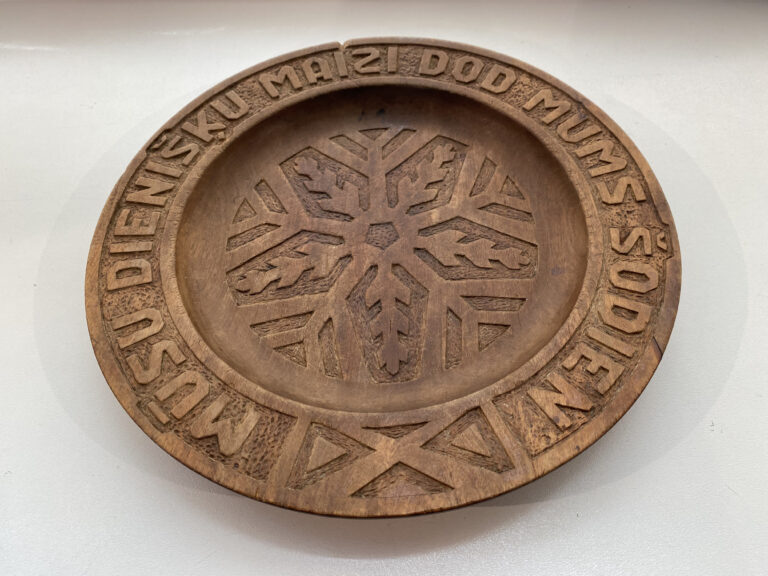
The Liepāja handicrafts teacher Rudolfs Fridrihs Grava made this bread platter in 1929 as a wedding anniversary gift for his wife, Irma Grava (née Mindenbergs). Irma and Rudolfs took this platter with them when they fled with their four youngest children during the Second World War, leaving Liepāja aboard an evacuation ship. Later, they packed the platter among their belongings when moving from a refugee camp in Germany...
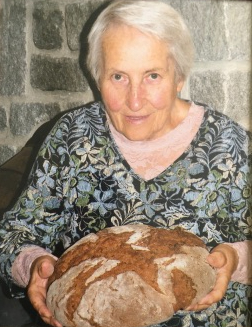
Mārite Krūze (USA) tells the story of her mother, Valentīne Upats (née Macāns, born in Rēzekne in 1924), and her bread baking. My mother, Valentīne Upats, recalled how she began baking rye bread during her retirement years. Her bread became very popular in our New Jersey congregation. She baked with great joy and generously shared her bread with others. The well-known Visvaldis Dzenis even wanted to purchase a...

Excerpt from an interview with Smudirīte Jinkinson in the United Kingdom in 2016, when the museum visited her during a field expedition: And then, when we arrived in Corby, somehow - I don’t know how - they [my parents] found out that rye flour could be ordered from Scotland. So they ordered flour from Scotland, and then my mother baked bread almost every week. Because really, as she...
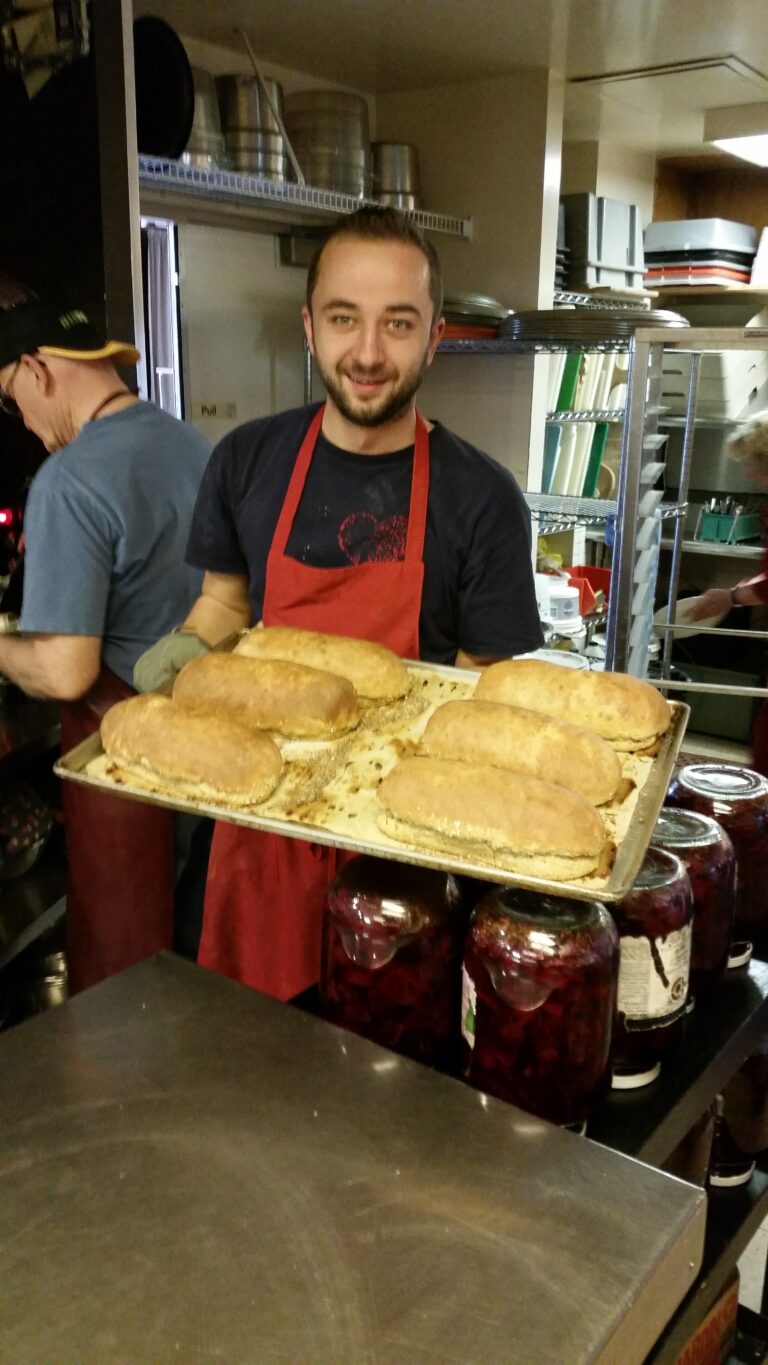
The Latvians Abroad museum met Mareks Nēgels in 2015 at the Toronto Latvian centre - he was baking "Lett's Bake" sourdough.
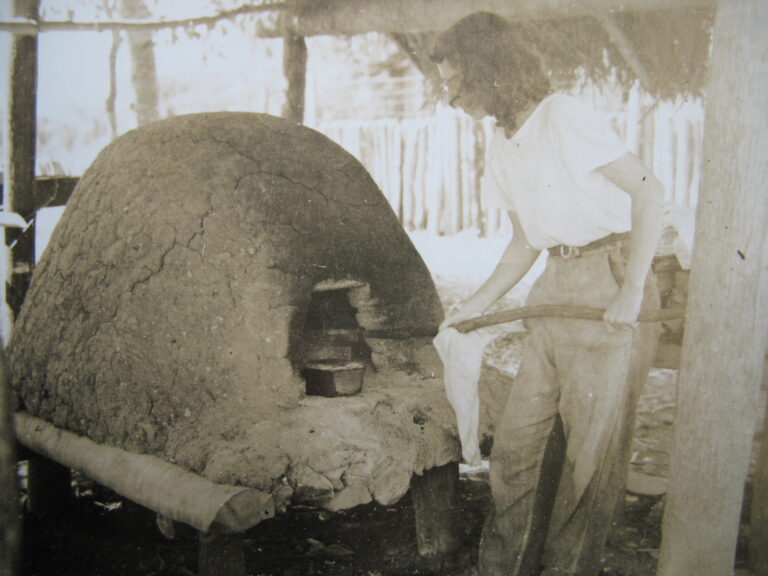
Aleksandrs Ziemeļs’s wife, Edīte (Edith Louise Bray Siemel), stands by a bread oven built from an anthill.
Excerpt from an interview with Inta Grunde and Valdis Bašēns in Philadelphia, USA, in 2015, when the museum met them during a field expedition: Inta: My mother always looked for what she called bolted flour. Not the dark rye flour, but bolted flour. It’s very hard to find here. I have to drive half an hour north to a kind of warehouse, where I have to place a...
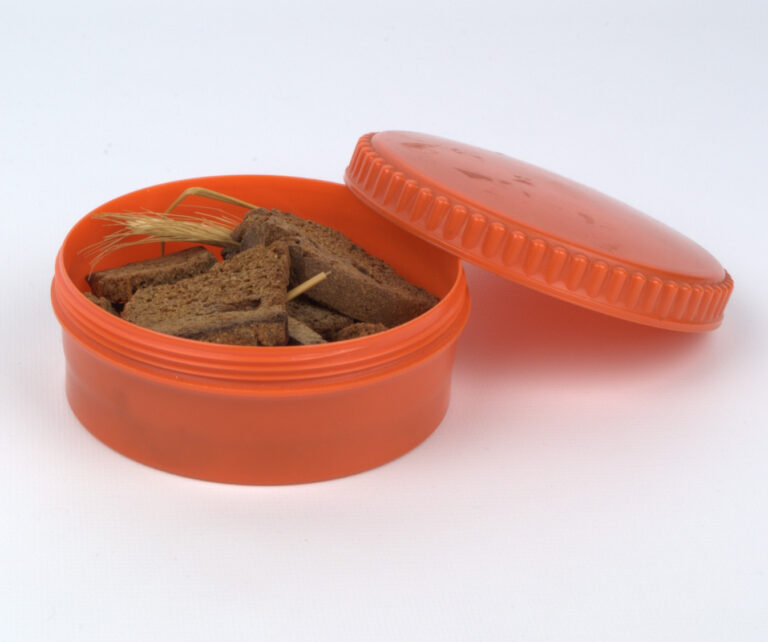
Vilhelms Griķis’ butter container, in which he kept symbols of home, taken from Latvia during the refugee journeys of the Second World War: rye bread, ears of grain, and santims (coins). Such orange bakelite butter/fat containers were issued to soldiers in the German army.
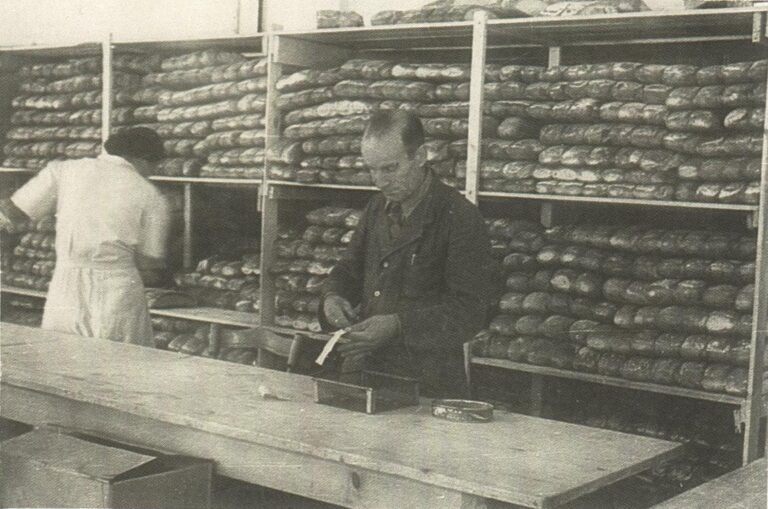
Documents of master baker Kārlis Atars from the collection of the museum “Latvians Abroad". Before the Second World War, Kārlis owned a bakery on Avotu Street in Riga. After the war, while living in a displaced persons camp in Schleswig, Germany, he worked at a bakery run by the United Nations Relief and Rehabilitation Administration (UNRRA), baking bread for refugees. After immigrating to Canada and settling in the...
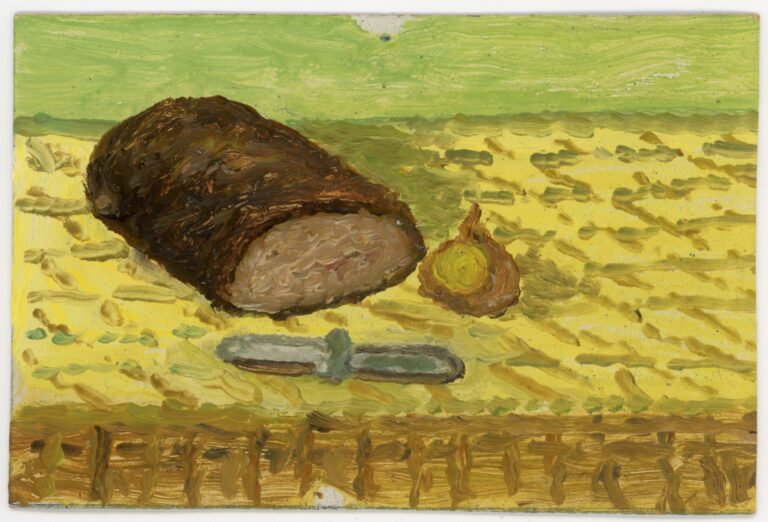
In a letter held in the collection of the museum Latvians Abroad, Kristaps Jaunzemis writes from Latvia to his wife Zinaīda in Nebraska on July 18, 1959: It may sound strange, but what if during my leave in the countryside I could get hold of one “proper” country loaf of bread—dried and sent to you? It seems so hard to believe that for a full fifteen years you...