

Soups for Charity (Anita Jurevica)
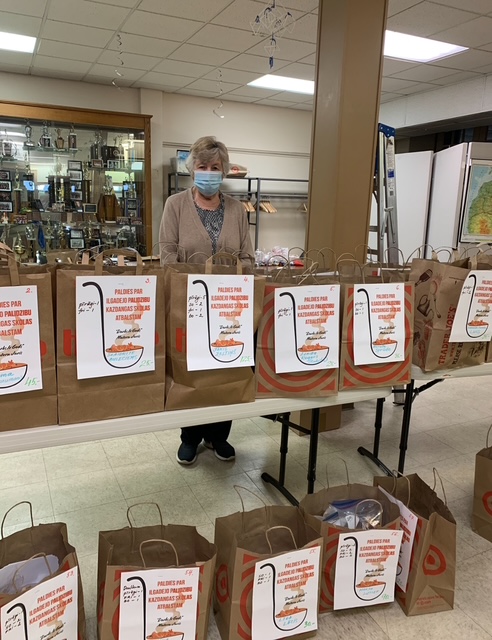
Anita Jurevica talks about a charity initiative—soup lunches—that she organizes every year in Minneapolis, USA. For 17 years, this initiative has become a testament to warmth, togetherness, and Latvian traditions.
Squirrel Sorrow Soup

During the period I lived in Germany, a new name emerged for one of my favorite Latvian dishes — sorrel soup. At that time, in everyday life I mostly spoke English, and someone once asked me what I was making. I said it was “sorrel soup.” Since “sorrel” sounds a bit like “sorrow” or even “squirrel” (after all, who knows what those strange Latvians are really stewing in their kitchens 😄), ever since then sorrel soup has been “squirrel sorrow soup” to me. It’s one of my go-to autumn dishes when I’m abroad, because I crave something dark, thick, and hearty — and fresh sorrel is rarely available. In Latvia, though, I would eat it more in spring, when the first greens appear. Traditionally, you’d have some leftover grains in the pantry — barley, pearl barley, potatoes, maybe a piece of smoked meat, and so on.In Eastern European shops you can sometimes buy sorrel in jars, or I bring it with me from Latvia. If you have sorrel, you can gather everything else around it, even if the ingredients aren’t exactly the same as back home. Dried or smoked ribs elsewhere might not be quite the same, but you can get very close to the familiar flavor.
Crystallised ginger piparkūkas (Maija Liiv)
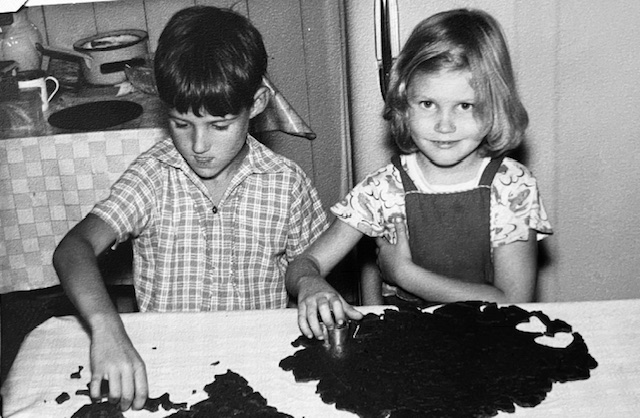
My mother Lauma taught me to make piparkukas when I was a little girl, and I still make them now that I am 75.
I was born in Brisbane, Australia, in December 1950, and lived there all my life until moving 100km north to the Sunshine Coast in 2016.
I still use my mother’s piparkuka recipe, with only a couple of variations. Where my mother used Golden Syrup, I now sometimes use Treacle and brown sugar. We always used to put a slivered almond in the centre of each piparkuka, like generations of my family in Latvia have always done, but now that we live in a ginger-growing area (Buderim) we are placing a small piece of crystallised ginger in the centre of each piparkuka, and find it delicious.
Pīrāgi is a comforting food for me (Māra Goldsmith)

The pīrāgi recipe that Māra Goldsmith uses every year when baking pīŗāgi for Christmas was passed down to her by Mrs. Arnoldija in Sydney. In this interview, Māra talks about a special trick that makes the dough magical. According to her, it is exactly this that allows you to bake the most delicious pīrāgi in the world!
It’s not Christmas without pīrāgi (Anda Cook)
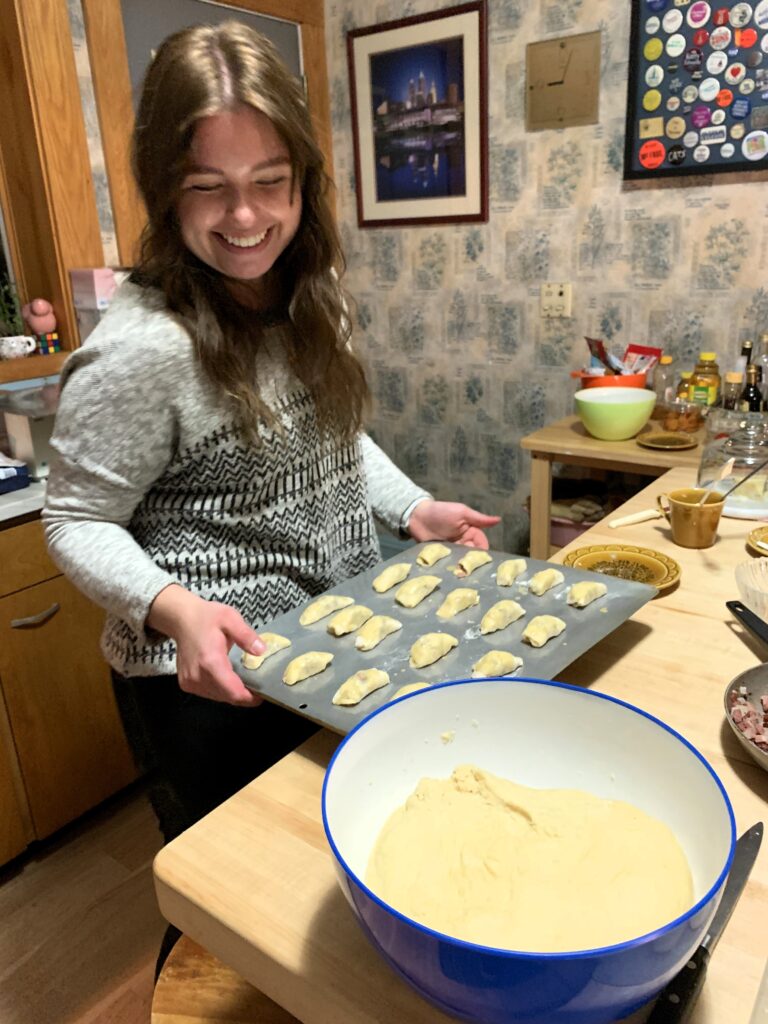
For as long as I can remember, pīrāgi held a place of honor at the Christmas table, and also at Easter. The necessary ingredients were not always easy to find, but my mother made sure to get them in time. In Cleveland, she had discovered a stall at the Westside Market, where she would go after work on Fridays. Her pīrāgi were not only delicious, but she always tried to make them very small, with plenty of meat filling.
My mother has been gone for a long time, and together with my daughter Lisa and granddaughter Greily, we have tried various recipes – but none are quite like my mother’s pīrāgi, neither in appearance nor in taste. The closest we’ve come was a few years ago. We use Dzidra Zeberiņa’s Ģimenes pavards (with a few variations – ed.).
It’s a lot of work, but we listen to Latvian folk songs and linger over memories. Sometimes, it even happens that a pīrāgs gets burned at both ends! And, of course, it’s not Christmas without pīrāgi.
It smells of braised sauerkraut! (Juris Sinka)
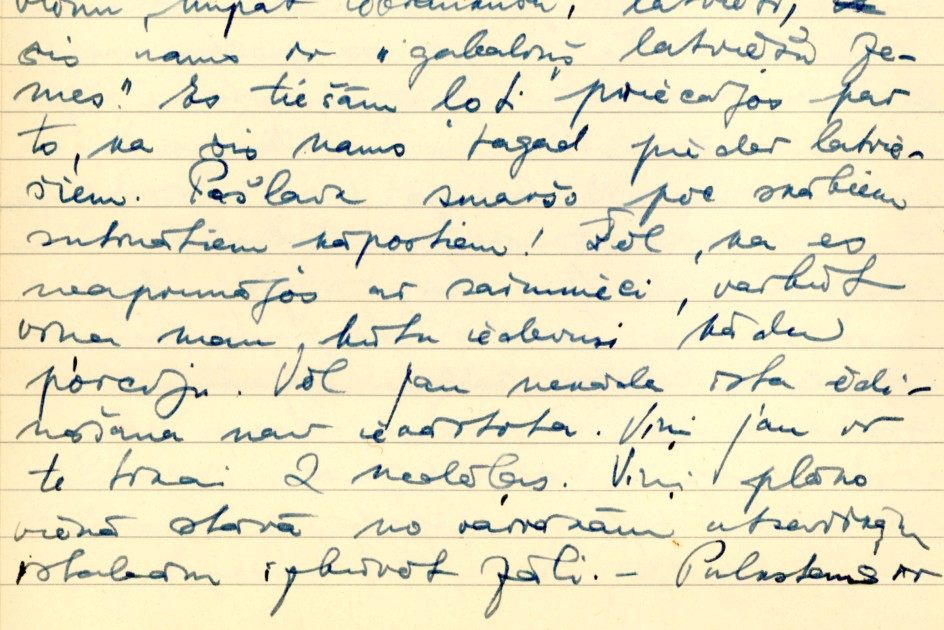
Juris Sinka arrived in the United Kingdom in 1950, where he studied at the University of Oxford. In his diary entry of December 20, 1950, Juris describes how the smell of cabbage filled the recently purchased Daugavas Vanagi house in Queensborough Terrace:
‘I am truly very glad that this house now belongs to Latvians. At the moment it smells of braised sauerkraut! It’s a pity I didn’t talk to the landlady—maybe she would have given me a portion. There isn’t any real catering set up yet. They have only been here for two weeks.’
Communal baking in Shanghai (Ilma Wilkinson)
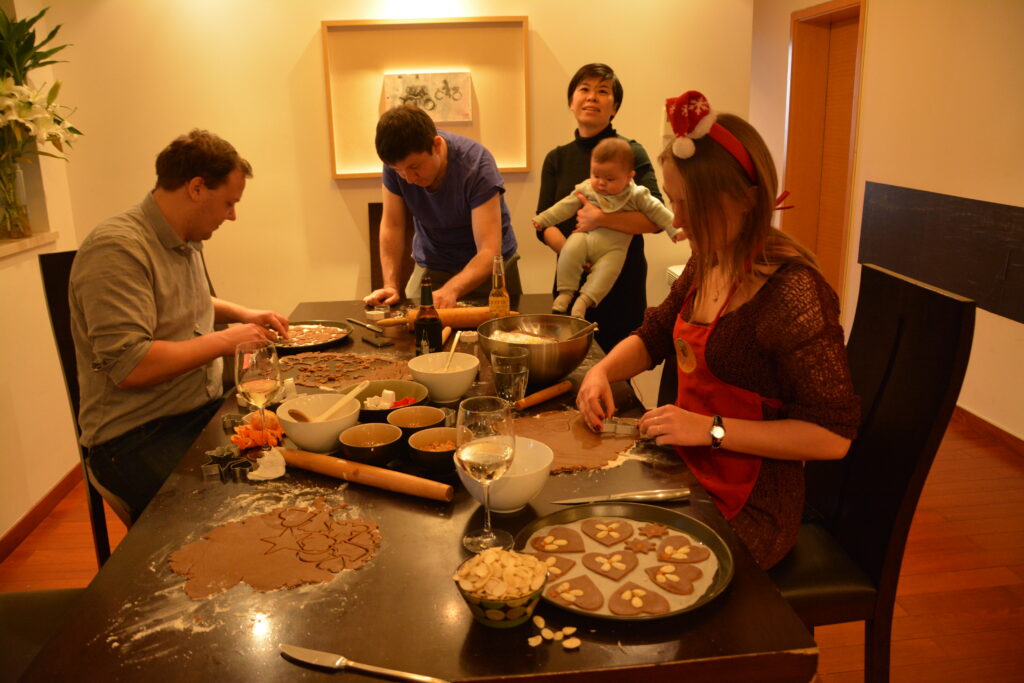
Ilma Wilkinson: “I bake piparkūkas every year — for me, Christmas just isn’t Christmas without “real” Latvian gingerbread. We used to bake together as a family, but when we moved to Shanghai in 2004, we began inviting friends and colleagues to join the tradition — Chinese, Australians, Europeans. In the early years, finding all the necessary spices was more difficult, and some I even had to grind myself.
In 2013, for the first time, the bakers were only Latvians, and the joy of being together was so great that from then on we continued baking gingerbread specifically with the Latvian crowd. We soon added pīrāgi to the tradition as well. Many friends lived in student dorms or apartments without an oven (common in Chinese kitchens), but we were renting a newer apartment and had one available. For those who couldn’t join on the planned baking day, I handed out little portions of piparkūkas dough (which my husband Andrew jokingly called “hashish blocks”) so they could bake at home. By December, our office reception had even gotten used to people dropping by to pick up a lump of dough.
In 2020, we had the largest group ever — because of COVID, many couldn’t travel home for the holidays. That also turned out to be our last Christmas season in Shanghai, as we returned to Australia in October 2021.
To my great joy, I recently received a message from a friend who still lives in China — two years ago, the Latvian Embassy allowed the community to use its kitchen and oven for baking pīrāgi. The new ambassador’s spouse has embraced this as a tradition, and this year, on the first Sunday of Advent, Latvians in Shanghai once again gathered to bake Christmas treats together!”
I wouldn’t offer these to pīrāgi purists! (Maija Hinkle)
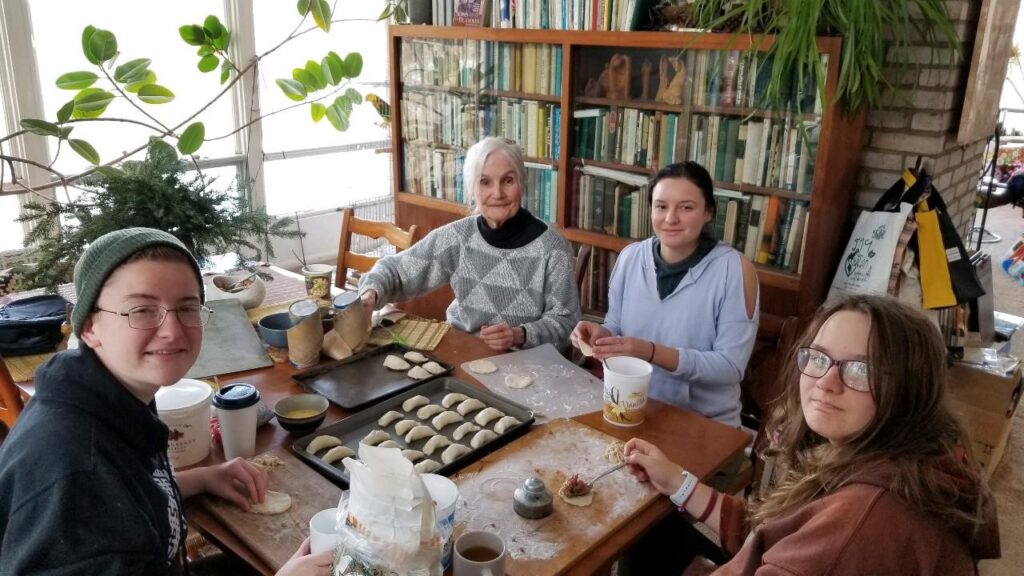
The founder of the Latvians Abroad Museum and Research Center museum shares the story of her family’s pīrāgi baking tradition. The Hinkle family includes several vegetarians, so they have had to invent various filling variations that everyone would enjoy. The family’s creative approach to pīrāgi doesn’t stop at the filling – for convenience, they use store-bought bun dough, and a ravioli press is used to shape the pīrāgi!
Even the cat smells like cabbage… (Irene Kreilis)

Irene Kreilis: “I prepare braised cabbage according to my own recipe: white pepper, bay leaves, fry the bacon, grind it, fry the onions, caraway seeds. A good amount of brown sugar also helps — half a cup. Six hours in the oven. As it bakes, the edges burn, and that’s the most delicious part. I grate carrots. The cabbage can be reheated for a week. The children complained that even the cat smells like cabbage! The whole house smelled — coats, clothes.”
Story recorded and submitted by Dagnija Roderte.
The house smells of smoked meats and rasols for days afterwards! (Laila Rudzone)

Festive table NOVEMBER 2025 The house smells of smoked meats and rasols for days afterwards! (Laila Rudzone) Germany On the holiday table at home, there’s always rosolīts (potato salad). Every year we agree that this time we’ll make a bit less of it, but somehow it always ends up being a big bowl — and it’s always eaten to the last bite. Sometimes we roast chicken or carp with garlic and dill. And the queen of the table is a homemade cake with lingonberry jam and custard cream. You can make lingonberry-apple jam here in Germany too. I couldn’t find fresh lingonberries anywhere, but you can buy them frozen at the Mix Markt store. Then you put the lingonberries in a pot together with peeled apples, a bit of sugar, and a clove or two for flavor. The jam is ready! You can also buy dill at this store — which turns out to be surprisingly hard to find fresh, crisp, and fragrant in other shops, for salads or boiled potatoes. After the home celebrations, the house still smells of smoke and rosolīts for two more days. Story sent in by Laila Rudzone. NOVEMBER news The house smells of smoked meats and rasols for days afterwards! (Laila Rudzone) When fermenting cabbage, you have to kiss over the barrel (Laila Rudzone) Grandma’s secret ingredient used in pickled vegetables (Ana Beatrise Apse-Paese) What I truly miss here when I think of Latvia A once-a-year feast of Latvian specialities (Maija Liiv) Inta talks about celebrations in her home / Philadelphia, USA Amber Table (Dace Gulbe and Inta Grunde) Hostesses in Latvian communities abroad: in different times and countries. Photographs from the collection of the museum Latvians Abroad. Festive tables of Latvian communities abroad: in different times and countries. Photographs from the collection of the museum Latvians Abroad. Ladies’ Committee canapé party! (Inta Šķiņķis) Ladies’ Committees helped maintain the Latvian community (Aija Abens) Mom runs around the stores looking for the “right” kind of cabbage The salmon looks like it’s swimming! (Ingrida Hawke) Searching for Latvian mushrooms How can you shred cabbage without having a beer? (Pēteris Freimanis) Little Māra went into the forest… Ēriks and Aina on mushroom picking Fermenting for three generations in Canada (Aija Zichmane) Liene pickles cucumbers Madara Riley – Mushroom Maddie Certified mushroomer from Michigan (Larisa Mednis) Are you going to send me to mushroom school? (Austra Muižniece) Liene makes kotletes (rissoles) Sauerkraut-making workshop in Melbourne No posts found