

Alma’s kneading trough (Alma Upesleja)
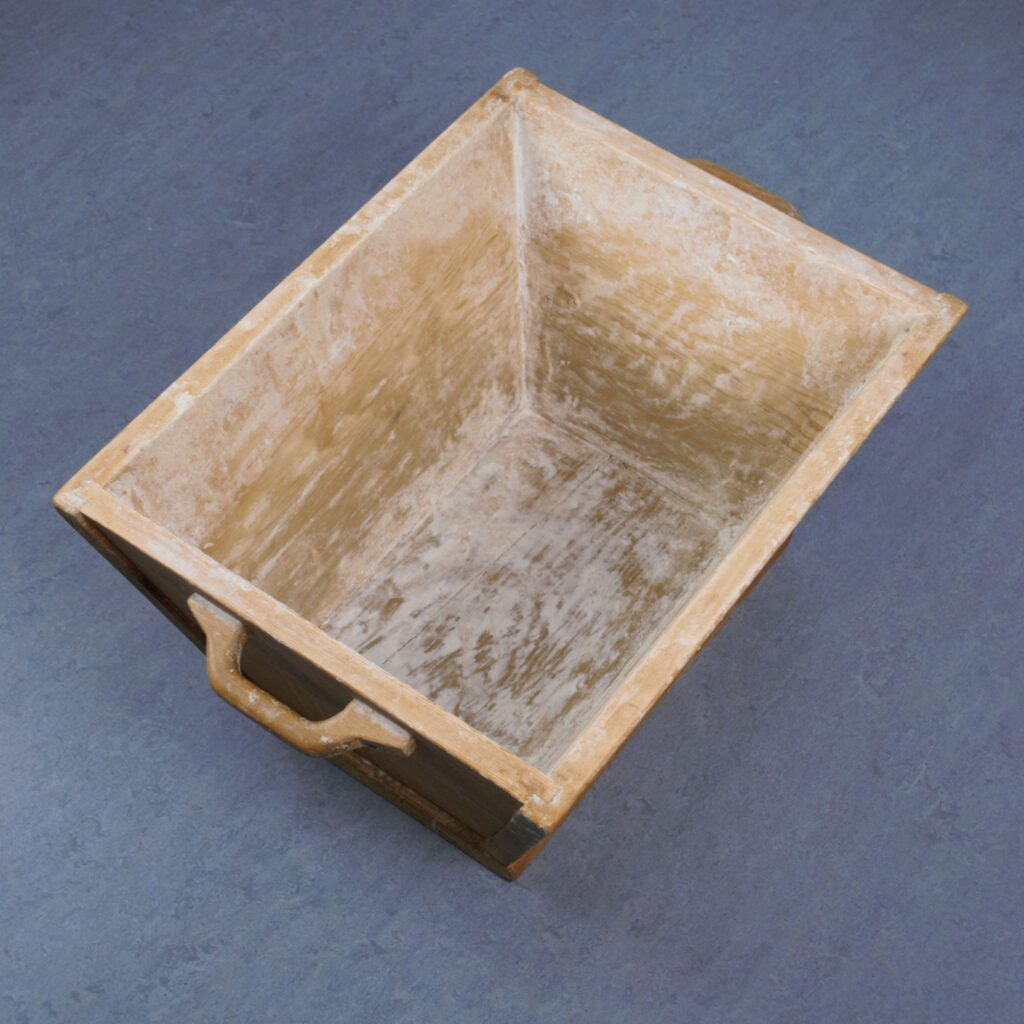
This kneading trough was made by Kārlis Upesleja (1902–1989) for his wife Alma (1906–2002) after their arrival in the United States, so that she could continue baking Latvian bread even while living in exile. Alma baked rye bread for her family and also for the Latvian community in Milwaukee, Wisconsin. Their daughter Anna Vējiņa (1932–2015) inherited the trough and continued her mother’s role—baking rye bread. In memory of Anna, the Milwaukee congregation’s newsletter states: “We thank God for Anna’s service both on the parish council, in the Daugavas Vanagi, at the Latvian House, and in the Credit Association. The bread she baked brought blessings to countless Latvians!”
The linen towel, with the monogram AU (Alma Upesleja), was most likely brought from Latvia on her refugee journey. The towel was used to cover the dough while it was rising. Alma also used a wooden paddle for baking, to mix the starter with water and flour.
The kneading trough, towel and paddle were donated to the “Latvians Abroad” museum by Vita Kākulis.
One loaf was always given to the minister! (Jānis Grimbergs)
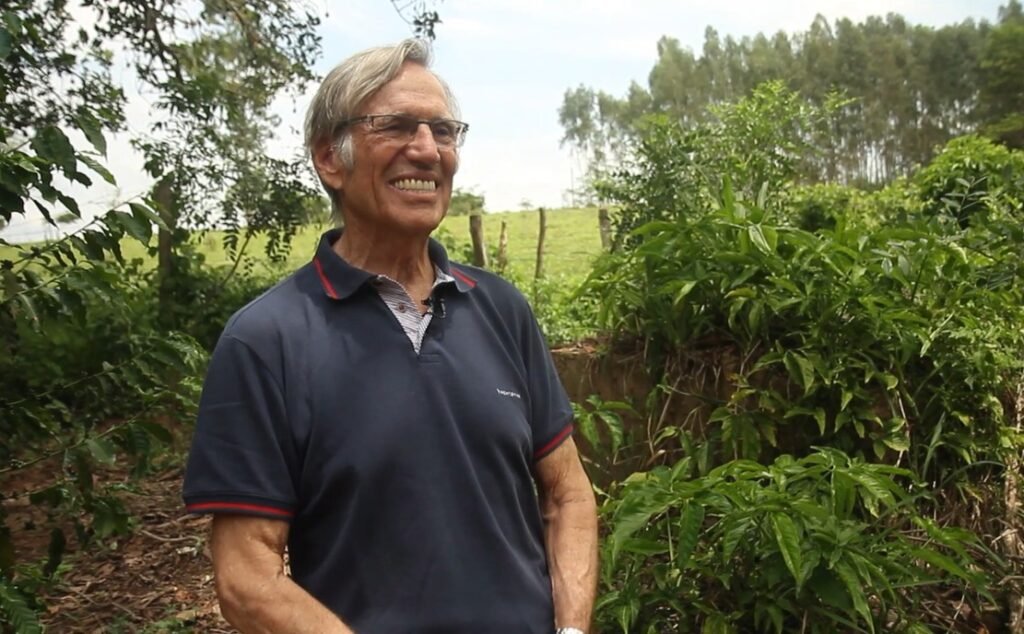
Jānis Grimbergs talks about bread baking in his childhood home — how loaves were baked on banana leaves, and how his mother managed to bake bread with the “real” taste, even though rye flour was not available. The interview with Jānis Grimbergs was given to the curator of the museum “Latvians in the World,” Marianna Auliciema, and researcher Brigita Tamuža during a museum expedition in Vārpa, Brazil, in 2013.
She mixed maize flour with sweet potato… (Luzija Osis)
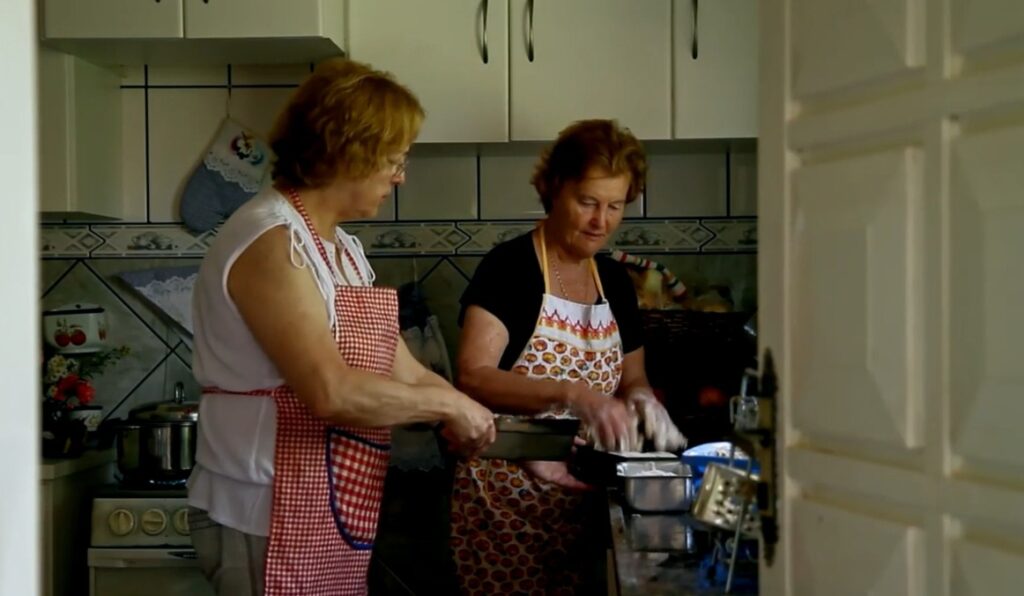
Luzija and Verners Osis, in their home in Vārpa, Brazil, demonstrate and talk about bread baking in their household in the past and today.
The interview was given to the curator of the museum “Latvians in the World,” Marianna Auliciema, and researcher Brigita Tamuža during a museum expedition in Vārpa, Brazil, in 2013. The video excerpt is from the museum’s documentary film “Vārpa: The Promised Land” (2017).
The Dambergs family kneading trough (Jaime Dambergs)
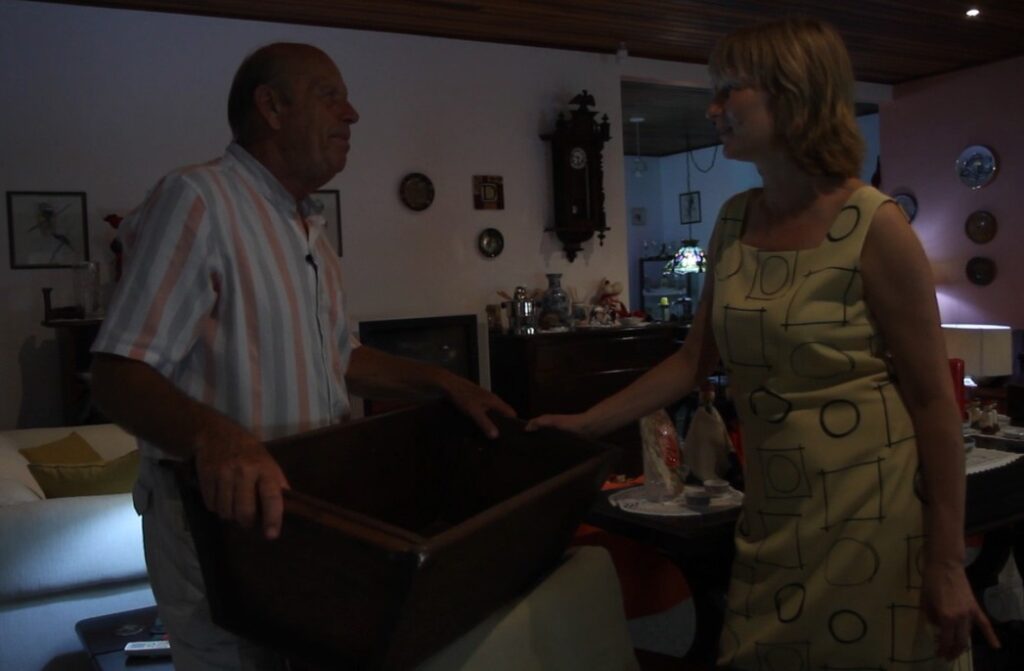
Jaime Dambergs talks about the “terribly” delicious bread that his mother used to bake on weekends in Brazil. The interview with Jaime Dambergs was given to the curator of the museum “Latvians in the World,” Marianna Auliciema, and researcher Brigita Tamuža during a museum expedition in Vārpa, Brazil, in 2013.
Her recipe relied on memory (Recipe – Modris Pukulis)
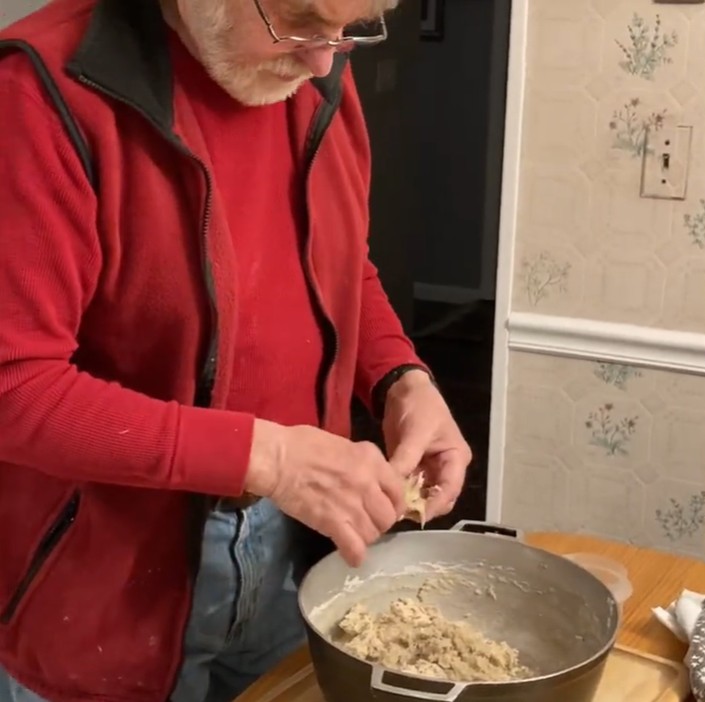
Modris Pukulis writes:
“The recipe for this bread comes from watching my mother making it – stopping her at times to measure what amount of ingredients were in hand. My mother was a great cook of her native Latvian food which we all ate while living at home (for me that was until I left for college at age 17). We all spoke Latvian as that was our first language learned at home and one that we were required to speak by and to our parents.
Not sure of the year but it was some time before I left for college that I decided that I wanted to learn how to make this bread – I had eaten other versions of this bread as made by Latvian friends of my parents but none were as good as hers.
I watched my mother through the whole two-day process, measuring ingredients as she went along, and taking notes (my memory not as good as hers). To my knowledge she never had a recipe but recalled everything from memory, though each time she made it, it tasted the same. We would eat it for breakfast with a slice of cheese or salami on top, and eat it for dinner with any soup she made. Though my favorite was the bread with my father’s smoked eel on top.
I similarly watched her make my favorite soup (biešu zupa – beet soup) and still make it whenever I make saldskābmaize (sourdough bread).
One thing I don’t know how to make,though I will try some day is speķu rauši.
Moe (or Mod as my sisters call me) Pukulis”
Butter, a slice of tomato, onion, and a little dill (Aivars Stūris)
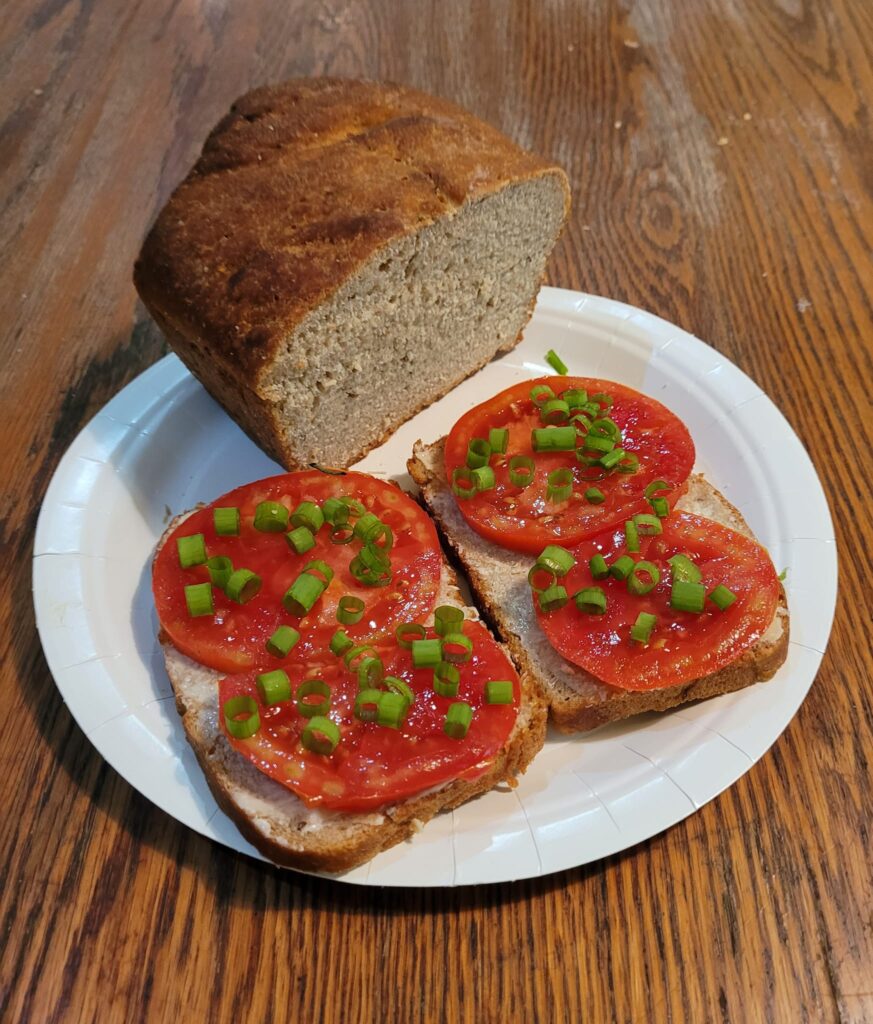
Aivars has been baking sourdough bread for many years, having taken over the tradition from his father when he retired. Today, Aivars bakes bread for himself and his family, as well as for American friends and nearby Latvian communities, including Garezers and the Grand Rapids Latvian retirees’ association.
My Homemade Rye Bread (Recipe – Maija Irbēns)
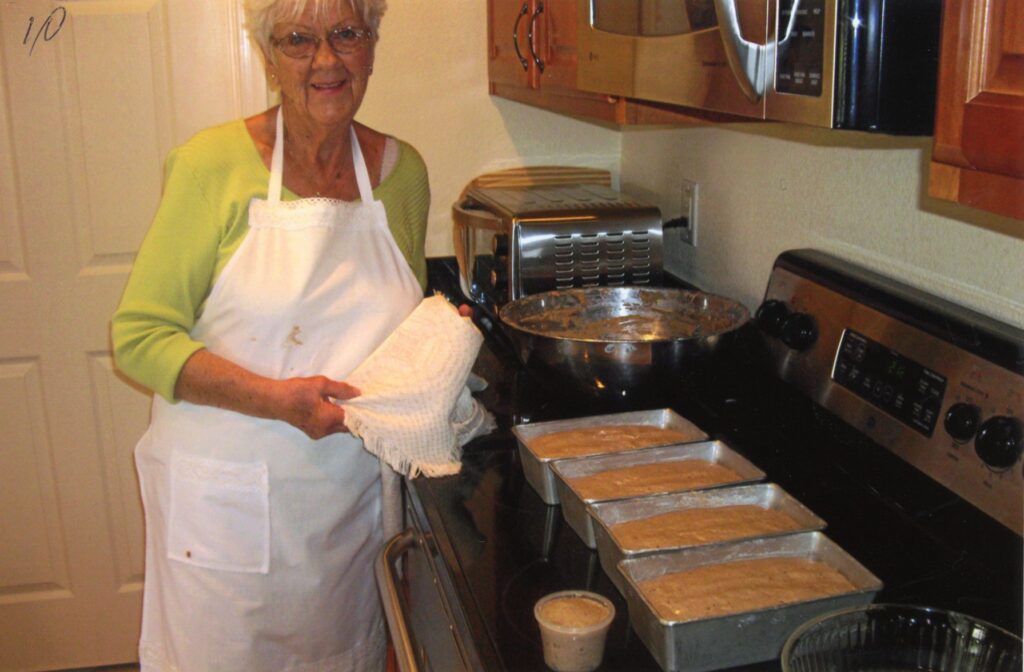
Maija Irbēns-Gilbert’s recipe for rye bread, which she always baked using sourdough starter inherited from her mother.
Riga Bakery (Āris Bērziņš)
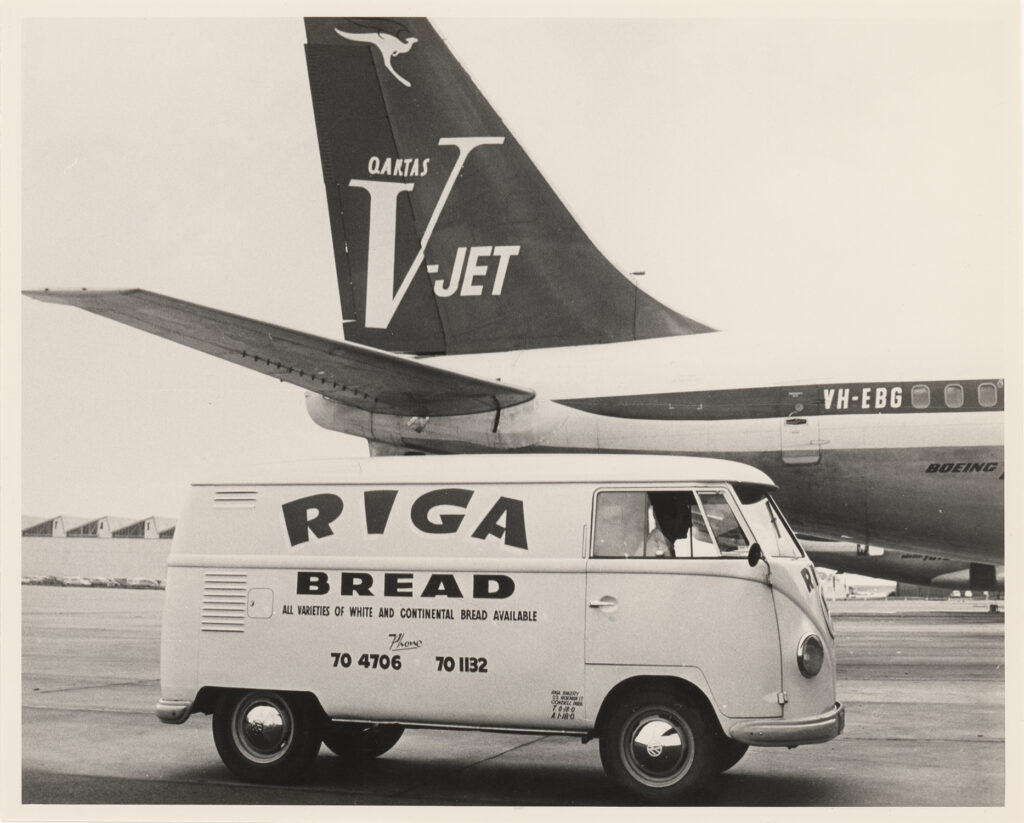
Āris talks about his father, Voldemārs Bērziņš, and the bakery he founded, “Riga Bakery,” in Australia in 1952. Watch the interview to learn how the bakery was established, how it grew, and what memories Āris has connected to it.
A mother’s blessing (Lilija Rudzītis)
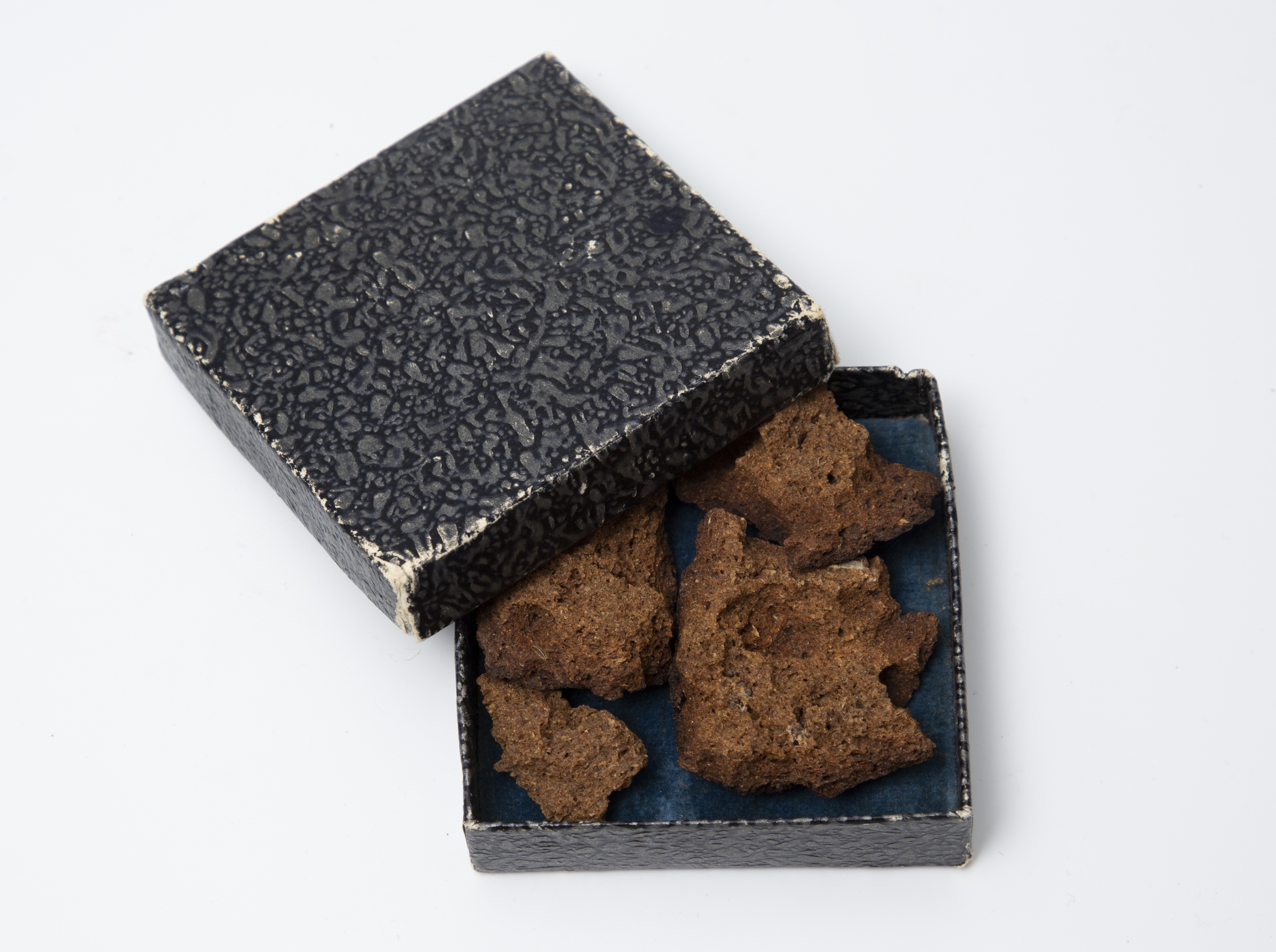
This dried piece of bread, which is part of the collection of the “Latvians Abroad” museum, is a special symbol of Latvia, of home, and of a mother.
Mayse Artisan Bakery (Aleksandrs Strelīts-Strēle and Elīna Krieviņa)
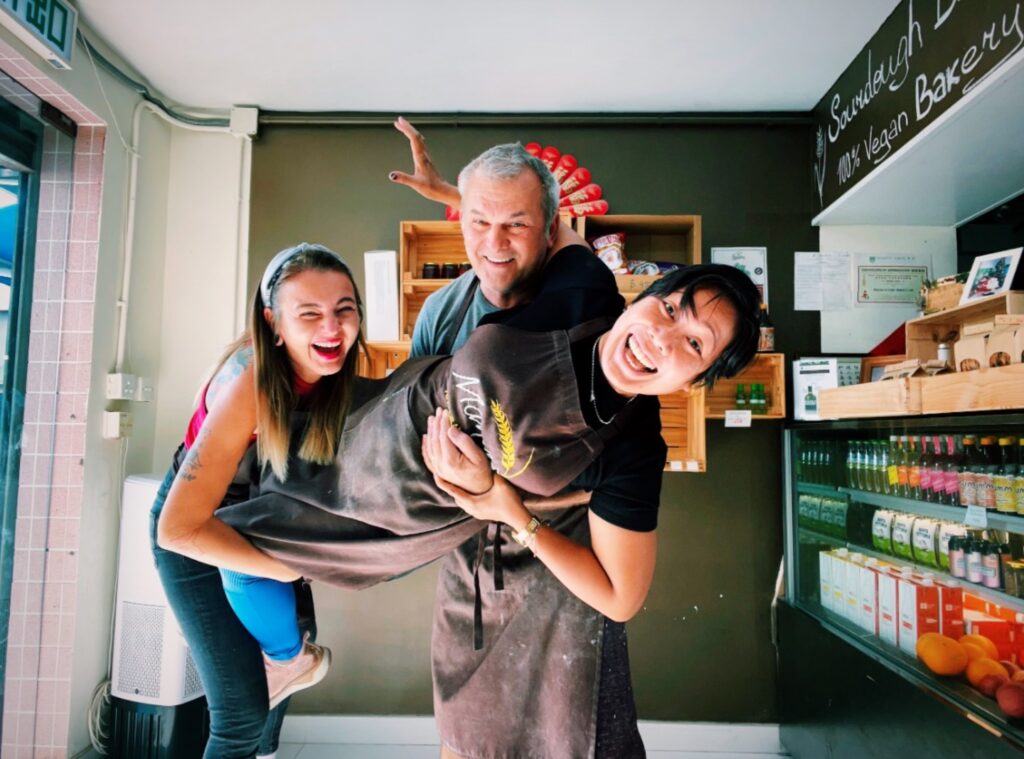
How did the “Mayse” bakery come to be in Hong Kong? Aleksandrs and his daughter Elīna talk about their bakery, which has been operating for eight years and has become a well-known and popular plant-based bakery among local residents in Hong Kong.