

Flower pot pashka (Laima Grāmatiņa)
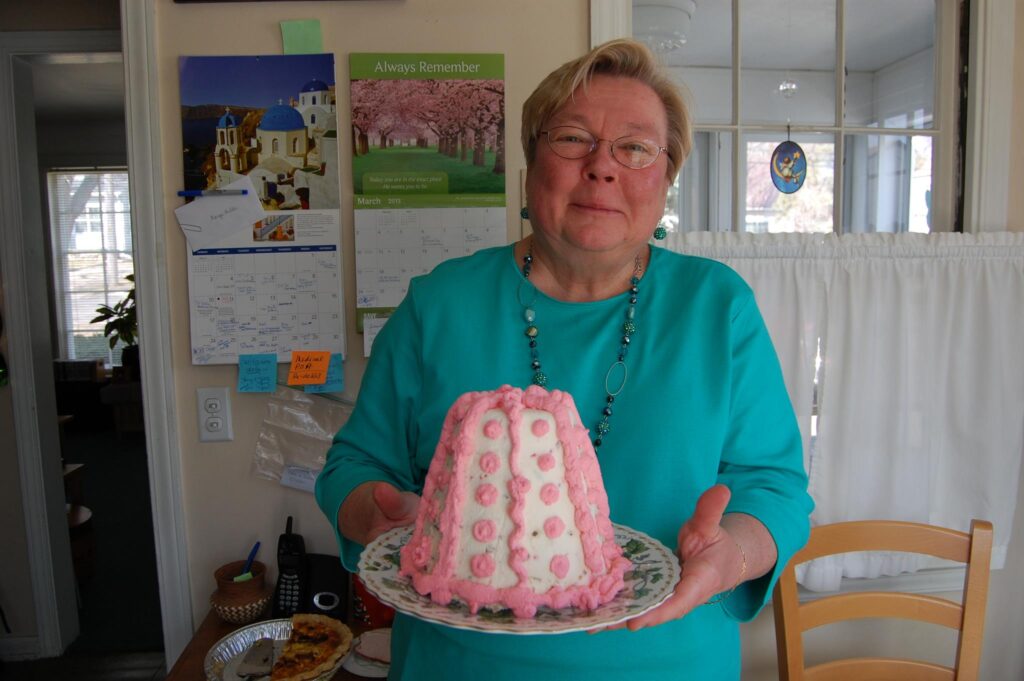
Living in America, Mirdza Grāmatiņa began making paskha at Easter using a recipe she found in a magazine. Mirdza’s daughter Laima adopted this tradition, and every Easter Laima tries to make paskha using that same recipe. She shapes the paskha by using a flower pot.
Pancake breakfast in Boston (Gints Grinbergs un Armands Ramoliņš)
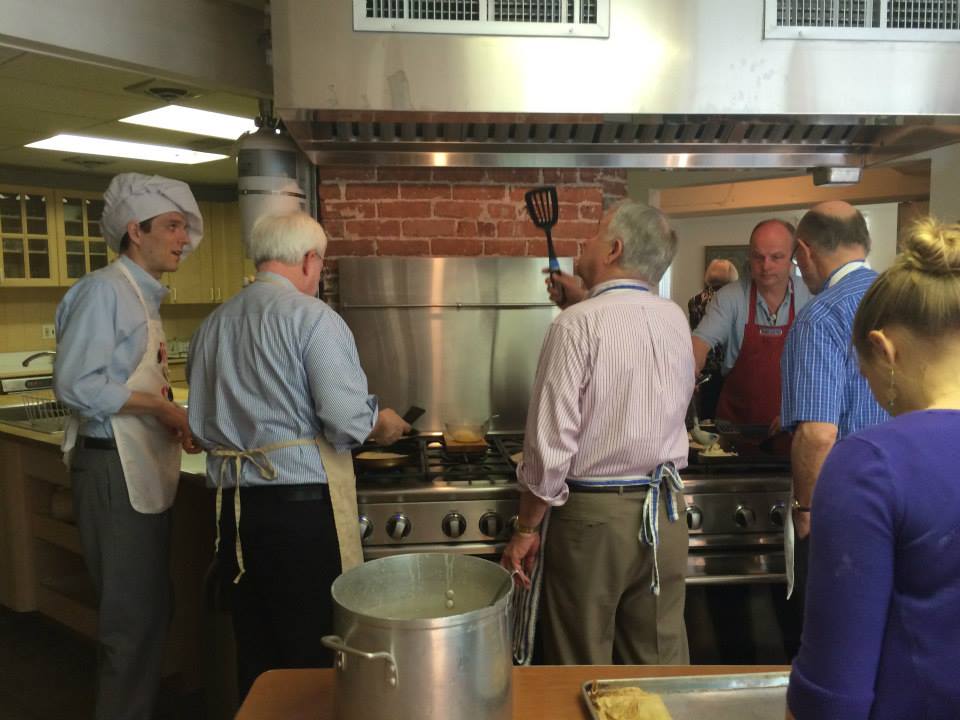
For about 30 years, the Latvian community in Boston has had a special Family Day tradition: making pancakes. However, this tradition has a small twist compared to usual—only the men make the pancakes! Listen to an interview with Gints and Armands, long-time Family Day pancake makers, about how this tradition began and how it continues today.
“Debesmanna” in vanilla sauce (Silvija Gurtiņš Mežgailis)
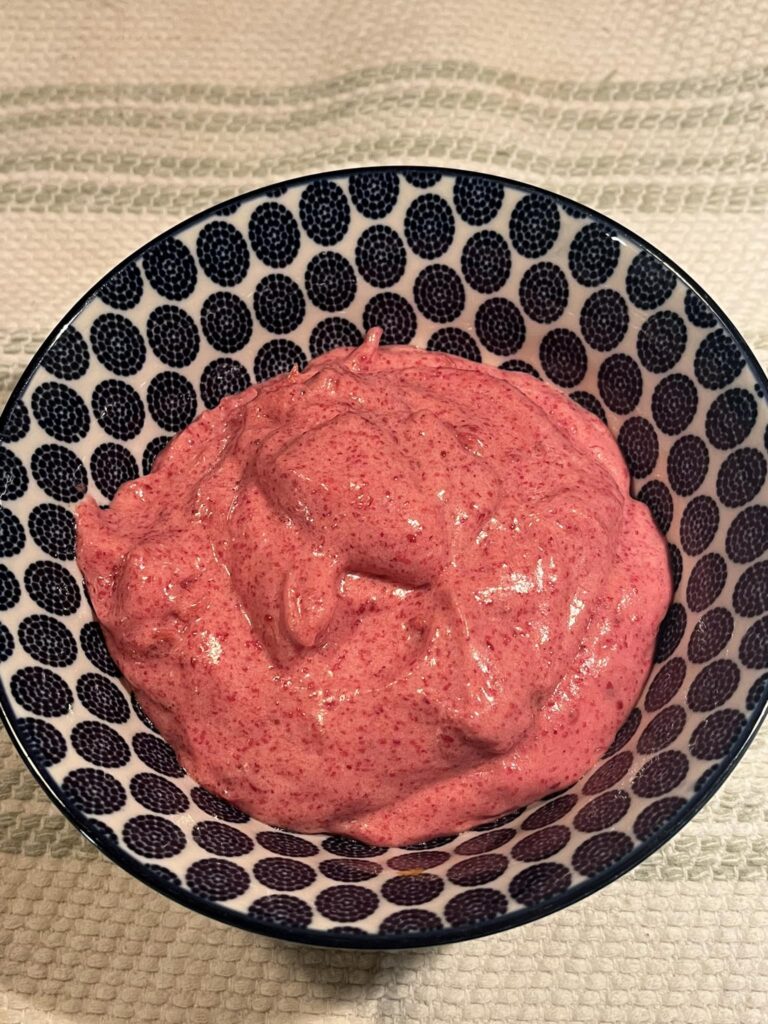
Silvija says that her mother and mother-in-law used to make debessmanna in the traditional way — first boiling the berries, then pressing them through a sieve to obtain a smooth mixture.
Whisk until it is fluffy and airy (Maruta Bergs)
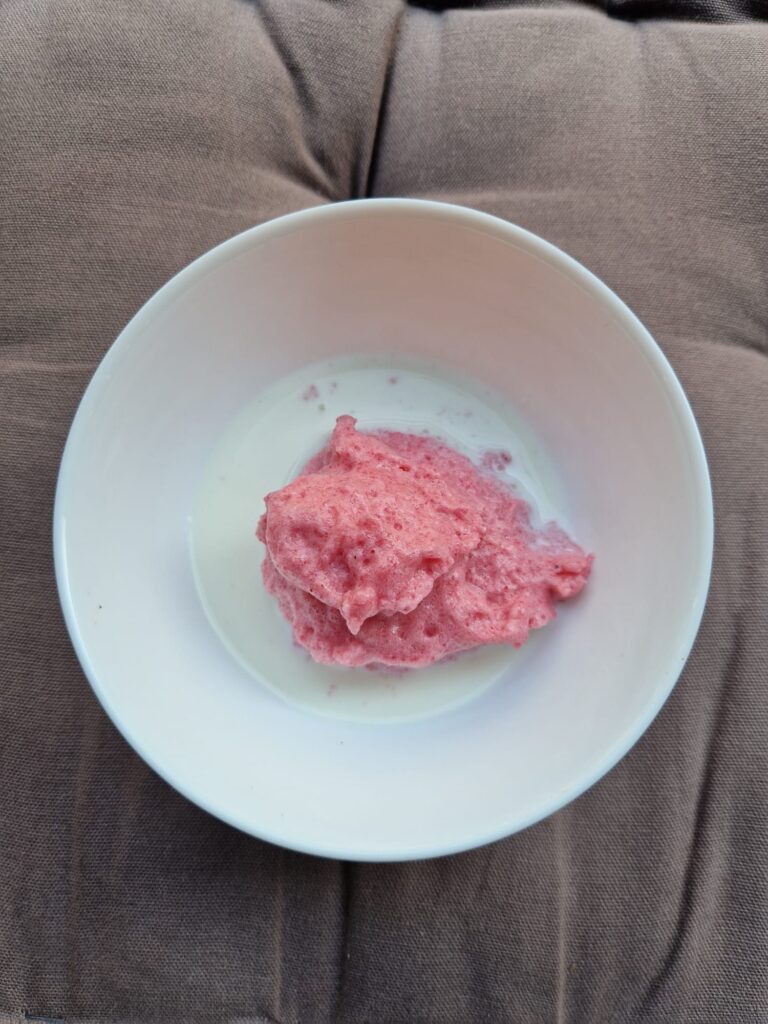
While living in Latvia, Maruta remembers how her mother and grandmother prepared a variety of sweet dishes during her childhood. After moving to America, she had to relearn everything from scratch! Watch the interview with Maruta Bergs, where she talks about how she prepares semolina mousse (debesmanna), fruit jelly (ķīselis), and pashka.
70-year-old wooden molds (Aija Ērgle)
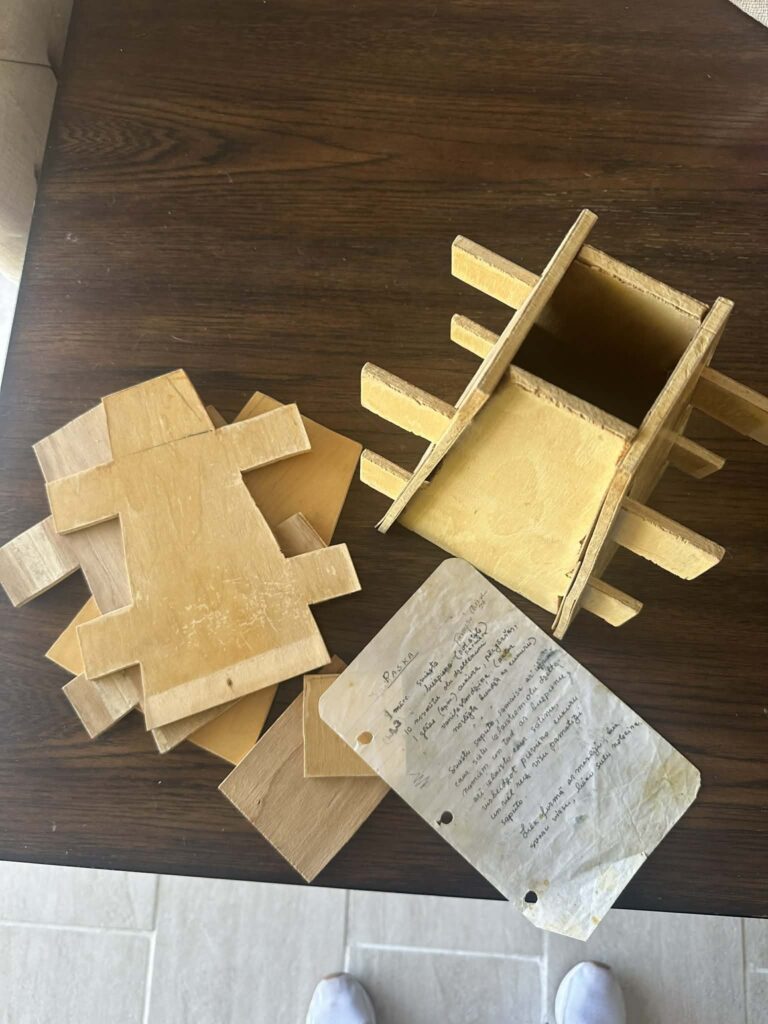
Aija’s mother always made paskha for Easter, using wooden molds that her husband had made about 70 years ago. Today, Aija continues this family tradition by preparing paskha according to her mother’s recipe and using the very same time-worn wooden molds, which carry both the taste of the holidays and cherished family memories.
Give us today our daily bread (Rūdolfs and Irma Grava)
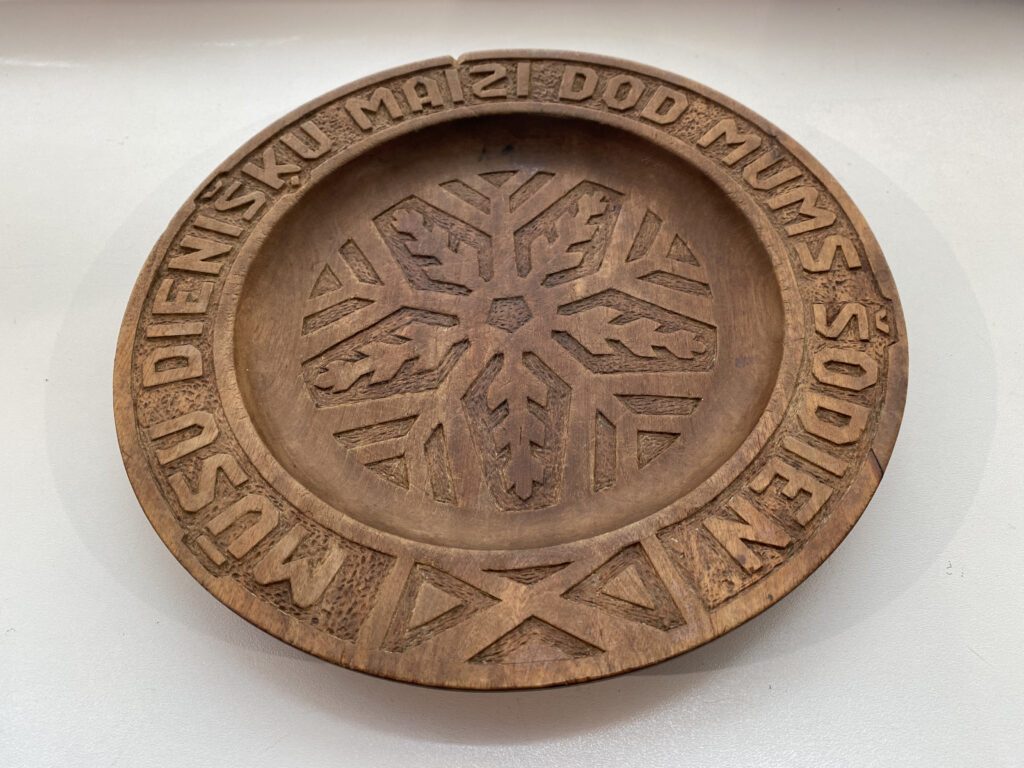
The Liepāja handicrafts teacher Rudolfs Fridrihs Grava made this bread platter in 1929 as a wedding anniversary gift for his wife, Irma Grava (née Mindenbergs). Irma and Rudolfs took this platter with them when they fled with their four youngest children during the Second World War, leaving Liepāja aboard an evacuation ship. Later, they packed the platter among their belongings when moving from a refugee camp in Germany to their new country of residence, the United States. After arriving in Baltimore, USA, the bread platter proved useful—it is believed that for many years it served in the Grava family’s large household both as a bread platter and as a cherished reminder of their wedding in their homeland. The plate was donated to the “Latvians Abroad” museum by Rūdolfs and Irma’s children, Artūrs Grava and Edīte Zariņa.
Whenever my mother baked bread, the entire house smelled wonderful (Mārīte Krūze)
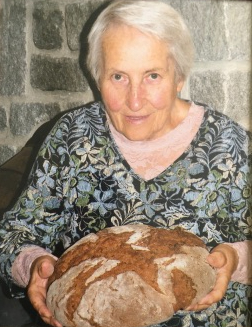
Mārite Krūze (USA) tells the story of her mother, Valentīne Upats (née Macāns, born in Rēzekne in 1924), and her bread baking.
My mother, Valentīne Upats, recalled how she began baking rye bread during her retirement years. Her bread became very popular in our New Jersey congregation. She baked with great joy and generously shared her bread with others.
The well-known Visvaldis Dzenis even wanted to purchase a special mixing machine to make kneading easier and to be able to produce a larger quantity of bread, but my mother refused. It was important to her to knead the dough herself—to do it properly and to feel the dough with her own fingers. She also had a bit of arthritis in her fingers, and this activity served as good exercise for them.
My mother believed she had received the recipe from a relative in Latvia, and later adapted it to suit herself and the ingredients available in the United States.
Whenever my mother baked bread, the entire house smelled wonderful for two days! I remember that once the loaves were finally baked, my mother and father would sit down at the table and immediately enjoy the fresh, warm bread. My father always received the first loaf. His task was to slice the bread evenly so that delicious buttered sandwiches could be prepared for the church luncheon table. For this purpose, he had purchased a special slicing device.
It was always important to my mother to find high-quality rye flour. She became acquainted with a baker who milled his own rye. My mother spent an entire day with him, discussing the sourdough starter, the dough composition, and other details. Her bread was baked in a wood-fired oven—and this was the loaf she was most proud of. The baker honored her by selling “Valija’s Latvian Rye Bread” at the market that summer.
We tried baking rye bread together, but it seems I never quite acquired the skill… Perhaps one day I will try again to bake this delicious bread, though I already know it will never receive the same admiration as my mother’s bread.
Where do you find bolted flour in Philadelphia? (Inta Grunde and Valdis Bašēns)
Excerpt from an interview with Inta Grunde and Valdis Bašēns in Philadelphia, USA, in 2015, when the museum met them during a field expedition:
Inta: My mother always looked for what she called bolted flour. Not the dark rye flour, but bolted flour. It’s very hard to find here. I have to drive half an hour north to a kind of warehouse, where I have to place a special order. Then I buy 100 pounds at a time. Because the dark rye flour we can buy in small bags here and there, but the bolted flour we can’t.
Valdis: About that flour – we lived, when we first arrived, in a place where there were many Estonians and many Japanese, and also Latvians. And in the local grocery store you could get exactly that kind of flour. For years all the Estonian and Latvian women went there to buy it. And when the owner retired and closed the shop – now it’s desperation. Where do you get it?
Bread treasured as a symbol of home (Vilhelms Griķis)
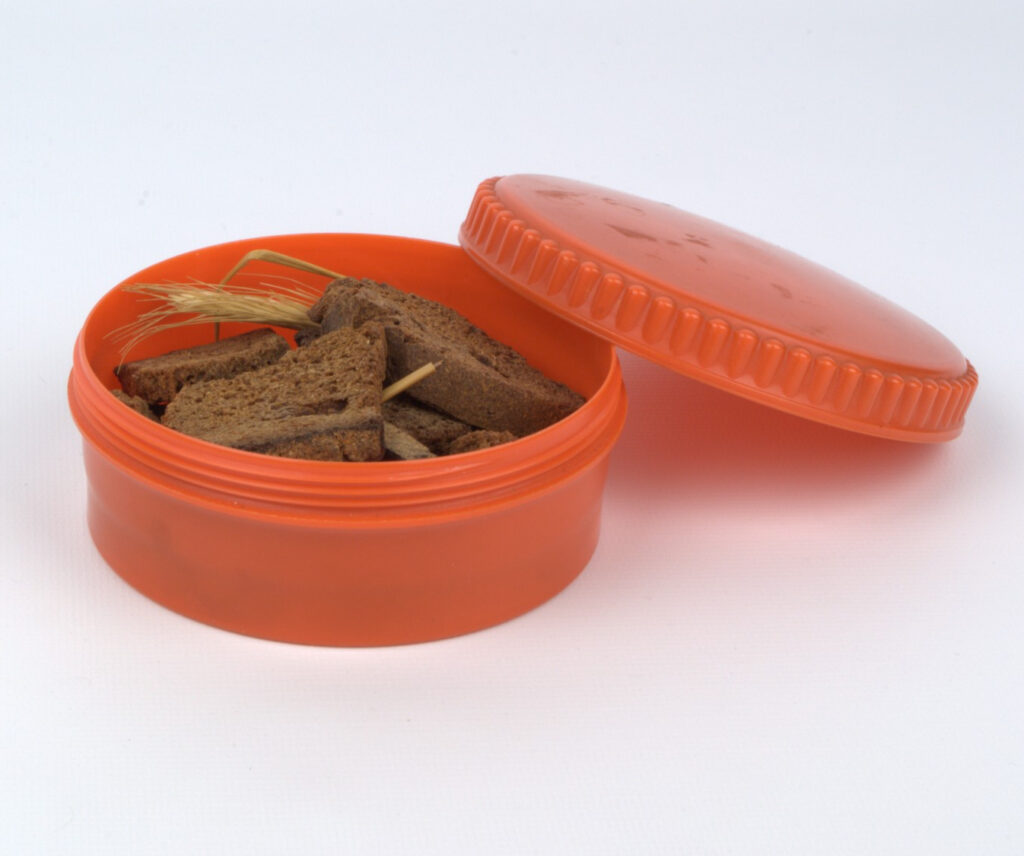
Vilhelms Griķis’ butter container, in which he kept symbols of home, taken from Latvia during the refugee journeys of the Second World War: rye bread, ears of grain, and santims (coins). Such orange bakelite butter/fat containers were issued to soldiers in the German army.
A proper country loaf (Kristaps and Zinaida Jaunzemis)
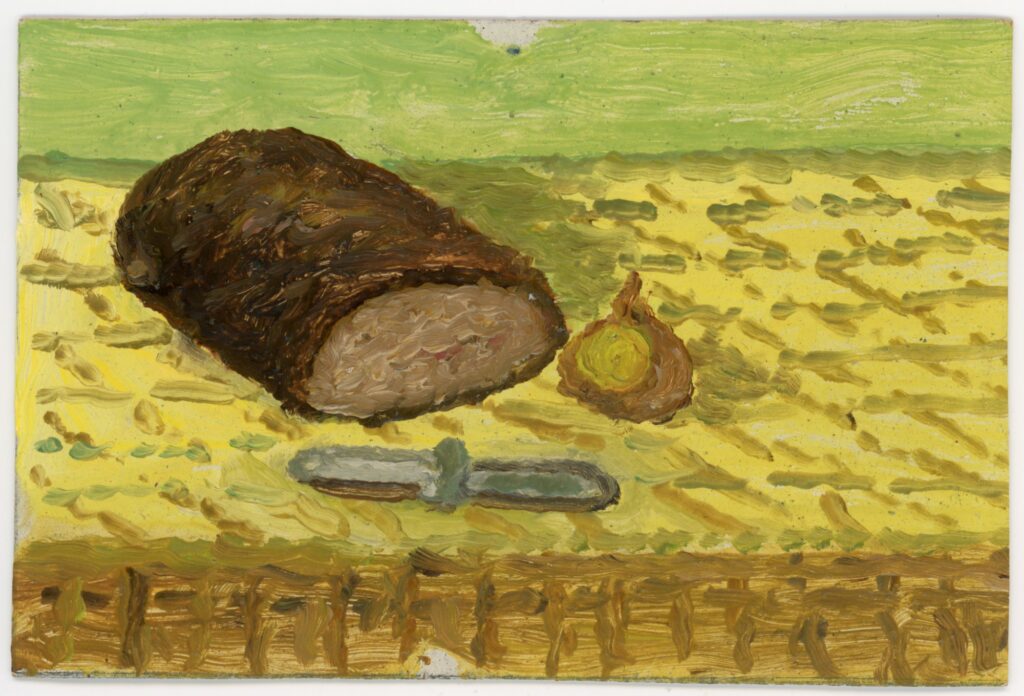
In a letter held in the collection of the museum Latvians Abroad, Kristaps Jaunzemis writes from Latvia to his wife Zinaīda in Nebraska on July 18, 1959:
It may sound strange, but what if during my leave in the countryside I could get hold of one “proper” country loaf of bread—dried and sent to you? It seems so hard to believe that for a full fifteen years you haven’t been able to taste rye bread! I think I myself would have become quite weak if I had had to live on white bread alone!
The family was separated during the Second World War. Legionnaire Kristaps Jaunzemis, after deportation to Siberia, returned to Latvia, where Latvian rye bread was readily available to him. Meanwhile, Kristaps’s wife Zinaīda and their children had fled Latvia as refugees during the war and ended up in the United States. Although contact between husband and wife was re-established through correspondence, they never met again in their lifetime.