

Frikadeller soup – when you have a cold (Anda Cook)

“Autumn is here, and it’s time to make soups. In our home, a favorite is the so-called meatball soup: bring a large pot of water to a boil; once it’s boiling, add 1 quart of sliced carrots. While that cooks, clean and chop 1 quart of celery and add it to the pot. Keeping the soup simmering, add about half a small head of chopped cabbage, then another quart of chopped red potatoes. Add beef bouillon cubes to taste. Then gradually add small pre-made meatballs (I use a Swedish meatball recipe for the meat), and finally add one package of frozen green peas.
Serve the soup with a spoonful of sour cream and some finely chopped pickles added to each bowl.
It’s not uncommon for my husband or daughter to call me from work saying they feel like they’re coming down with a cold and asking whether we could have meatball soup for dinner.”
Latvian School of Chicago piparkūku working bee
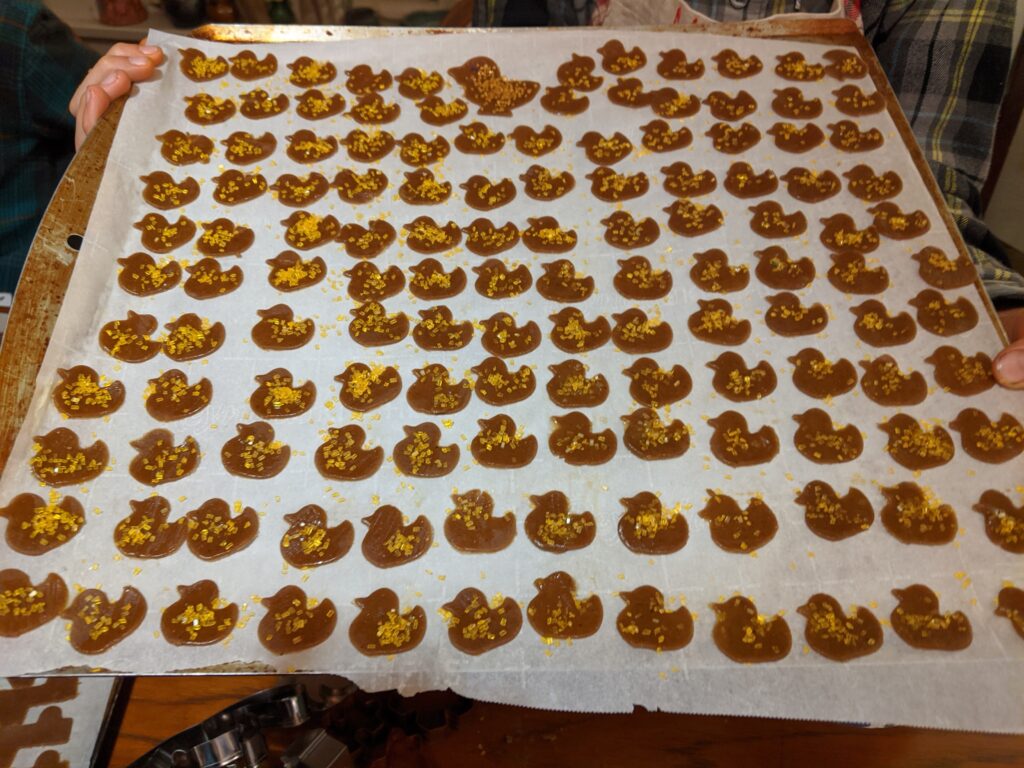
Watch how a piparkūku working bee takes place at the Latvian School of Chicago! Participants share their experiences, the meaning and importance of piparkūkas, as well as what they like most about piparkūkas…
We send pīrāgi by mail! (Dace Gulbe un Inta Grunde)
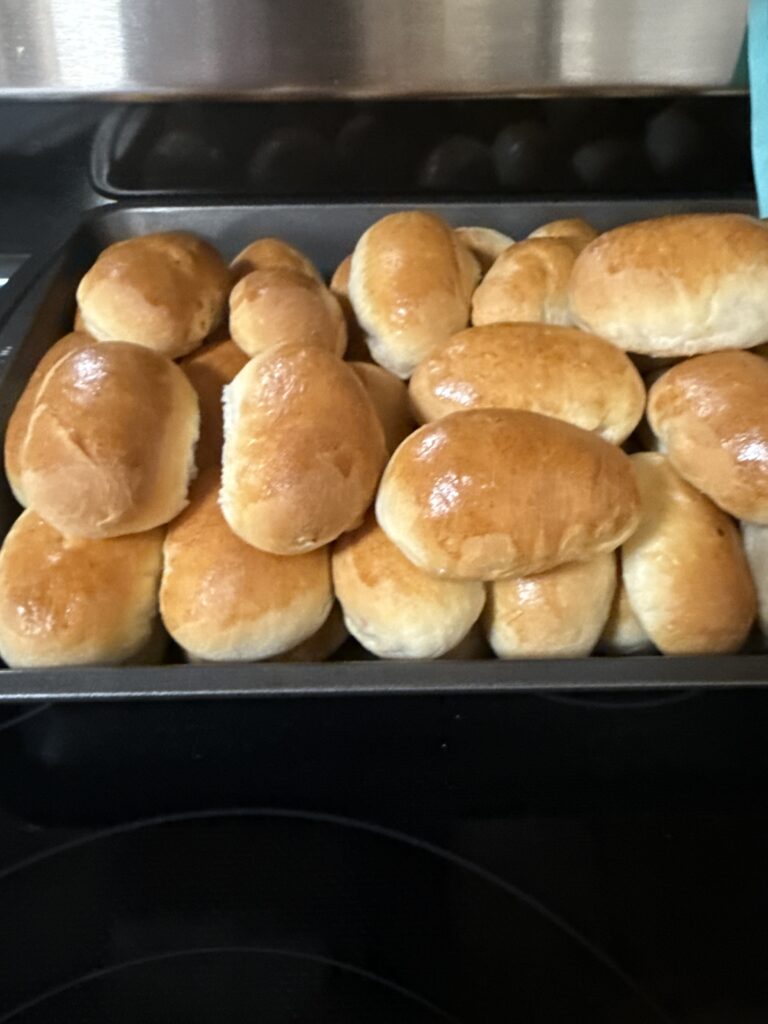
Dace and Inta talk about baking pīrāgi, sending them by mail, and the different fillings they make.
It’s not Christmas without pīrāgi (Anda Cook)
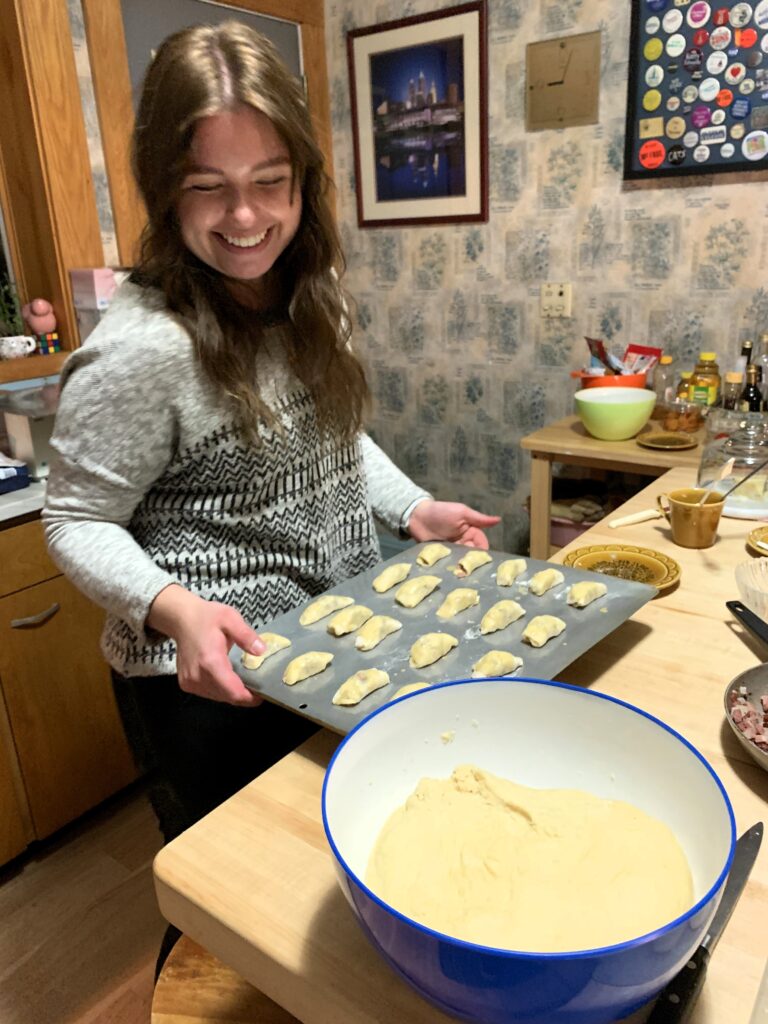
For as long as I can remember, pīrāgi held a place of honor at the Christmas table, and also at Easter. The necessary ingredients were not always easy to find, but my mother made sure to get them in time. In Cleveland, she had discovered a stall at the Westside Market, where she would go after work on Fridays. Her pīrāgi were not only delicious, but she always tried to make them very small, with plenty of meat filling.
My mother has been gone for a long time, and together with my daughter Lisa and granddaughter Greily, we have tried various recipes – but none are quite like my mother’s pīrāgi, neither in appearance nor in taste. The closest we’ve come was a few years ago. We use Dzidra Zeberiņa’s Ģimenes pavards (with a few variations – ed.).
It’s a lot of work, but we listen to Latvian folk songs and linger over memories. Sometimes, it even happens that a pīrāgs gets burned at both ends! And, of course, it’s not Christmas without pīrāgi.
I wouldn’t offer these to pīrāgi purists! (Maija Hinkle)
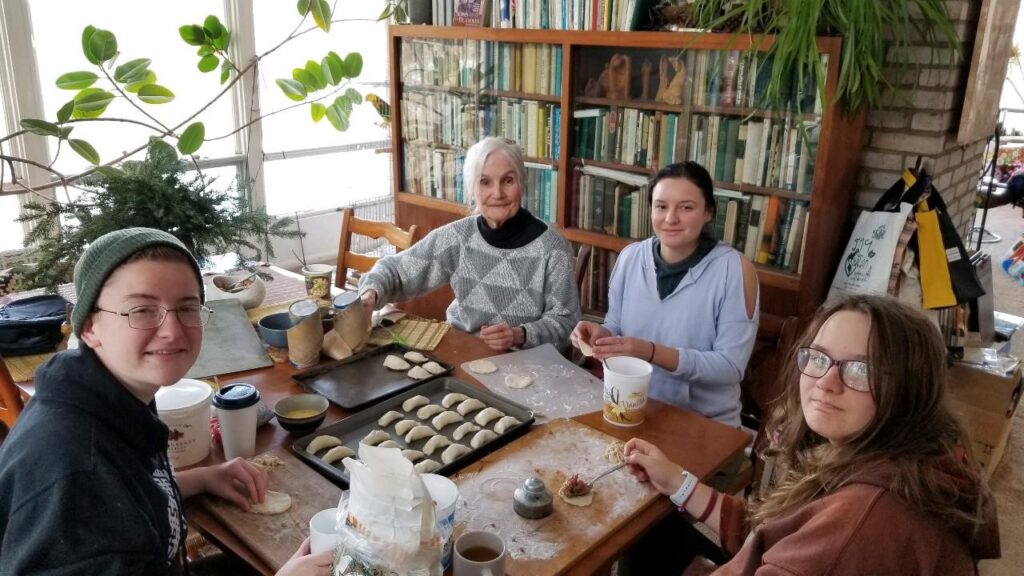
The founder of the Latvians Abroad Museum and Research Center museum shares the story of her family’s pīrāgi baking tradition. The Hinkle family includes several vegetarians, so they have had to invent various filling variations that everyone would enjoy. The family’s creative approach to pīrāgi doesn’t stop at the filling – for convenience, they use store-bought bun dough, and a ravioli press is used to shape the pīrāgi!
Even the cat smells like cabbage… (Irene Kreilis)

Irene Kreilis: “I prepare braised cabbage according to my own recipe: white pepper, bay leaves, fry the bacon, grind it, fry the onions, caraway seeds. A good amount of brown sugar also helps — half a cup. Six hours in the oven. As it bakes, the edges burn, and that’s the most delicious part. I grate carrots. The cabbage can be reheated for a week. The children complained that even the cat smells like cabbage! The whole house smelled — coats, clothes.”
Story recorded and submitted by Dagnija Roderte.
Pīrāgu recipe trials and errors (Amanda Whittaker-Lee)

Amanda, a Canadian married to a Canadian-Latvian, values passing culture on to her daughter, including her husband’s heritage. She had always wanted to try making pīrāgi, and has finally begun the journey of learning and perfecting the recipe. After two unsuccessful, though still delicious, attempts, Amanda turned to the Facebook group “Latvian Favorite Foods,” asking for help, wondering what she was doing wrong, and looking for advice.
The secret ingredient is faith (Inga Lucāns)
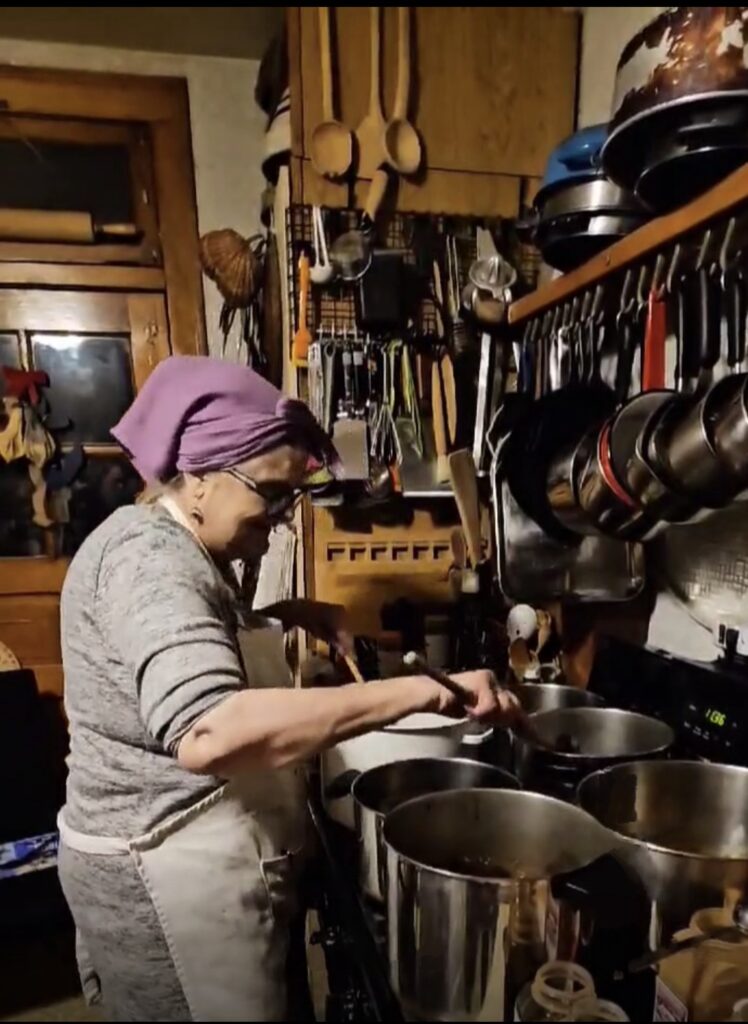
Inga shares her many years of experience in baking piparkūkas and pīrāgi. She believes that there are no secrets to making pīrāgi, people shouldn’t be afraid to give it a try, because it’s really not that difficult. However, when it comes to piparkūkas, the secret ingredient, according to Inga, is faith in the dough!
Inta talks about celebrations in her home / Philadelphia, USA

…In our home, 2–3 days beforehand we were already preparing all kinds of dishes. Sometimes, at our house, we ate three times: everyone gathered for dinner around six o’clock and ate the hot meal; then afterwards, the men went off to play cards, the women washed the dishes, and then there was the coffee table; and around two or three in the morning, my mother set out the smorgasbord.
From an interview with Inta Grunde for the museum “Latvians Abroad.” Interviewed by Ieva Vītola in 2016.
Amber Table (Dace Gulbe and Inta Grunde)
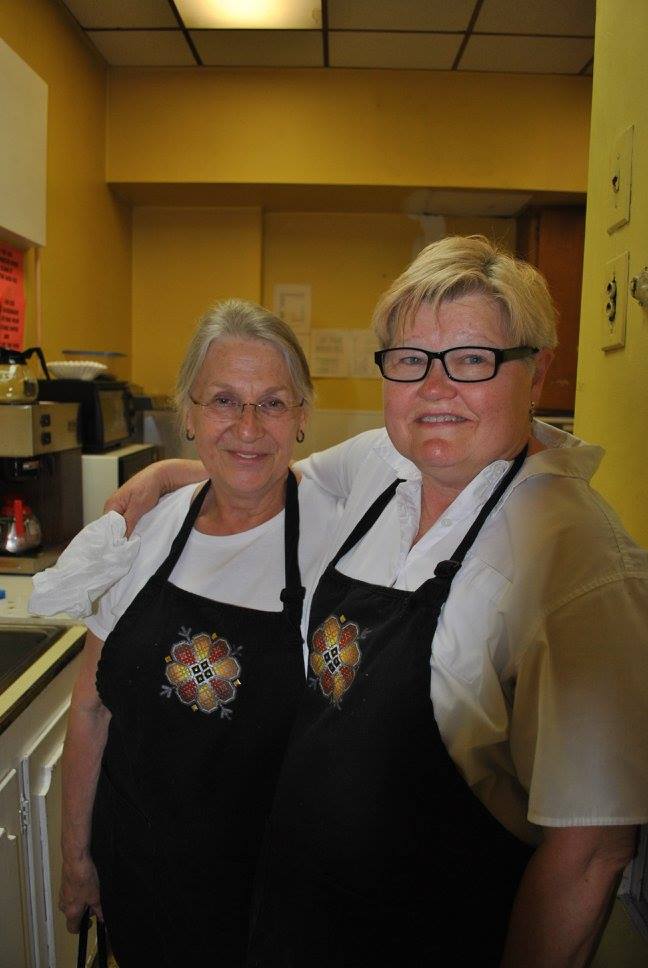
Dace Gulbe and Inta Grunde have been preparing and setting festive tables for Latvians on the East Coast of the United States for about 20 years with Amber catering company.They talk about the most popular foods they make (pīrāgi!), about their cooking process, and also share their experience of how it was recently when the President visited Priedaine and they prepared the food for the event.