I Wouldn’t Offer These to Pīrāgi Purists! (Maija Hinkle)
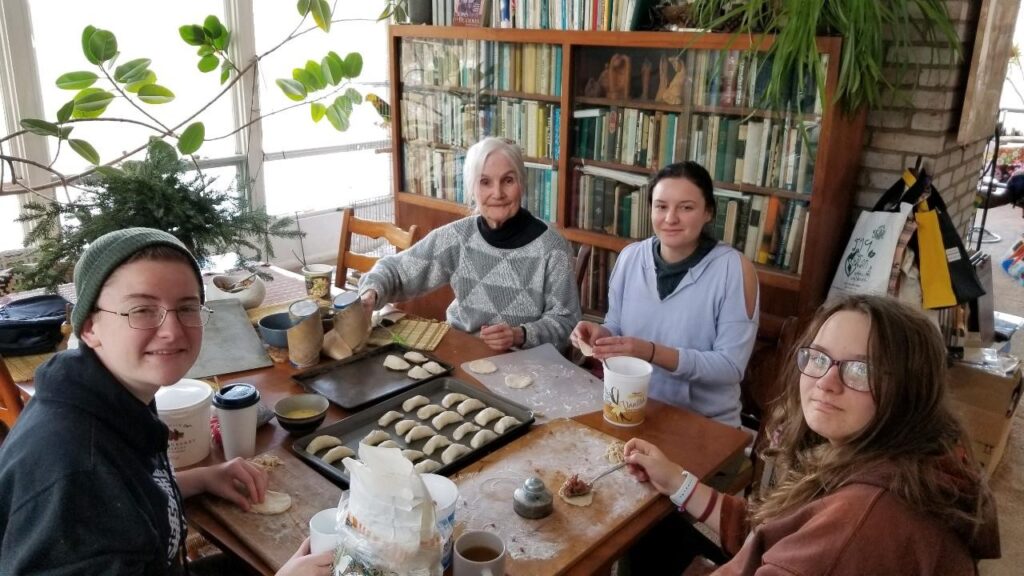
The founder of the Latvians Abroad Museum and Research Center museum shares the story of her family’s pīrāgi baking tradition. The Hinkle family includes several vegetarians, so they have had to invent various filling variations that everyone would enjoy. The family’s creative approach to pīrāgi doesn’t stop at the filling – for convenience, they use store-bought bun dough, and a ravioli press is used to shape the pīrāgi!
Pīrāgi as the Feeling of Home (Līva Ozola)
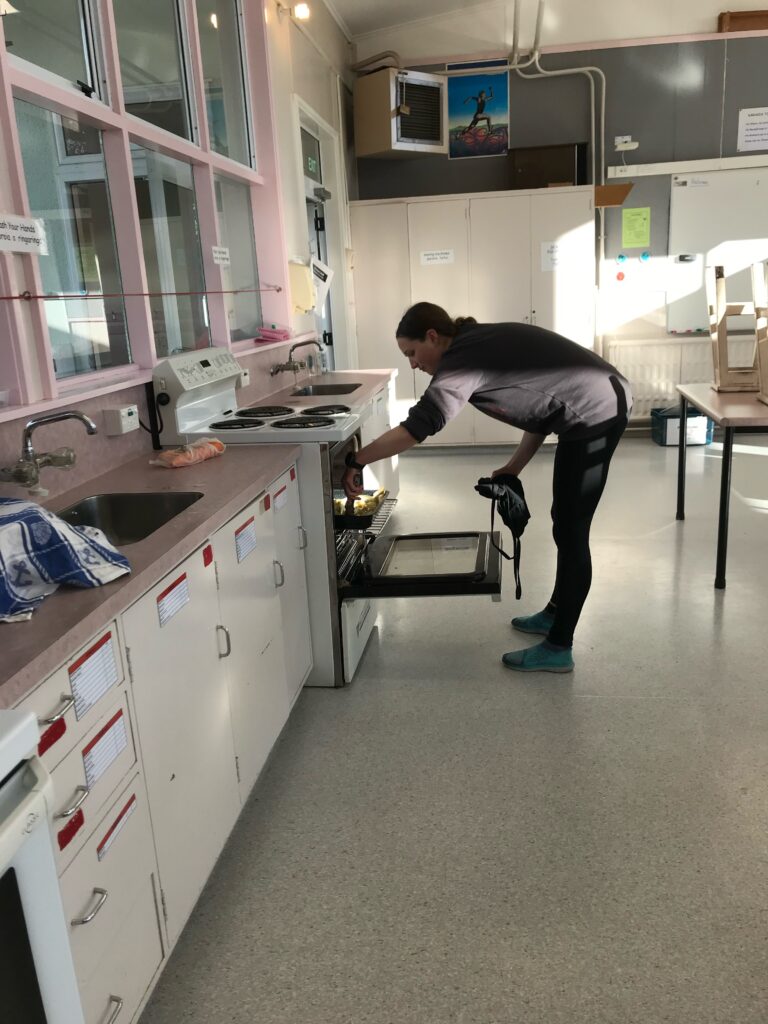
Līva, a home economics teacher in New Zealand, says that pīrāgi give her a feeling of warmth and home. She has treated her colleagues at school to pīrāgi and has even included making them as an assignment for her students in cooking class…
There Must Be 12 Different Dishes on the Christmas Table! (Inga Čulkstēna)
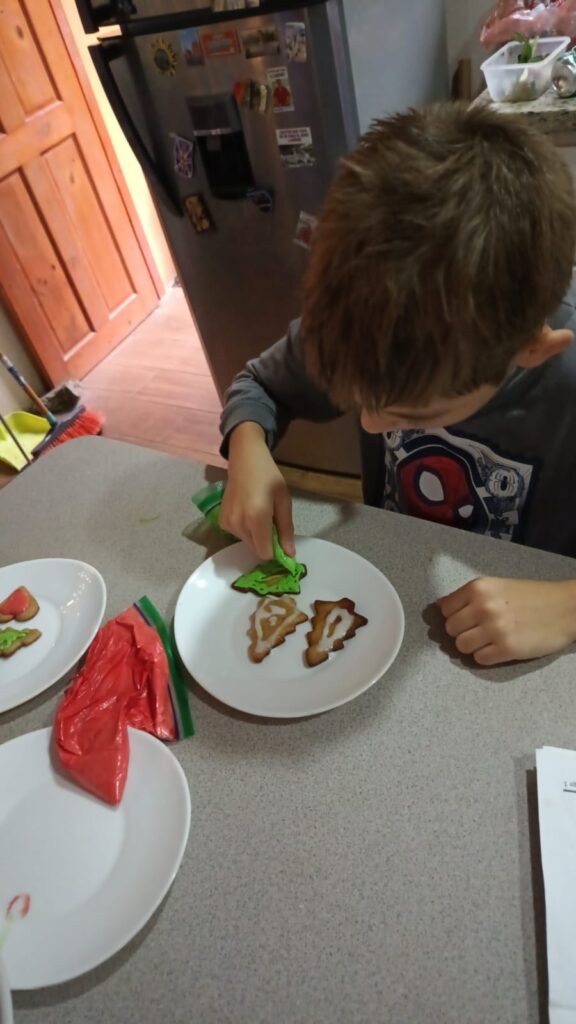
Inga, who now lives in Costa Rica, bakes piparkūkas and pīrāgi every year together with her sons. She talks about her experience searching for ingredients that are not always easy to find in Costa Rica, and fondly remembers her family’s Christmas traditions from her childhood.
Pīrāgi Baking Workshop (Brisbane Latvian Community)

PipArkūkas & Pīrāgi DECEMBER 2025 Pīrāgi Baking Workshop (Brisbane Latvian Community) BrisbANE, Australia The Brisbane Latvian Community reports: “Inhale — can you still smell that fresh batch of pīrāgi straight from the oven? We can, and we’re still smiling! In October 2025 a pīrāgi making workshop was held at the Brisbane Latvian Hall. What a warm, delicious, and joy-filled afternoon it was!The wonderful Dace Dambergs guided us through the entire process — from preparing the dough and savoury filling, to sharing her expert tips on shaping and glazing (plus a few treasured family stories along the way!). Dace was joined in the kitchen by Zile, Jasmine and Inga who added their own flair, tips and stories, and Jasmine demonstrated an alternative shaping technique for that perfect pīrādziņš.Attendees had a hands-on experience on shaping their own pīrāgi, and everyone had lots of fun in the process, especially the tasting (no burnt bottoms there)!” Photo author: Garen Krūmiņš DECEMBER Stories Piparkūkas in Romania (Laura Sarkane) Crystallised ginger piparkūkas (Maija Liiv) Latvian School of Chicago piparkūku working bee Now I can give my recipe to everyone! (Dzidra Ādamsone) Pīrāgi making outside Latvia: photographs from the collection of the museum “Latvians Abroad” One recipe in three versions (Ilma Wilkinson) We send pīrāgi by mail! (Dace Gulbe un Inta Grunde) Pīrāgi is a comforting food for me (Māra Goldsmith) It’s not Christmas without pīrāgi (Anda Cook) It smells of braised sauerkraut! (Juris Sinka) The decorating process takes seven hours (Anita Kupcis-Clifford) Grandma’s pīrāgi in Rome (Austra Muižniece) My family pīrāgi recipe – with commentary (Aivars Sinka) Communal baking in Shanghai (Ilma Wilkinson) I remember mountains of piparkūkas! (Māra Goldsmith) I wouldn’t offer these to pīrāgi purists! (Maija Hinkle) Pīrāgi as the feeling of home (Līva Ozola) A Mindful Pīrāgi Making Adventure (Dace Dambergs) There must be 12 different dishes on the Christmas table! (Inga Čulkstēna) Pīrāgi Baking Workshop (Brisbane Latvian Community) Even The Cat Smells Like Cabbage… (Irene Kreilis) Pīrāgu Recipe Trials and Errors (Amanda Whittaker-Lee) The Secret Ingredient is Faith (Inga Lucāns) Piparkūku Camps in Italy (Ilze Atardo) No posts found
Pīrāgu Recipe Trials and Errors (Amanda Whittaker-Lee)

Amanda, a Canadian married to a Canadian-Latvian, values passing culture on to her daughter, including her husband’s heritage. She had always wanted to try making pīrāgi, and has finally begun the journey of learning and perfecting the recipe. After two unsuccessful, though still delicious, attempts, Amanda turned to the Facebook group “Latvian Favorite Foods,” asking for help, wondering what she was doing wrong, and looking for advice.
Piparkūku Camps in Italy (Ilze Atardo)
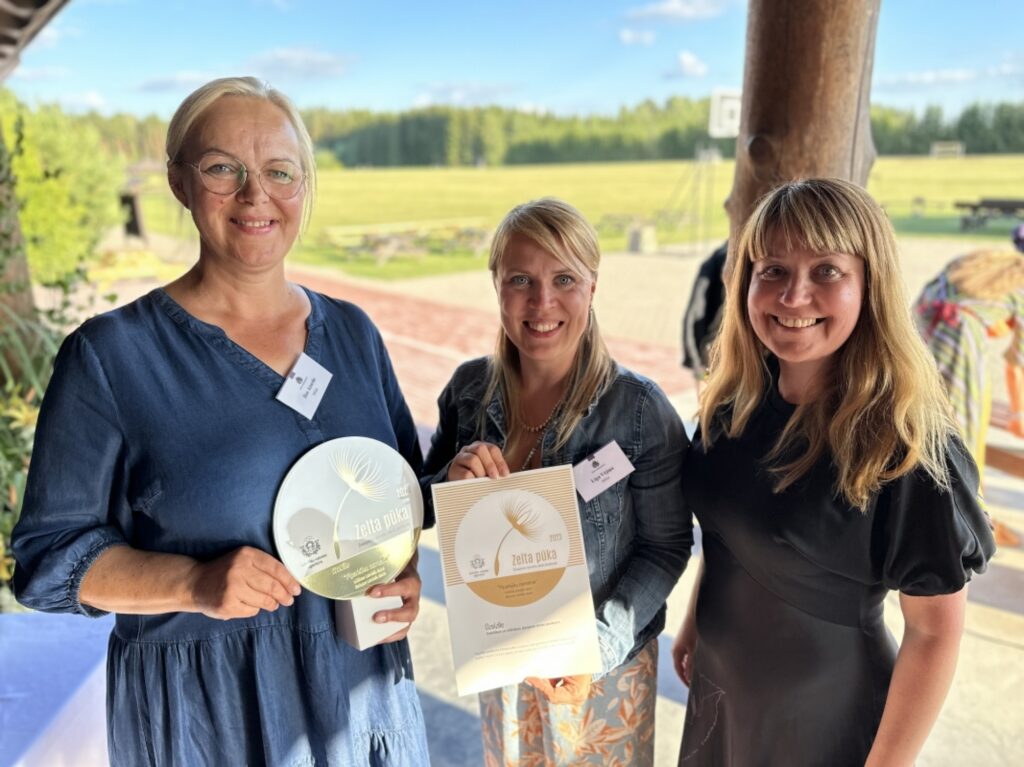
For Ilze, piparkūkas has always been a part of Christmas. Now, living in Italy, she organizes piparkūku camps that bring together other Latvians living in Italy, as well as participants from Luxembourg and Germany. For three days they bake, cook food, eat, dance, sing, and simply enjoy being together. In 2023, Ilze received the “Zelta pūka” award for her piparkūka camp.
The House Smells of Smoked Meats and Rasols for Days Afterwards! (Laila Rudzone)

Festive table NOVEMBER 2025 The House Smells of Smoked Meats and Rasols for Days Afterwards! (Laila Rudzone) Germany On the holiday table at home, there’s always rosolīts (potato salad). Every year we agree that this time we’ll make a bit less of it, but somehow it always ends up being a big bowl — and it’s always eaten to the last bite. Sometimes we roast chicken or carp with garlic and dill. And the queen of the table is a homemade cake with lingonberry jam and custard cream. You can make lingonberry-apple jam here in Germany too. I couldn’t find fresh lingonberries anywhere, but you can buy them frozen at the Mix Markt store. Then you put the lingonberries in a pot together with peeled apples, a bit of sugar, and a clove or two for flavor. The jam is ready! You can also buy dill at this store — which turns out to be surprisingly hard to find fresh, crisp, and fragrant in other shops, for salads or boiled potatoes. After the home celebrations, the house still smells of smoke and rosolīts for two more days. Story sent in by Laila Rudzone. NOVEMBER Stories The House Smells of Smoked Meats and Rasols for Days Afterwards! (Laila Rudzone) A Once-a-Year Feast of Latvian Specialities (Maija Liiv) Inta Talks About Celebrations in Her Home A Thin Slice of Lemon and a Sprig of Dill (Ingrīda Hawke) Amber Table (Dace Gulbe and Inta Grunde) Hostesses in Latvian Communities Abroad: in Different Times and Countries. Photographs From the Collection of the Museum Latvians Abroad. Festive Tables of Latvian Communities Abroad: in Different Times and Countries. Photographs From the Collection of the Museum Latvians Abroad. Ladies’ Committee Canapé Party! (Inta Šķiņķis) Ladies’ Committees Helped Maintain the Latvian Community (Aija Abens) The Salmon Looks Like it’s Swimming! (Ingrīda Hawke) No posts found
When Fermenting Cabbage, You Have To Kiss Over the Barrel (Laila Rudzone)
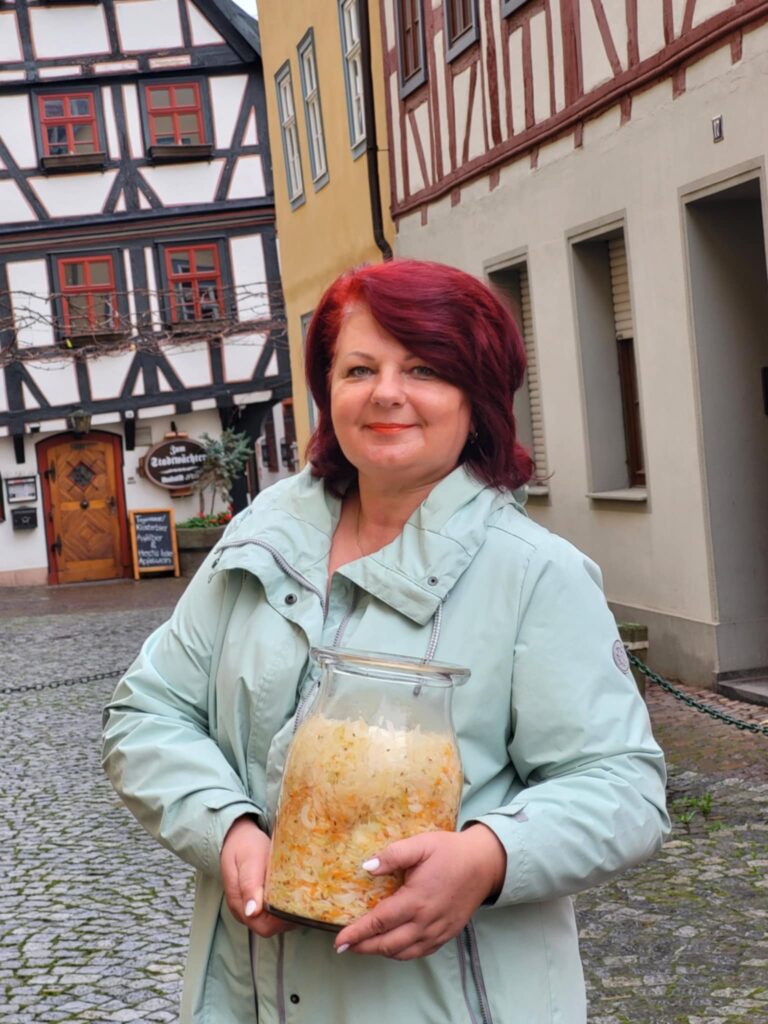
“So it has happened that I’ve been living in Germany for some time now. Homemade food carries a kind of genetic memory — of grandma’s pancakes or dad’s pike patties, those familiar childhood tastes. Even the stewed sauerkraut on the Christmas table reminds me of the cabbage fermenting days at grandma’s countryside home. In autumn, when the big heads of cabbage were harvested from the field, they were piled up in the middle of the yard under a broad oak tree, waiting for busy hands. The yellow oak leaves slowly swirled through the air, falling onto the cabbage heads. The slightly chilly, misty morning was no obstacle to the great cabbage-souring party. A wooden tub was prepared in advance, scalded with boiling water and scrubbed clean. My grandfather made the wooden barrels and tubs himself. From the attic, the cabbage grater was brought down — it had been carefully stored year after year. Grandma, wearing her apron, cleaned each cabbage head thoroughly, peeling away the outer leaves until only the white heart remained. Grandfather placed it on the grater and, pushing the wooden box back and forth, shaved it down. The white cabbage strips, mixed with a few grated carrots and caraway seeds, pleasantly crunched in the barrel under the wooden pestle. The cabbage was pressed until the juice started to separate. When the tub was full, a wooden lid and a stone weight were placed on top, and the cabbage was left to ferment. For about a week, it was poked every day down to the bottom of the barrel so that the gases could escape. From the Lubāna region in Latvia, there’s an old saying that when fermenting cabbage, one should kiss over the tub — then the cabbage will keep well. Everyone who has made sauerkraut can test the truth of that for themselves :))) To make the sauerkraut healthy, rich with good probiotic bacteria that help produce the happiness hormone serotonin in the gut, only salt should be added — 20 grams per 1 kilogram of the combined cabbage and carrot mass. It shouldn’t be oversalted so that it doesn’t need to be rinsed before eating, and all the goodness stays in the cabbage. In the winter season, when someone caught a cold, grandma would hurry to the cellar with a bowl in hand, scoop out some sauerkraut from the big tub, and bring back a dose of vitamin C. For the children, she sprinkled a bit of sugar on top to make it tastier. That vitamin boost would get all the weak ones back on their feet. And there’s strength in sauerkraut juice — many a market woman has revived herself with it after having one drink too many. Cabbage gives strength and health, and that strength goes straight through the stomach. In Germany, I don’t ferment full tubs of cabbage, but smaller amounts — just enough for sauerkraut soup, stewed cabbage with roast pork, or as a salad mixed with chopped onions and oil to eat with pleasure.”
Story submitted by Laila Rudzone. Photograph from Laila’s private collection.
(Originally written in Latvian).
What I Truly Miss Here When I Think of Latvia (Ingrīda Eglīte)
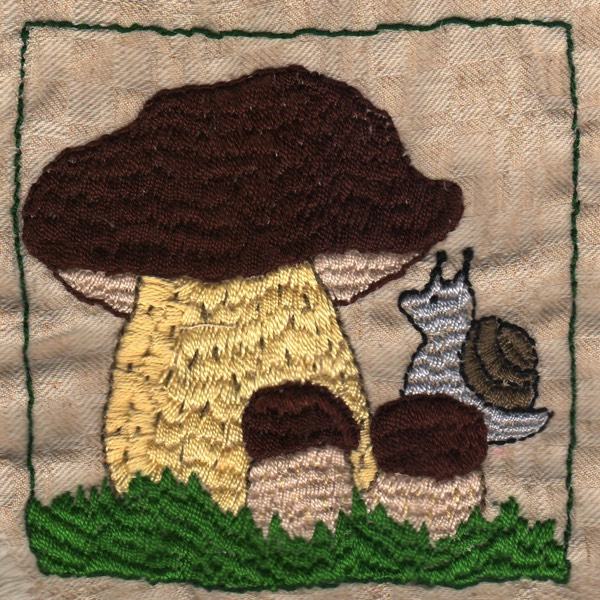
I am not a child of exile, but it so happened that I have been living in Canada for seven years now. Latvia has always been and remains dear and close to my heart. I am proud to have been born in Latvia. This square was created with the idea of showing what I truly miss here when thinking about Latvia. It’s the fragrant forests and fields, the meadows. Mushroom picking, berry picking. Remembering my childhood through Margarita Stāraste’s illustrations and fairy-tale books, this porcini mushroom square was made.
Description submitted by Ingrīda Eglīte for the Museum “Latvians Abroad” project “Story Quilt” (2018)
A Once-a-Year Feast of Latvian Specialities (Maija Liiv)
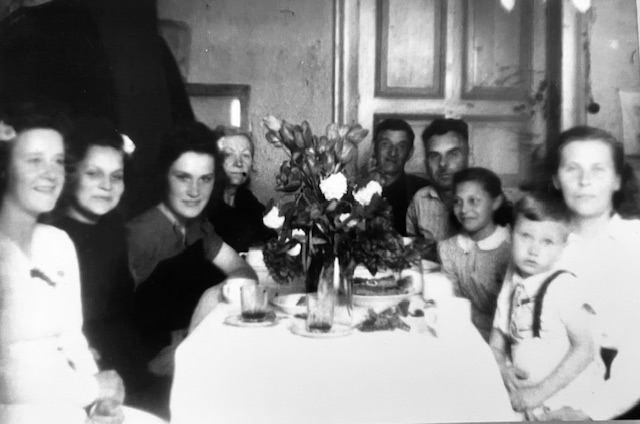
My family left Latvia in 1944, and settled in Brisbane, Queensland, Australia, in 1950 and I was born here. At this pre-Christmas time of year I think back, with nostalgia, to the once-a-year feast of Latvian specialties of my childhood.
My brother and I had birthdays either side of Christmas Day, so there was always a huge family and friends party at our house then.
The anticipation and preparations started long before. I remember taking out our best plates and serving dishes, cleaning the rarely-used silverware, and shopping at the far-away delicatessen that was the only place in those days that had the ingredients we needed for our party table. I loved the sights and smells of that delicatessen, as well as the sounds of many languages spoken by customers.
My mother (Lauma Sīlis) baked her own rye bread and sweet-sour bread, bacon rolls, cinnamon buns and poppy seed buns, pepper cakes, and our birthday tortes. She assembled platters of what seemed ‘exotic’ cold-cuts in those times of comparatively very plain Australian food. There was smoked salmon, rollmop herrings, sprats, smoked eel, tongue, and salami. The making of meat-in-aspic involved a trip the to butcher’s shop to buy a pig’s head. In those days,1950’s 60’s, pigs’ heads (wearing sunglasses, very tropical) were displayed in butcher shop windows.
She also made her own pate, rasols (with beetroot), stuffed eggs, fresh cucumbers in sour cream, and home-pickled cucumbers, and countless other traditional Latvian treats.
Australian Christmas staples were also on the table: ham, home-roasted chicken (after killing and plucking), prawns, trifle, and Christmas fruitcake.
My mother Lauma did all this as a single mother (separated), who also worked in full-time employment as a shop assistant. I honour her for her effort, her planning and coordination, her ability to save all year for this annual expense, and most of all for her love and for her incredible culinary talent. This woman, who left Latvia as a 17 year old, gave us our Latvian heritage and the most amazing childhood birthday/Christmas memories. Unforgettable.