

Crystallised ginger piparkūkas (Maija Liiv)
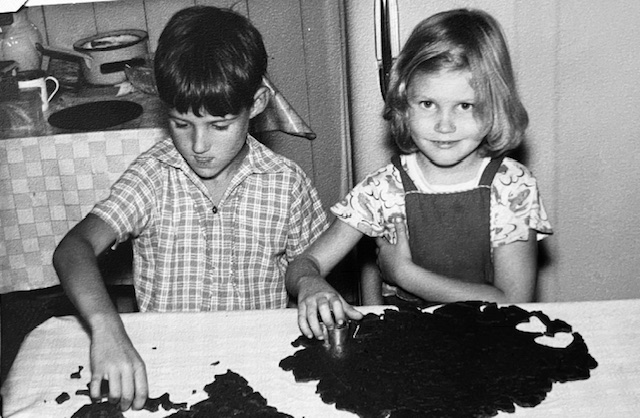
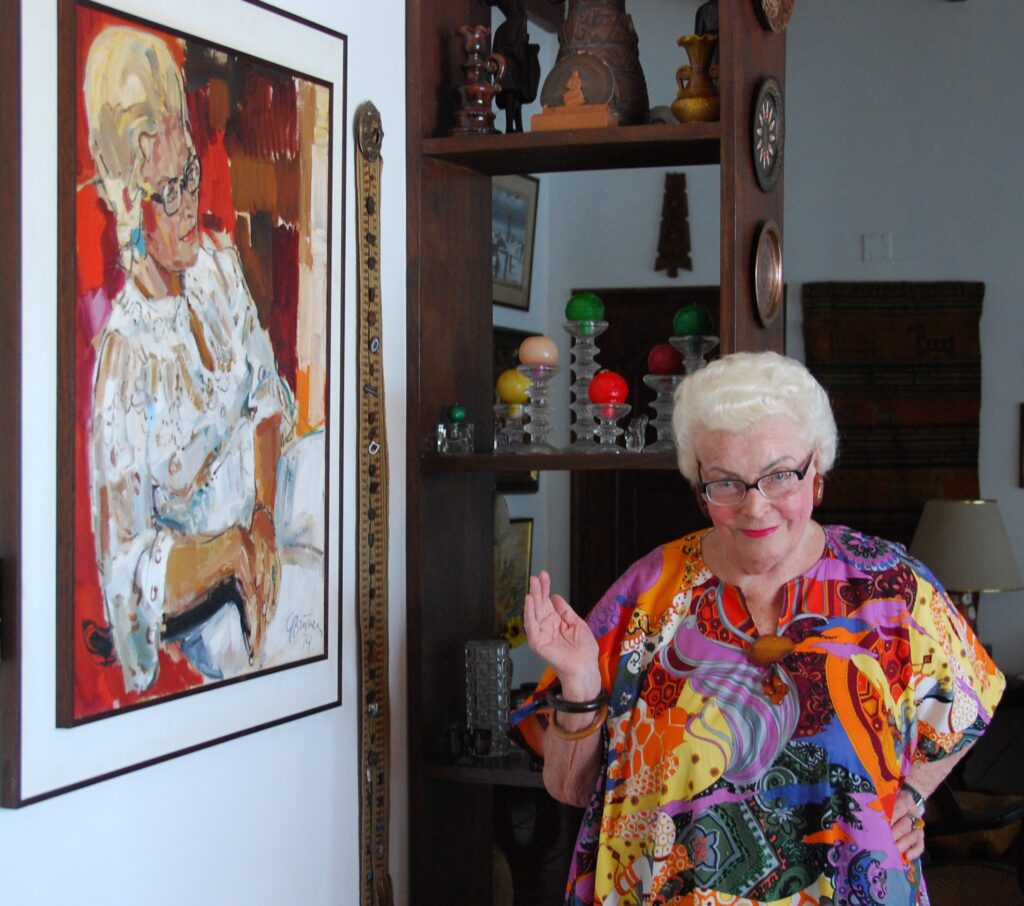
My mother Lauma taught me to make piparkukas when I was a little girl, and I still make them now that I am 75.
I was born in Brisbane, Australia, in December 1950, and lived there all my life until moving 100km north to the Sunshine Coast in 2016.
I still use my mother’s piparkuka recipe, with only a couple of variations. Where my mother used Golden Syrup, I now sometimes use Treacle and brown sugar. We always used to put a slivered almond in the centre of each piparkuka, like generations of my family in Latvia have always done, but now that we live in a ginger-growing area (Buderim) we are placing a small piece of crystallised ginger in the centre of each piparkuka, and find it delicious.
Now I can give my recipe to everyone! (Dzidra Ādamsone)
Dzidra Ādamsone writes about her pīrāgi recipe in an email in 2003.
One recipe in three versions (Ilma Wilkinson)
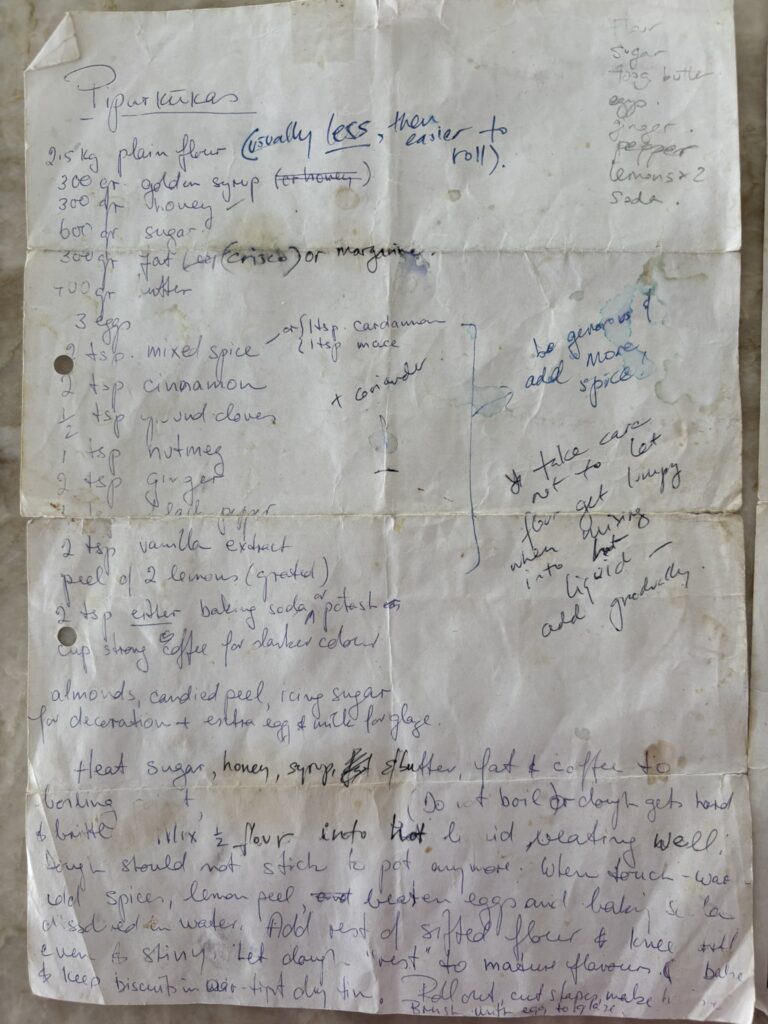
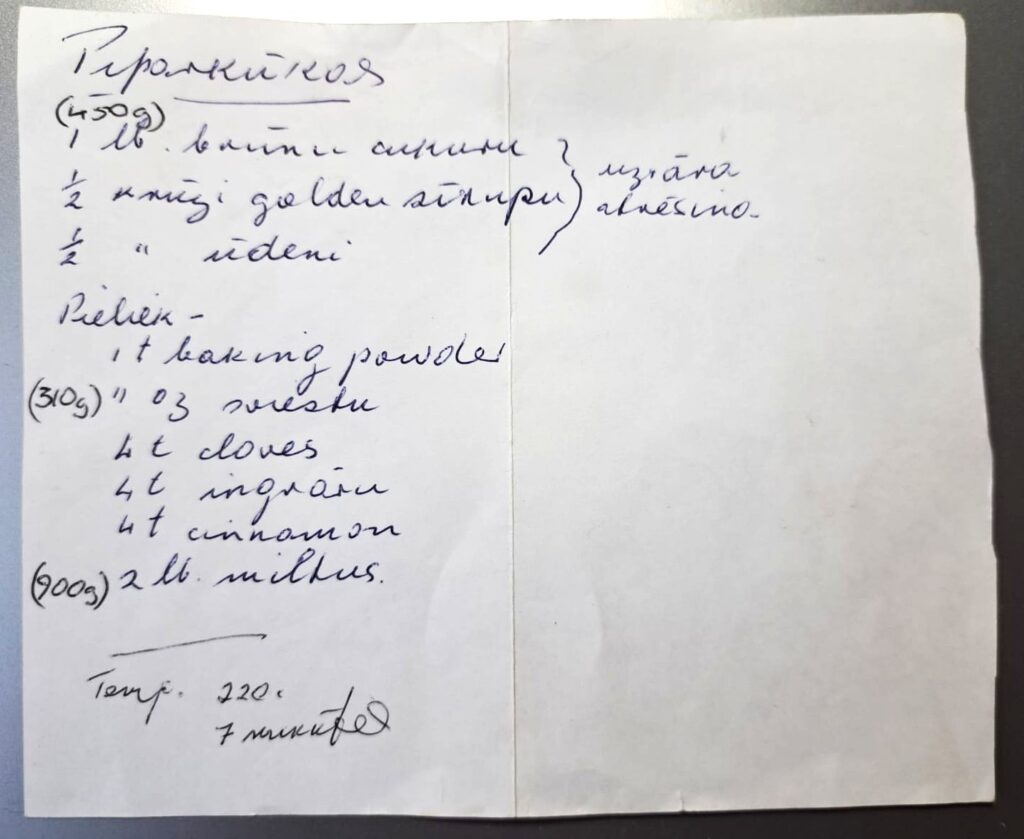
Ilma explains: “The basis of the recipe comes from M. Krone-Balduma’s cookbook Everyday and Holiday Table: A Handbook for the Latvian Homemaker (Daugava: Stockholm, 1956). My mother received that book as a gift from her own mother for Christmas in 1964 (my parents’ first Christmas as a married couple). We don’t follow the recipe to the letter and we change a few things (what kind of fat to use, or syrup, and I always use considerably more spices than written—2–3 times more).”
The photographs show three versions of this recipe: the first, copied from Krone-Balduma’s cookbook and sent by fax to Ilma—who at the time was in Shanghai—from her sister’s office in Brisbane, Australia. The second is Ilma’s mother Māra’s handwritten version of the recipe, translated into English, with Ilma’s own notes added. The third is a version of the recipe published in the cookbook produced by Ilma’s sons’ kindergarten in English. It mentions that one kindergarten family used this dough to make the base for a cheesecake!
My family pīrāgi recipe – with commentary (Aivars Sinka)

Aivars Sinka: “Quite often my English acquaintances wanted to try baking pīrāgi, so I wrote the recipe in English. I used to bake a lot. It felt important to me that my daughters understood that Latvian food is different from English food. I often put a pīrāgs in their school lunchbox.
I bake my pīrāgi using the same recipe my mother used and, very likely, the one her mother used as well.”
I remember mountains of piparkūkas! (Māra Goldsmith)
My mother first baked this recipe before 1951. I remember how she and her friend, in the heat of the Australian summer, would spend hours rolling out the dough, cutting it, and baking batch after batch so there would be enough gingerbread for both families to give to colleagues, teachers, and friends. I still recall the enormous mountains of gingerbread that covered almost the entire kitchen counter!
We still bake them every year, though now in smaller quantities—just enough for us to enjoy.
These gingerbread cookies are fragrant, dark brown, and wonderfully crisp.
A Mindful Pīrāgi Making Adventure (Dace Dambergs)
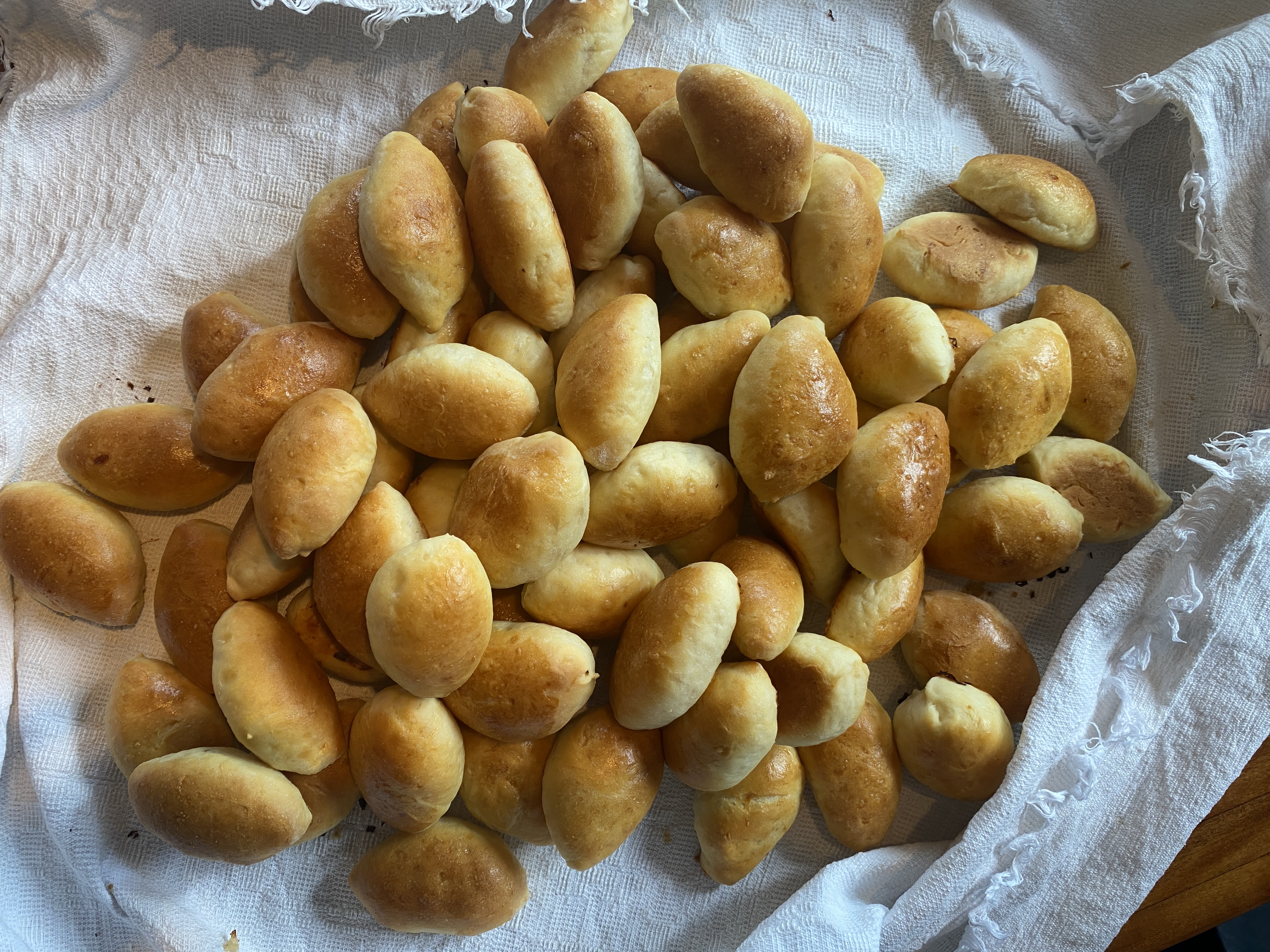
Dace Dambergs has a “”foolproof”” pīrāgi recipe, that she has adapted from Mrs Silmanis’ 1960s recipe for “”Savoury Bacon Rolls””, which she entered in to the iconic Australian women’s magazine “”The Women’s Weekly”” recipe competition, winning a prize. Dace explains: “”The art of making pīrāgi is steeped in Latvian legend and folklore. For centuries grandmothers, mothers and daughters sat around many a table plying their art and chatting about ‘women’s business’. This pīrāgi recipe relies on 21st century ‘mod cons’ making the task somewhat less strenuous and stressful.These include a mixmaster with a dough hook, a microwave, cling wrap, baking paper and an electric blanket. The recipe does however call for a mindful, albeit eastern philosophical approach to the pīrāgi making process.”” The photographs demonstrate step-by-step dough preparation, as prepared by Inga Česlis (Brisbane).
Even the cat smells like cabbage… (Irene Kreilis)

Irene Kreilis: “I prepare braised cabbage according to my own recipe: white pepper, bay leaves, fry the bacon, grind it, fry the onions, caraway seeds. A good amount of brown sugar also helps — half a cup. Six hours in the oven. As it bakes, the edges burn, and that’s the most delicious part. I grate carrots. The cabbage can be reheated for a week. The children complained that even the cat smells like cabbage! The whole house smelled — coats, clothes.”
Story recorded and submitted by Dagnija Roderte.
The secret ingredient is faith (Inga Lucāns)
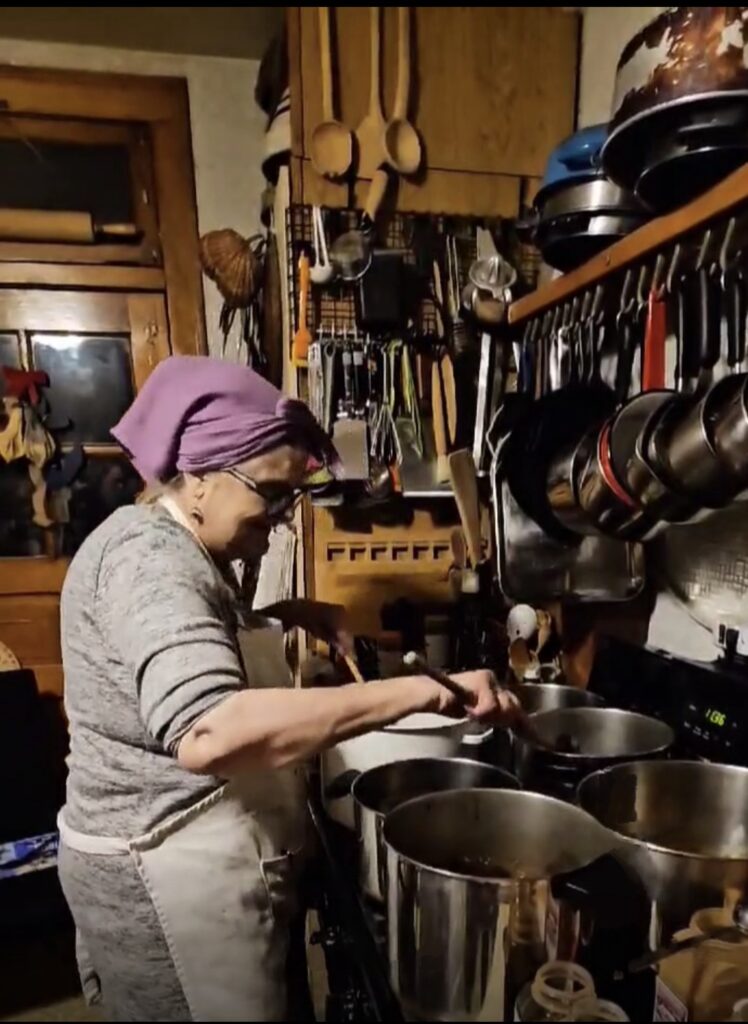
Inga shares her many years of experience in baking piparkūkas and pīrāgi. She believes that there are no secrets to making pīrāgi, people shouldn’t be afraid to give it a try, because it’s really not that difficult. However, when it comes to piparkūkas, the secret ingredient, according to Inga, is faith in the dough!
Grandma’s secret ingredient used in pickled vegetables (Ana Beatrise Apse-Paese)
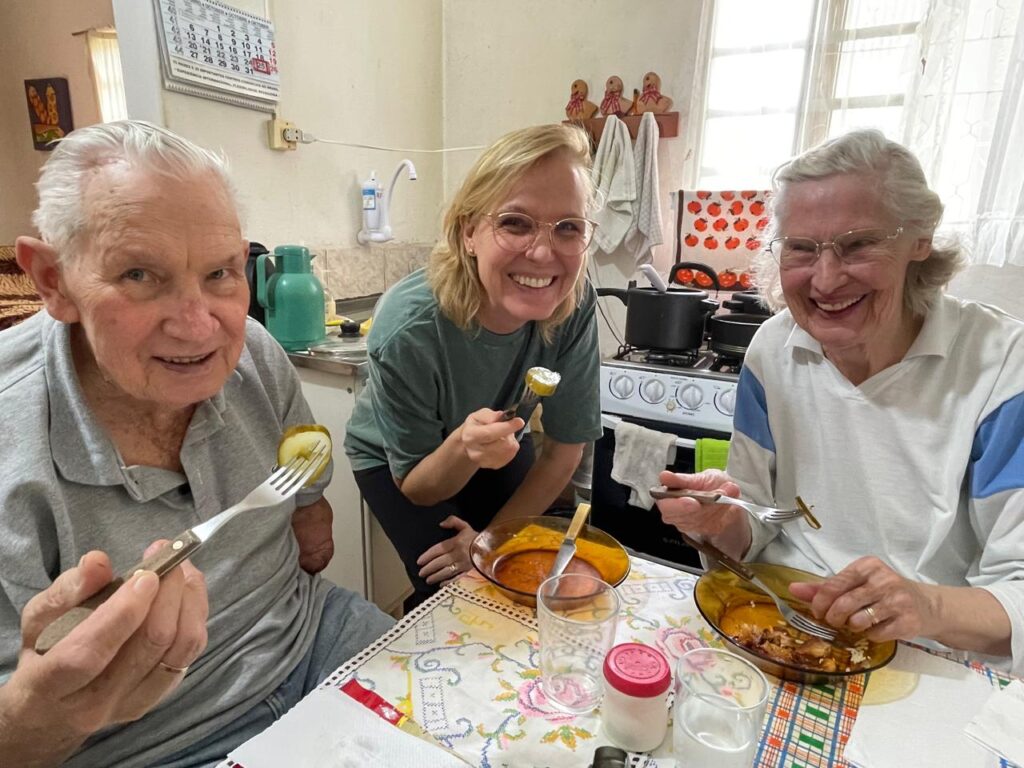
“My grandma, Eunise, pickles vegetables on the regular. Cucumber, carrots and cauliflower. She adds onion and garlic and her secret ingredient are cloves. She cooks them in water, vinegar and salt (two cups of vinegar for four large cucumbers) until the cucumber loses its green hues and then stores it in jars in the fridge. My grandparents eat pickled vegetables everyday at lunchtime. As kids, me and my siblings were never fond of pickled vegetables, but my mom, Leila, has always had quite Latvian tastebuds, so, when we went out to eat burgers, we would all pick out the pickles to give to her, who gladly ate them. As a grown-up, I now appreciate my grandma’s pickles and reproduce them in my small apartment in Germany, where I study.””
Story submitted by Ana Beatrise Apse-Paese. Photos are from Ana’s personal archive.
Liene makes kotletes (rissoles)
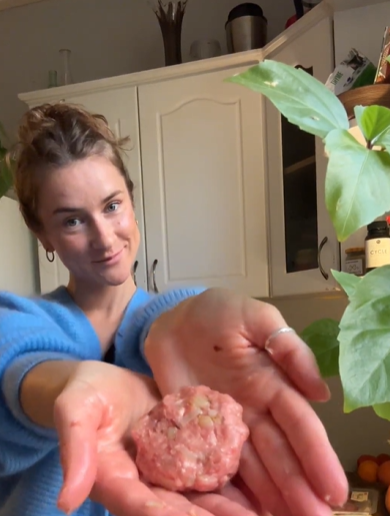
Liene’s grandmother Biruta always makes the yummiest kotletes (rissoles). But in her childhood Liene didn’t realize that they contained onions…