

It smells of braised sauerkraut! (Juris Sinka)

Juris Sinka arrived in the United Kingdom in 1950, where he studied at the University of Oxford. In his diary entry of December 20, 1950, Juris describes how the smell of cabbage filled the recently purchased Daugavas Vanagi house in Queensborough Terrace:
‘I am truly very glad that this house now belongs to Latvians. At the moment it smells of braised sauerkraut! It’s a pity I didn’t talk to the landlady—maybe she would have given me a portion. There isn’t any real catering set up yet. They have only been here for two weeks.’
When fermenting cabbage, you have to kiss over the barrel (Laila Rudzone)
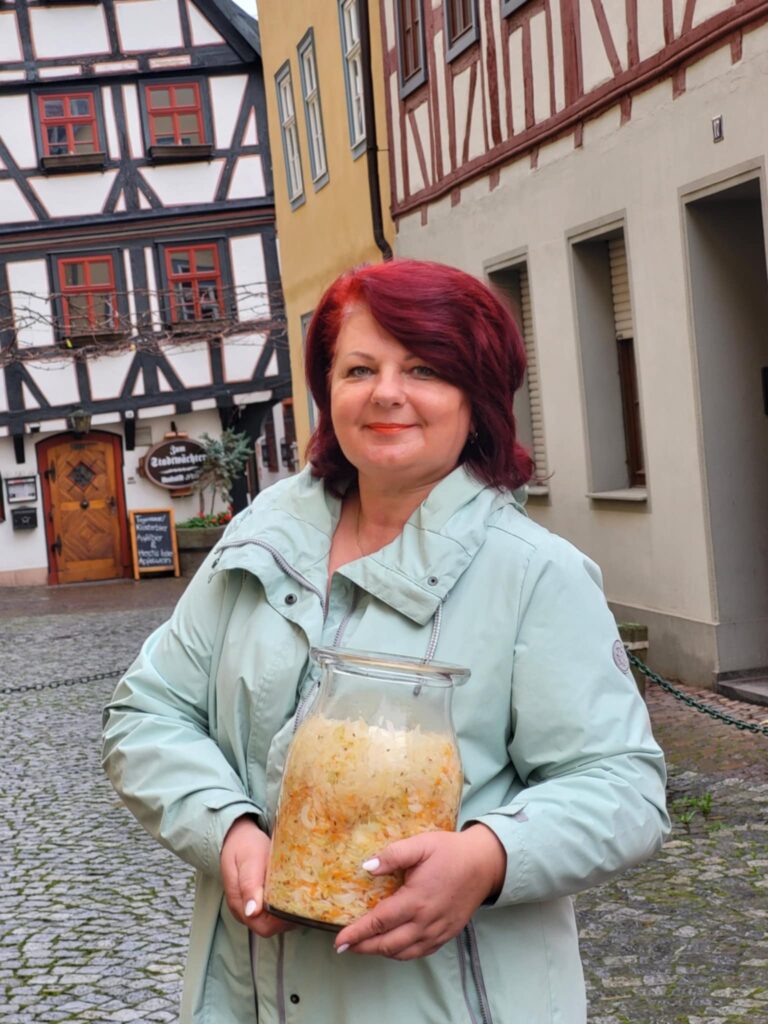
“So it has happened that I’ve been living in Germany for some time now. Homemade food carries a kind of genetic memory — of grandma’s pancakes or dad’s pike patties, those familiar childhood tastes. Even the stewed sauerkraut on the Christmas table reminds me of the cabbage fermenting days at grandma’s countryside home. In autumn, when the big heads of cabbage were harvested from the field, they were piled up in the middle of the yard under a broad oak tree, waiting for busy hands. The yellow oak leaves slowly swirled through the air, falling onto the cabbage heads. The slightly chilly, misty morning was no obstacle to the great cabbage-souring party. A wooden tub was prepared in advance, scalded with boiling water and scrubbed clean. My grandfather made the wooden barrels and tubs himself. From the attic, the cabbage grater was brought down — it had been carefully stored year after year. Grandma, wearing her apron, cleaned each cabbage head thoroughly, peeling away the outer leaves until only the white heart remained. Grandfather placed it on the grater and, pushing the wooden box back and forth, shaved it down. The white cabbage strips, mixed with a few grated carrots and caraway seeds, pleasantly crunched in the barrel under the wooden pestle. The cabbage was pressed until the juice started to separate. When the tub was full, a wooden lid and a stone weight were placed on top, and the cabbage was left to ferment. For about a week, it was poked every day down to the bottom of the barrel so that the gases could escape. From the Lubāna region in Latvia, there’s an old saying that when fermenting cabbage, one should kiss over the tub — then the cabbage will keep well. Everyone who has made sauerkraut can test the truth of that for themselves :))) To make the sauerkraut healthy, rich with good probiotic bacteria that help produce the happiness hormone serotonin in the gut, only salt should be added — 20 grams per 1 kilogram of the combined cabbage and carrot mass. It shouldn’t be oversalted so that it doesn’t need to be rinsed before eating, and all the goodness stays in the cabbage. In the winter season, when someone caught a cold, grandma would hurry to the cellar with a bowl in hand, scoop out some sauerkraut from the big tub, and bring back a dose of vitamin C. For the children, she sprinkled a bit of sugar on top to make it tastier. That vitamin boost would get all the weak ones back on their feet. And there’s strength in sauerkraut juice — many a market woman has revived herself with it after having one drink too many. Cabbage gives strength and health, and that strength goes straight through the stomach. In Germany, I don’t ferment full tubs of cabbage, but smaller amounts — just enough for sauerkraut soup, stewed cabbage with roast pork, or as a salad mixed with chopped onions and oil to eat with pleasure.”
Story submitted by Laila Rudzone. Photograph from Laila’s private collection.
(Originally written in Latvian).
Mom runs around the stores looking for the “right” kind of cabbage

Inese Šteinbaha: We make our own sauerkraut. My mom, Māra Rozenberga, is the one running around the stores looking for the right kind of cabbage. She knows exactly what they should be like. We even have our own cabbage slicer, brought from Latvia.
How can you shred cabbage without having a beer? (Pēteris Freimanis)
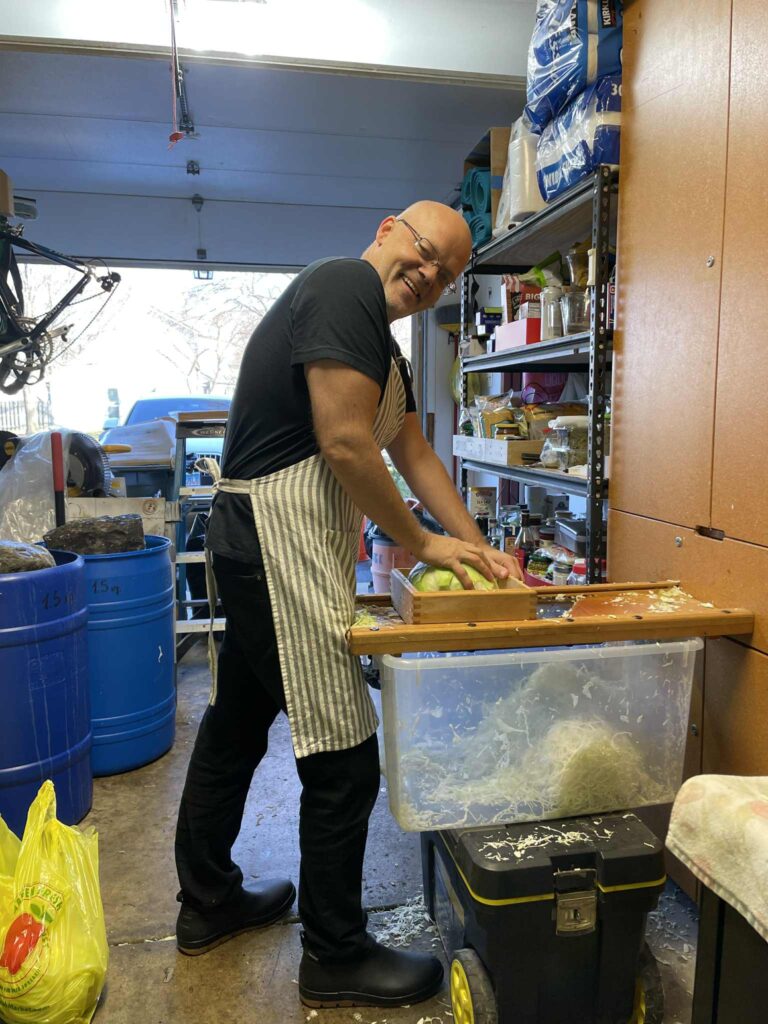
Pēteris Freimanis shares childhood memories of his grandmother’s sauerkraut and tells how he began fermenting cabbage himself, inspired by his friend Aigars. This activity has become a tradition for him.
Fermenting for three generations in Canada (Aija Zichmane)

Aija Zichmane (née Bramane)’s parents began fermenting cabbage in Canada in the 1960s. When they grew older, the sauerkraut-making tradition — along with the large fermentation barrel — was taken over by Aija and her husband Klāvs. Every autumn, they organized sauerkraut-making gatherings, involving a wide circle of relatives and friends. Today, the tradition is carried on by the next generation, and Aija’s son-in-law, a Canadian named Brad, has been crowned the “Cabbage King”!
Sauerkraut-making workshop in Melbourne
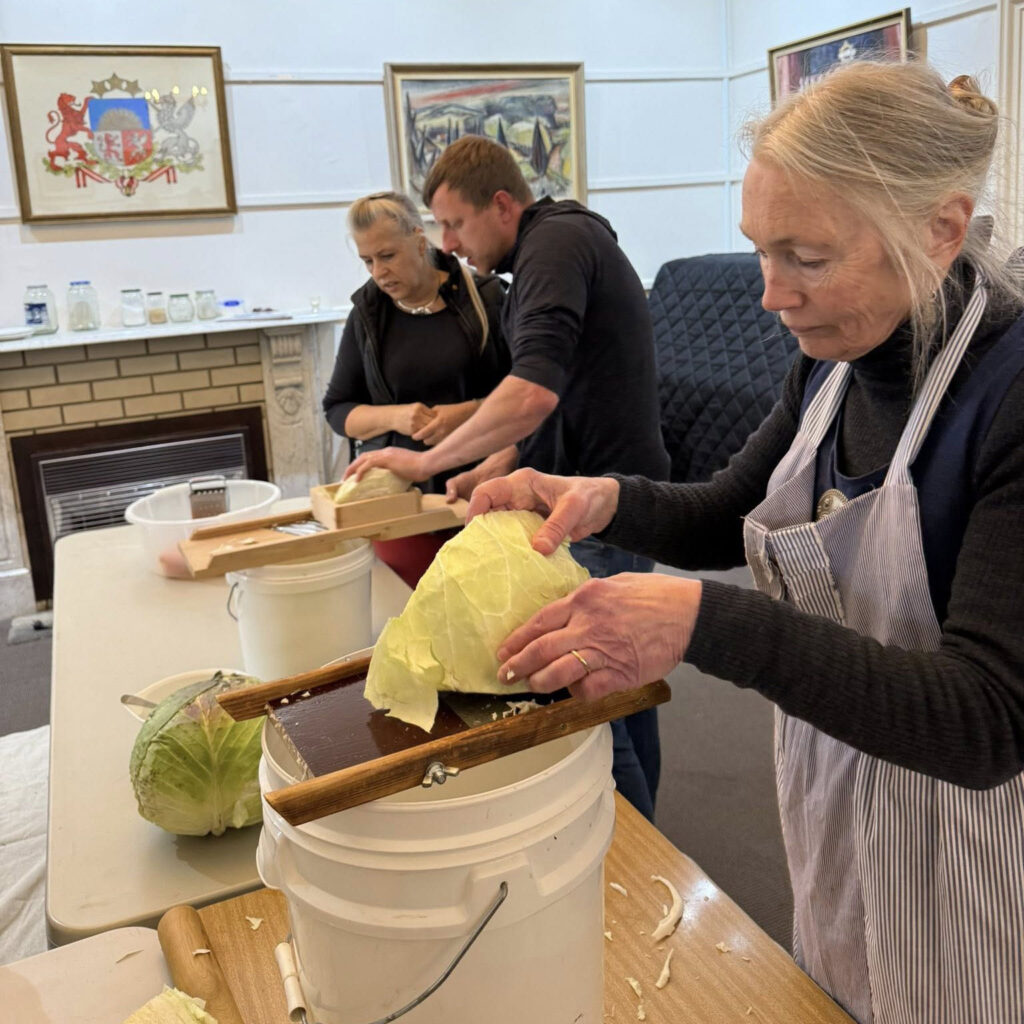
A sauerkraut making workshop was held in the Latvian House in Melbourne on 26 July 2025. The workshop was organized and led by Arturs Landsbergs, and proceeds were donated to the organization of 3×3 camp. Video filmed and edited by Agnese Krūze.
Grandma taught me how to ferment cabbage (Kalvis Mikelšteins)

Every year, Kalvis Mikelšteins ferments cabbage, which he then sells at Latvian Christmas markets in the USA. Cabbage is almost his favorite vegetable — he enjoys eating it cold, adding fresh apple slices and sometimes freshly chopped onion.
It took two or three days and the sauerkraut was ready (Nestors Refbergs)

Nestors Refbergs was born in the Latvian colony Letonija in Brazil in 1933. He recalls how his mother made sauerkraut: she crushed the cabbage in a wooden dough trough and then transferred it into a special ceramic fermentation pot. After two or three days, the sauerkraut was ready!
A Latvian Heart and Expensive Dill (Iveta Leitase)
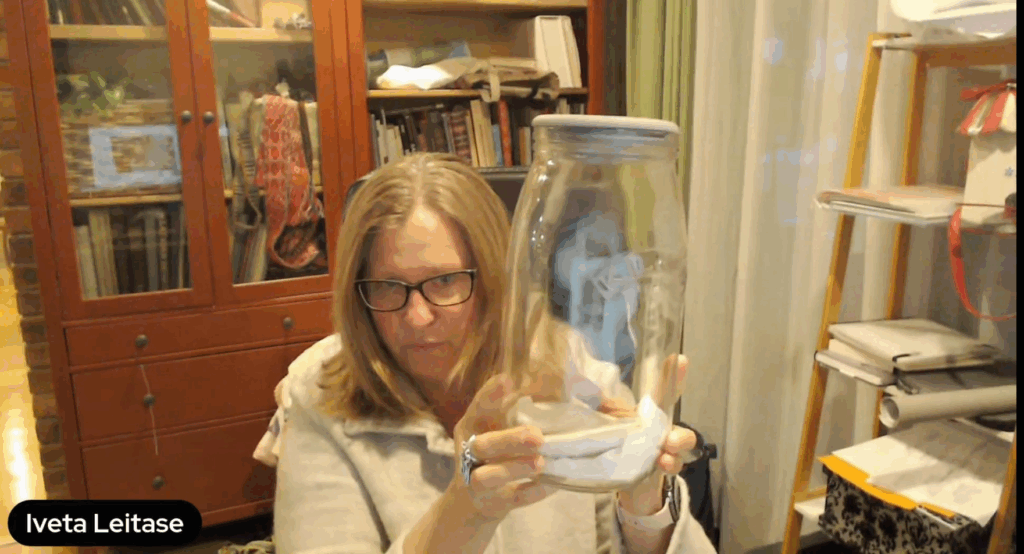
Iveta Leitase in Canberra, Australia makes sauerkraut and lightly salted cucumbers.
Latvians in Bergen ferment cabbage for shared celebrations

Cabbage fermenting working bee in Bergen in the fall of 2025.