

Piparkūkas in Romania (Laura Sarkane)
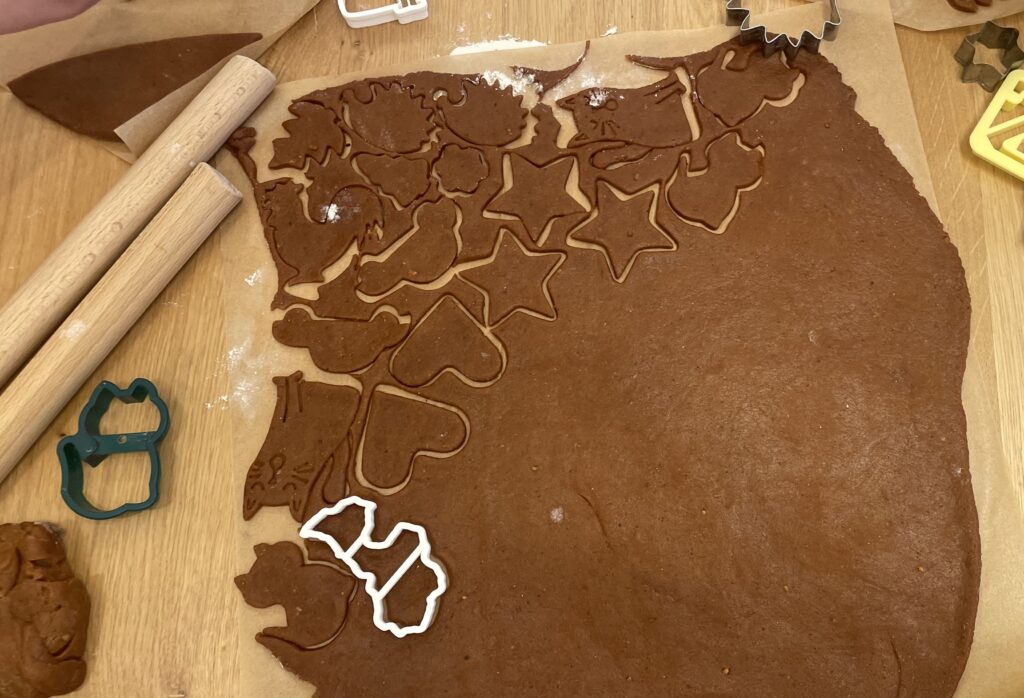
Laura: My husband, while learning Latvian, tried to say speķa pīrāgi (bacon buns), but it just wouldn’t come out right, and the best he managed in the end was — piranhas.
Crystallised ginger piparkūkas (Maija Liiv)
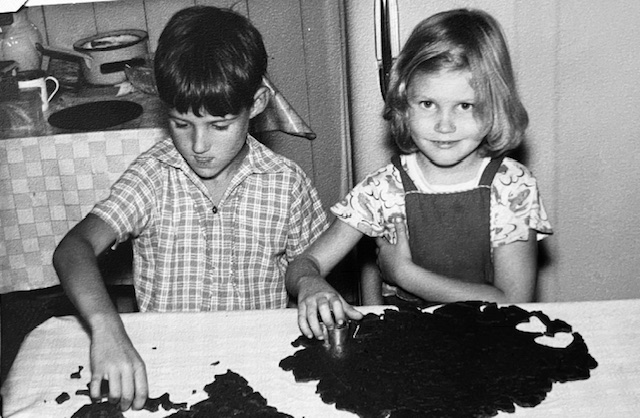
My mother Lauma taught me to make piparkukas when I was a little girl, and I still make them now that I am 75.
I was born in Brisbane, Australia, in December 1950, and lived there all my life until moving 100km north to the Sunshine Coast in 2016.
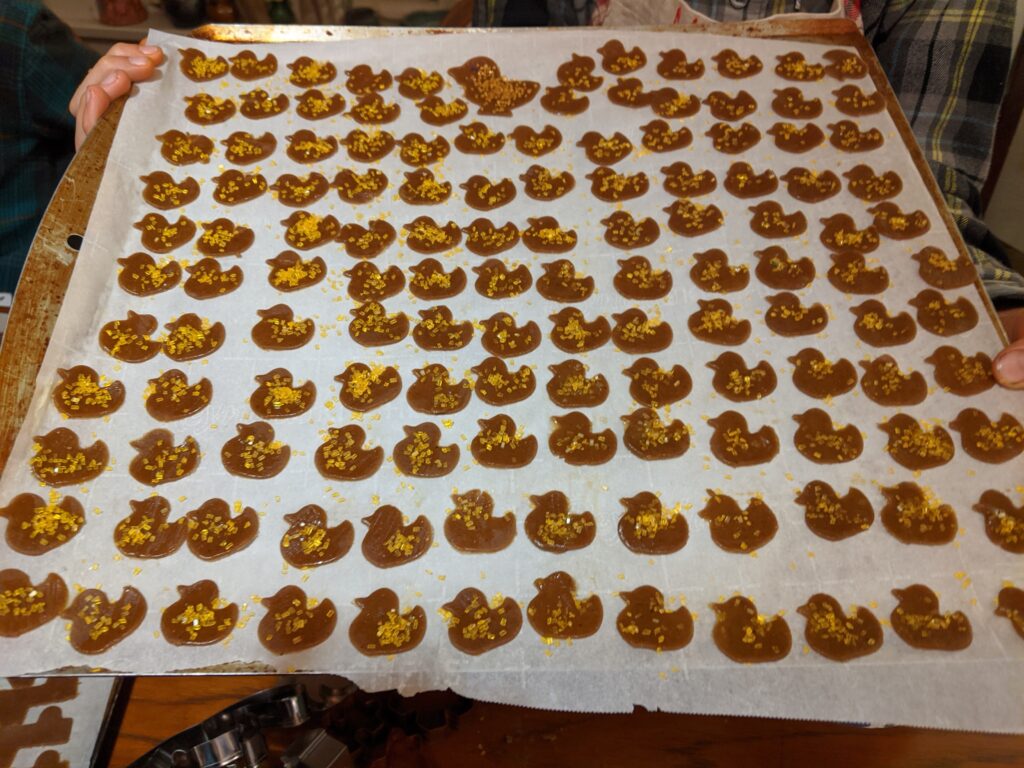
I still use my mother’s piparkuka recipe, with only a couple of variations. Where my mother used Golden Syrup, I now sometimes use Treacle and brown sugar. We always used to put a slivered almond in the centre of each piparkuka, like generations of my family in Latvia have always done, but now that we live in a ginger-growing area (Buderim) we are placing a small piece of crystallised ginger in the centre of each piparkuka, and find it delicious.
Latvian School of Chicago piparkūku working bee
Watch how a piparkūku working bee takes place at the Latvian School of Chicago! Participants share their experiences, the meaning and importance of piparkūkas, as well as what they like most about piparkūkas…
Now I can give my recipe to everyone! (Dzidra Ādamsone)
Dzidra Ādamsone writes about her pīrāgi recipe in an email in 2003.
Pīrāgi making outside Latvia: photographs from the collection of the museum “Latvians Abroad”
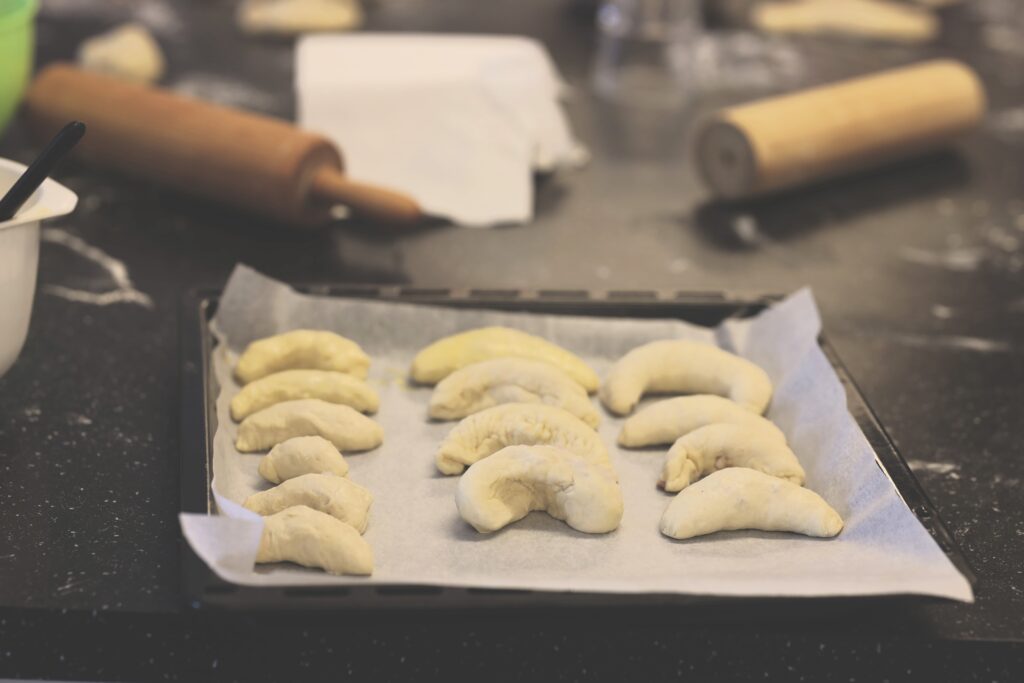
This album features photographs of pirāgi making in various corners of the world and across different periods of time.
One recipe in three versions (Ilma Wilkinson)
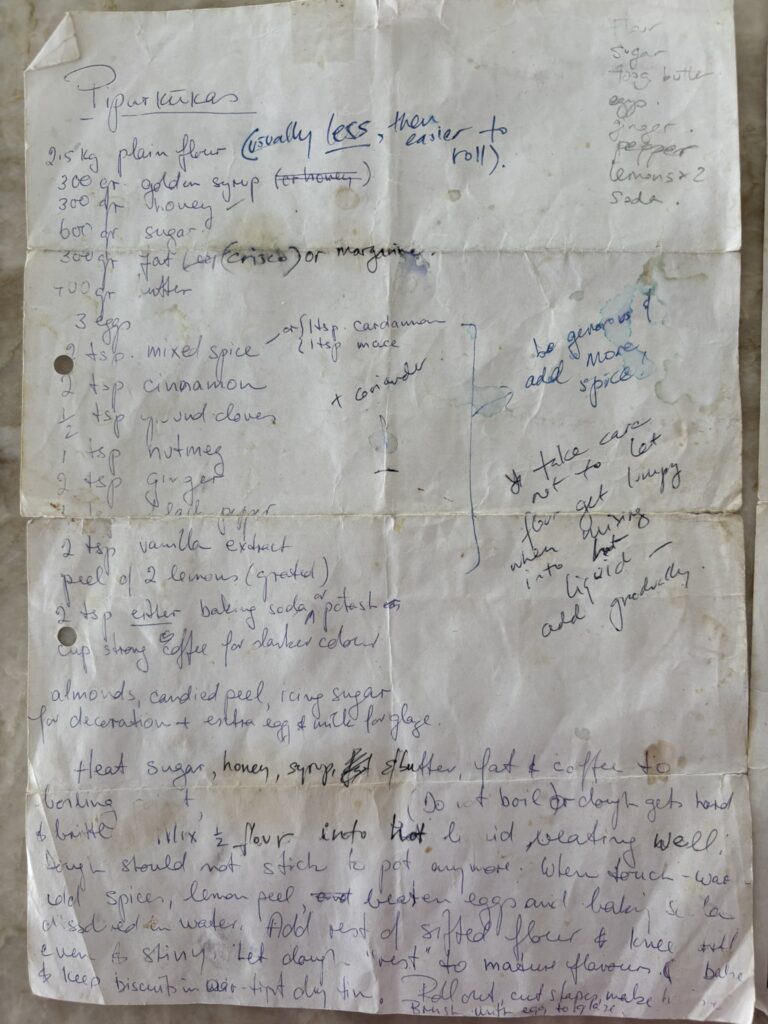
Ilma explains: “The basis of the recipe comes from M. Krone-Balduma’s cookbook Everyday and Holiday Table: A Handbook for the Latvian Homemaker (Daugava: Stockholm, 1956). My mother received that book as a gift from her own mother for Christmas in 1964 (my parents’ first Christmas as a married couple). We don’t follow the recipe to the letter and we change a few things (what kind of fat to use, or syrup, and I always use considerably more spices than written—2–3 times more).”
The photographs show three versions of this recipe: the first, copied from Krone-Balduma’s cookbook and sent by fax to Ilma—who at the time was in Shanghai—from her sister’s office in Brisbane, Australia. The second is Ilma’s mother Māra’s handwritten version of the recipe, translated into English, with Ilma’s own notes added. The third is a version of the recipe published in the cookbook produced by Ilma’s sons’ kindergarten in English. It mentions that one kindergarten family used this dough to make the base for a cheesecake!
We send pīrāgi by mail! (Dace Gulbe un Inta Grunde)
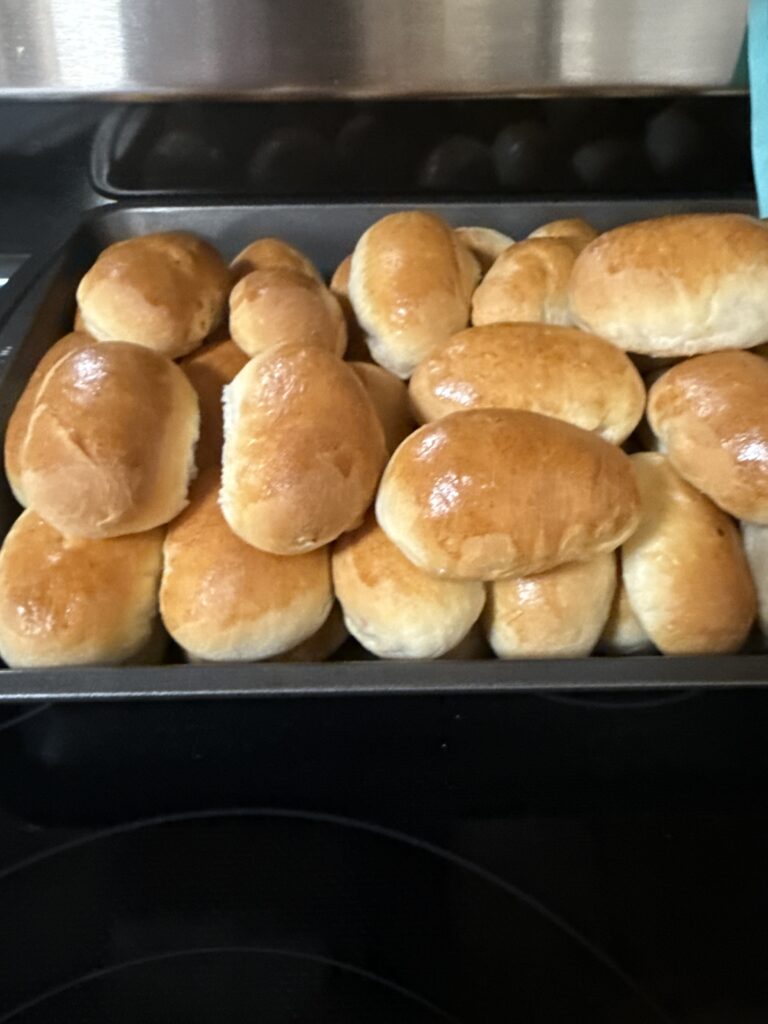
Dace and Inta talk about baking pīrāgi, sending them by mail, and the different fillings they make.
Pīrāgi is a comforting food for me (Māra Goldsmith)
The pīrāgi recipe that Māra Goldsmith uses every year when baking pīŗāgi for Christmas was passed down to her by Mrs. Arnoldija in Sydney. In this interview, Māra talks about a special trick that makes the dough magical. According to her, it is exactly this that allows you to bake the most delicious pīrāgi in the world!
It’s not Christmas without pīrāgi (Anda Cook)
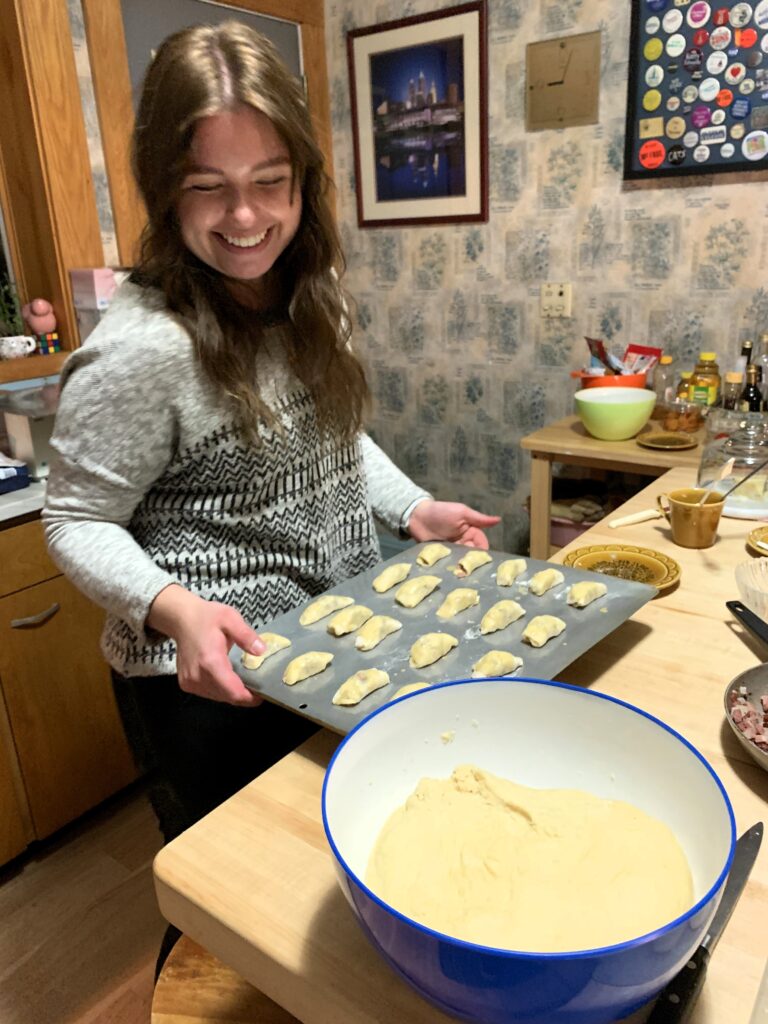
For as long as I can remember, pīrāgi held a place of honor at the Christmas table, and also at Easter. The necessary ingredients were not always easy to find, but my mother made sure to get them in time. In Cleveland, she had discovered a stall at the Westside Market, where she would go after work on Fridays. Her pīrāgi were not only delicious, but she always tried to make them very small, with plenty of meat filling.
My mother has been gone for a long time, and together with my daughter Lisa and granddaughter Greily, we have tried various recipes – but none are quite like my mother’s pīrāgi, neither in appearance nor in taste. The closest we’ve come was a few years ago. We use Dzidra Zeberiņa’s Ģimenes pavards (with a few variations – ed.).
It’s a lot of work, but we listen to Latvian folk songs and linger over memories. Sometimes, it even happens that a pīrāgs gets burned at both ends! And, of course, it’s not Christmas without pīrāgi.
It smells of braised sauerkraut! (Juris Sinka)
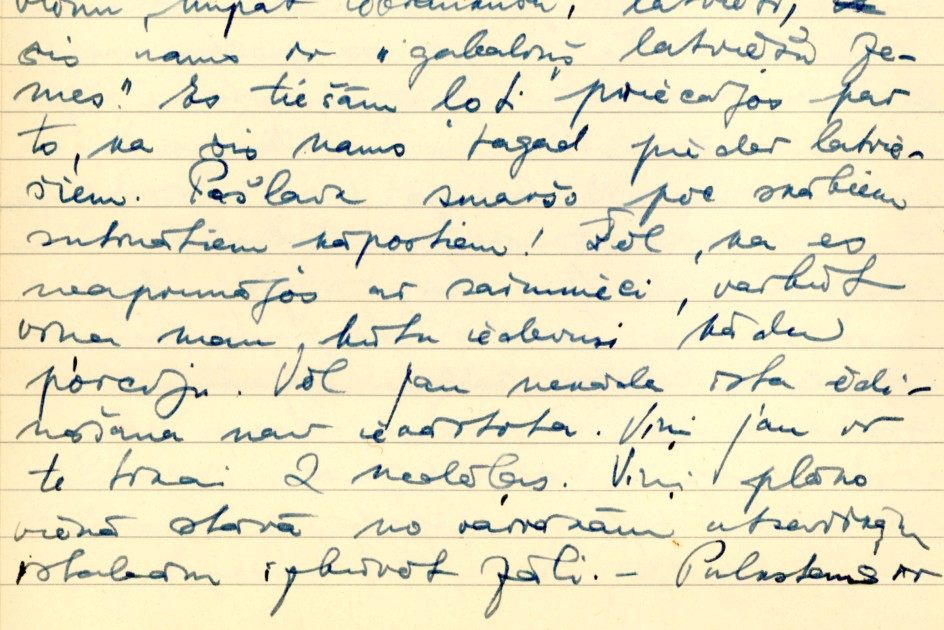
Juris Sinka arrived in the United Kingdom in 1950, where he studied at the University of Oxford. In his diary entry of December 20, 1950, Juris describes how the smell of cabbage filled the recently purchased Daugavas Vanagi house in Queensborough Terrace:
‘I am truly very glad that this house now belongs to Latvians. At the moment it smells of braised sauerkraut! It’s a pity I didn’t talk to the landlady—maybe she would have given me a portion. There isn’t any real catering set up yet. They have only been here for two weeks.’