

Mayse Artisan Bakery (Aleksandrs Strelīts-Strēle and Elīna Krieviņa)
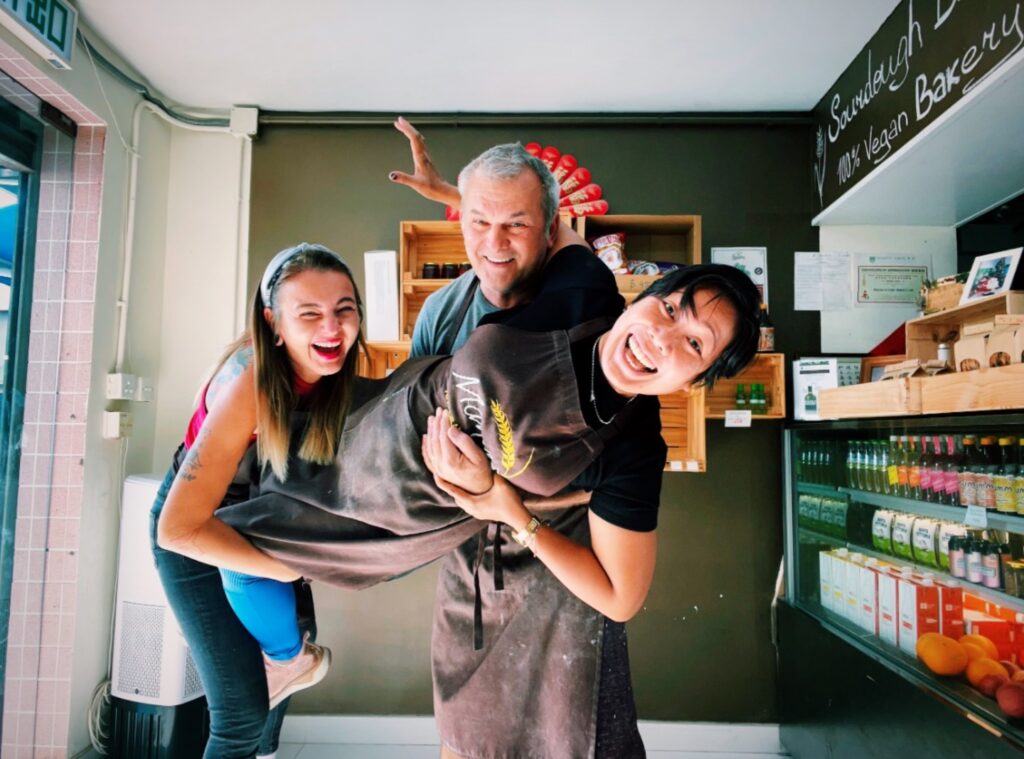
How did the “Mayse” bakery come to be in Hong Kong? Aleksandrs and his daughter Elīna talk about their bakery, which has been operating for eight years and has become a well-known and popular plant-based bakery among local residents in Hong Kong.
One recipe in three versions (Ilma Wilkinson)
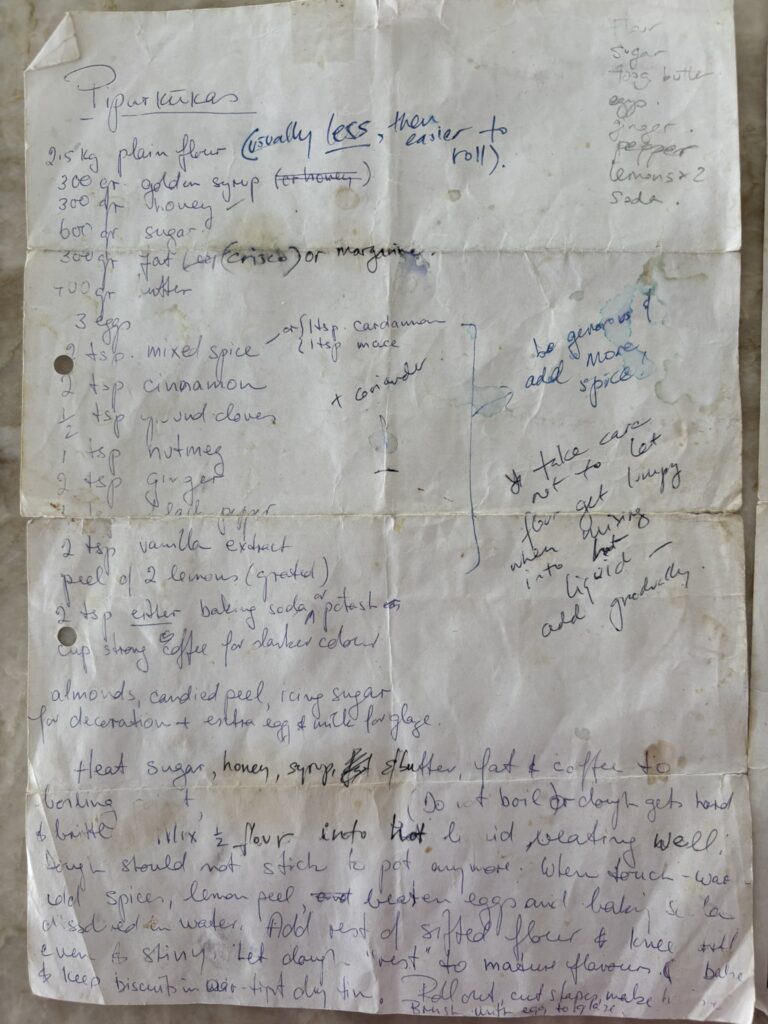
Ilma explains: “The basis of the recipe comes from M. Krone-Balduma’s cookbook Everyday and Holiday Table: A Handbook for the Latvian Homemaker (Daugava: Stockholm, 1956). My mother received that book as a gift from her own mother for Christmas in 1964 (my parents’ first Christmas as a married couple). We don’t follow the recipe to the letter and we change a few things (what kind of fat to use, or syrup, and I always use considerably more spices than written—2–3 times more).”
The photographs show three versions of this recipe: the first, copied from Krone-Balduma’s cookbook and sent by fax to Ilma—who at the time was in Shanghai—from her sister’s office in Brisbane, Australia. The second is Ilma’s mother Māra’s handwritten version of the recipe, translated into English, with Ilma’s own notes added. The third is a version of the recipe published in the cookbook produced by Ilma’s sons’ kindergarten in English. It mentions that one kindergarten family used this dough to make the base for a cheesecake!
Communal baking in Shanghai (Ilma Wilkinson)
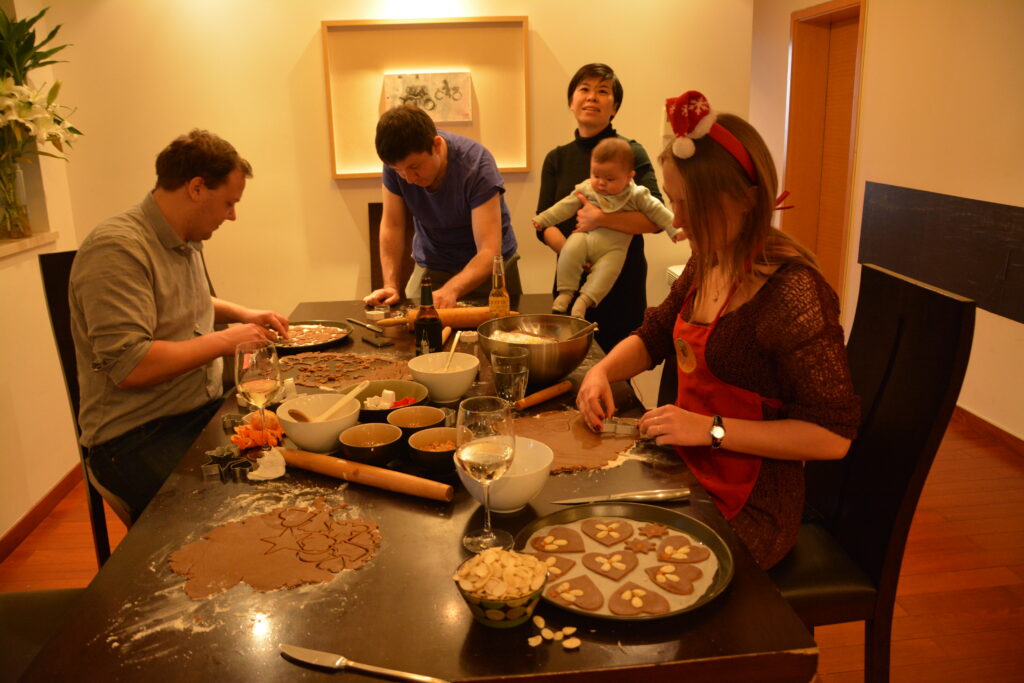
Ilma Wilkinson: “I bake piparkūkas every year — for me, Christmas just isn’t Christmas without “real” Latvian gingerbread. We used to bake together as a family, but when we moved to Shanghai in 2004, we began inviting friends and colleagues to join the tradition — Chinese, Australians, Europeans. In the early years, finding all the necessary spices was more difficult, and some I even had to grind myself.
In 2013, for the first time, the bakers were only Latvians, and the joy of being together was so great that from then on we continued baking gingerbread specifically with the Latvian crowd. We soon added pīrāgi to the tradition as well. Many friends lived in student dorms or apartments without an oven (common in Chinese kitchens), but we were renting a newer apartment and had one available. For those who couldn’t join on the planned baking day, I handed out little portions of piparkūkas dough (which my husband Andrew jokingly called “hashish blocks”) so they could bake at home. By December, our office reception had even gotten used to people dropping by to pick up a lump of dough.
In 2020, we had the largest group ever — because of COVID, many couldn’t travel home for the holidays. That also turned out to be our last Christmas season in Shanghai, as we returned to Australia in October 2021.
To my great joy, I recently received a message from a friend who still lives in China — two years ago, the Latvian Embassy allowed the community to use its kitchen and oven for baking pīrāgi. The new ambassador’s spouse has embraced this as a tradition, and this year, on the first Sunday of Advent, Latvians in Shanghai once again gathered to bake Christmas treats together!”