
Pork Aspic (Ingrīda Hawke)

Melbourne, Australia

INGREDIENTS
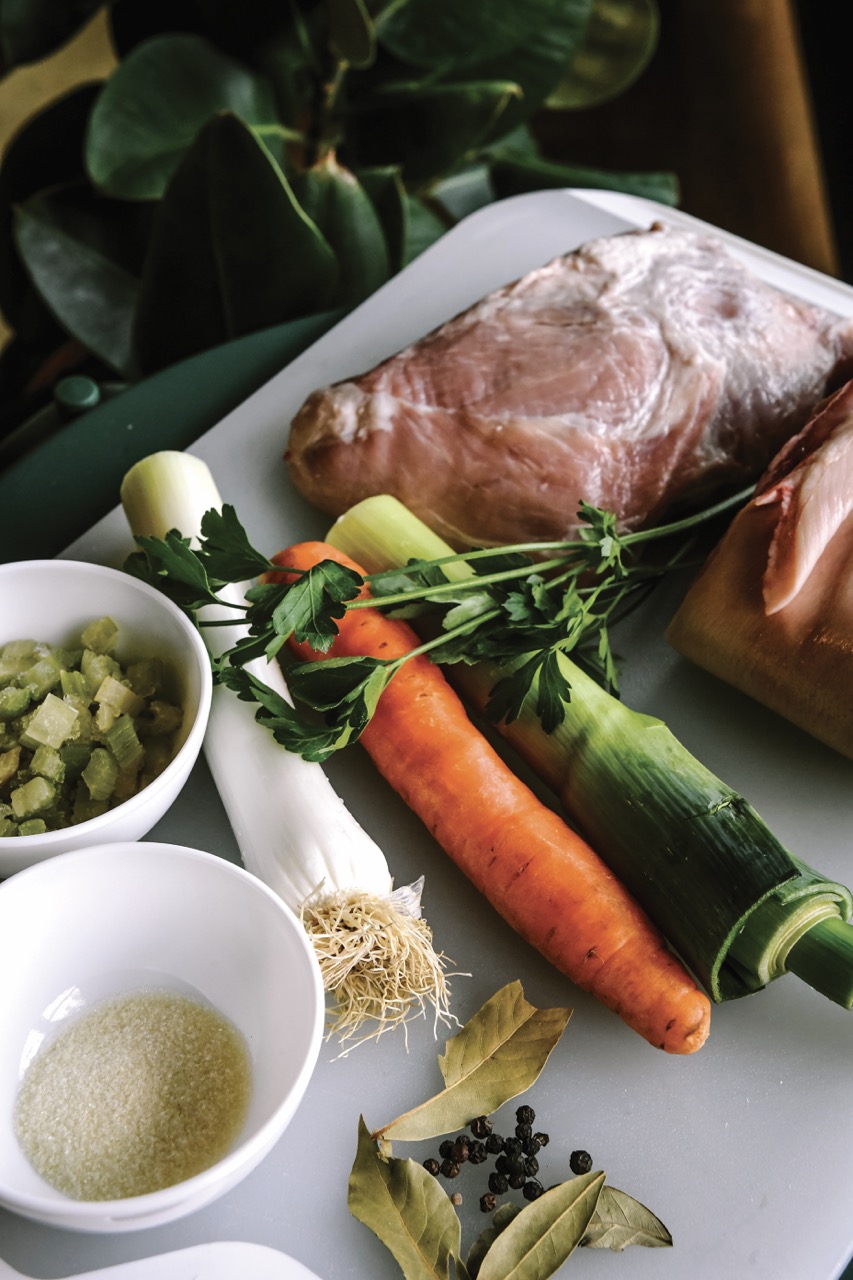
1 pork hock (trotter/shank)
500 g pork shoulder
Water
1 carrot
1 celery stalk
1 leek
1 parsnip
2 bay leaves
½ teaspoon black peppercorns
A pinch of salt
Gelatin
Parsley for garnish
Mustard, horseradish and/or vinegar for serving (optional)

PREPARATION
1. Peel the carrot and parsnip, and cut the leek in half crosswise. Rinse the hock and shoulder, and place in a large pot together with all ingredients except the gelatin. Pour in cold water to cover all contents. Cover the ingredients with baking paper – this is optional, but helps reduce foam formation.

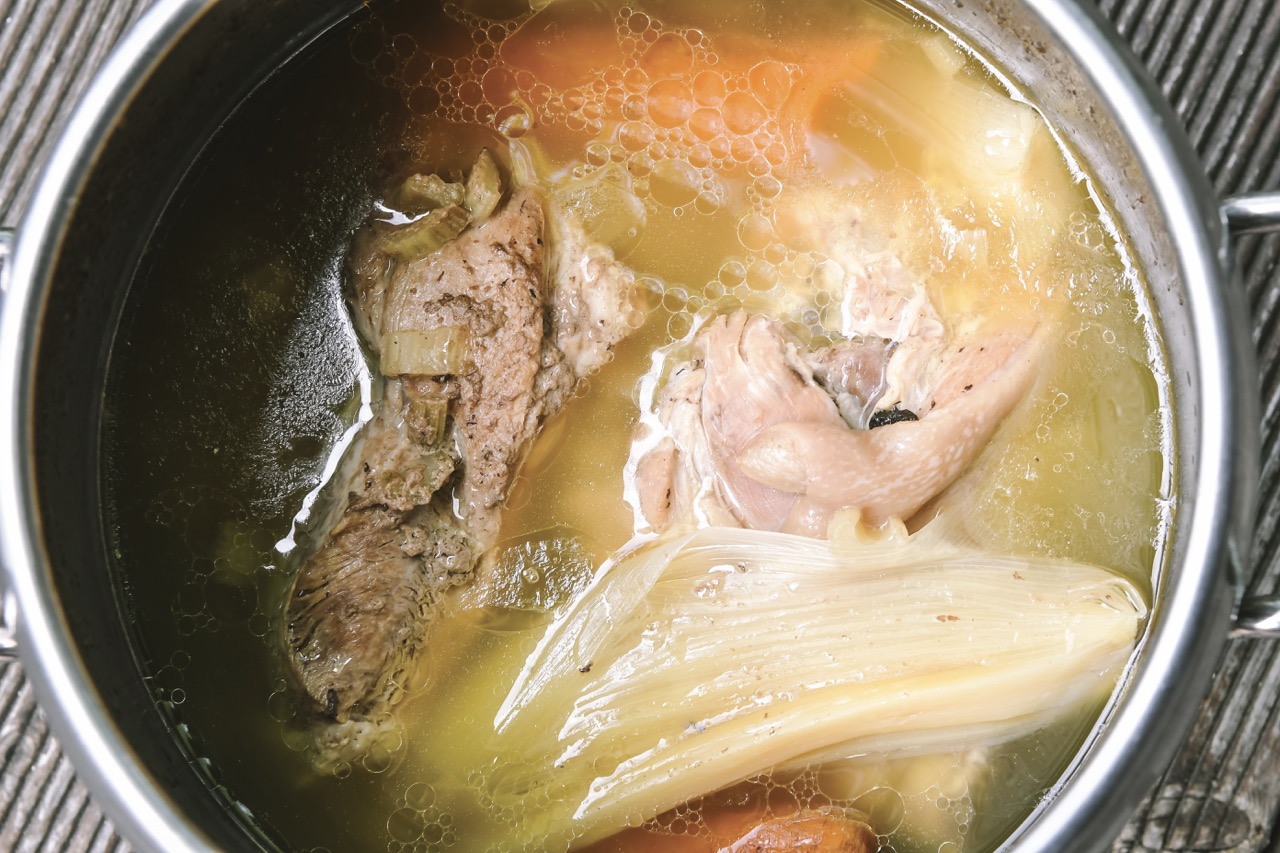
2. Bring to a slow boil (so the broth won’t turn cloudy) and skim off the foam. Reduce the heat and simmer with a lid on for 2–3 hours, until the meat is tender.

3. Once sufficiently cooled, remove the hocks; separate the meat from the bones, fat, cartilage and skin. Cut the meat into small pieces, about 1 cm long. Strain the broth into a large bowl and reserve the carrot.

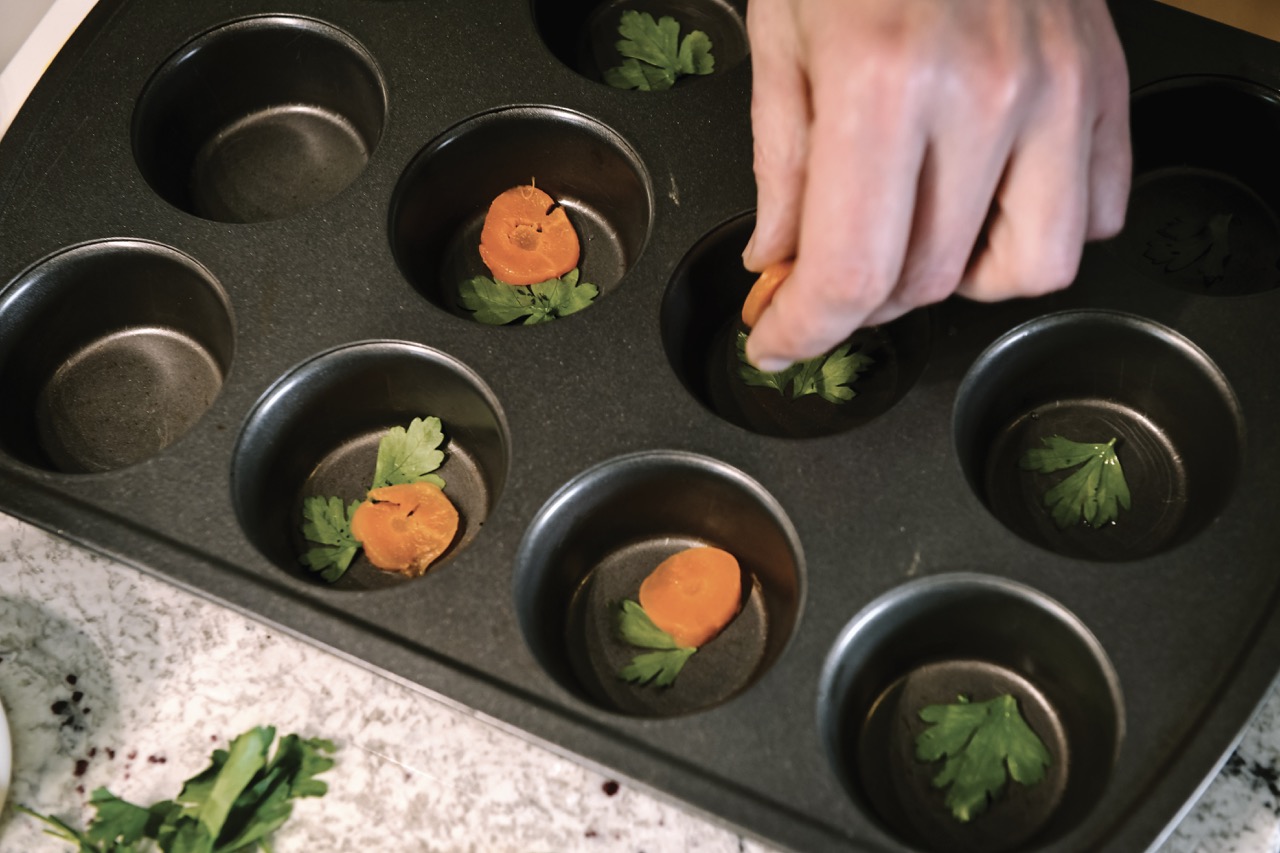
4. Prepare jellied meat moulds (shape and size of your choice; you can also use smaller individual moulds) and decorate the bottoms – moisten the parsley leaves so they stick to the mould, and place carrot slices between the leaves to form a flower pattern. Place the chopped meat into the moulds.

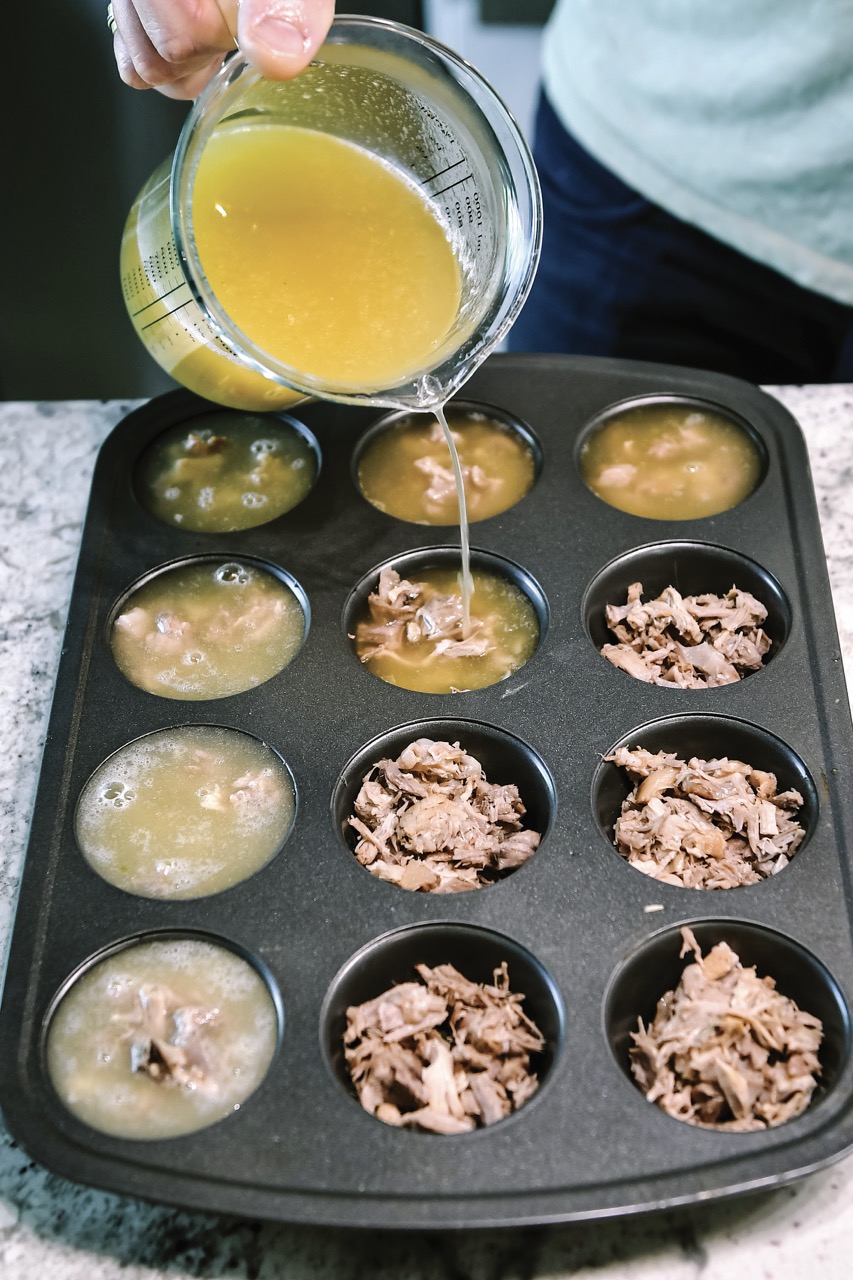
5. Add gelatin to the warm broth according to package instructions. Pour over the meat so it is completely covered. Approximately 1 litre or 4 cups of broth should be enough.

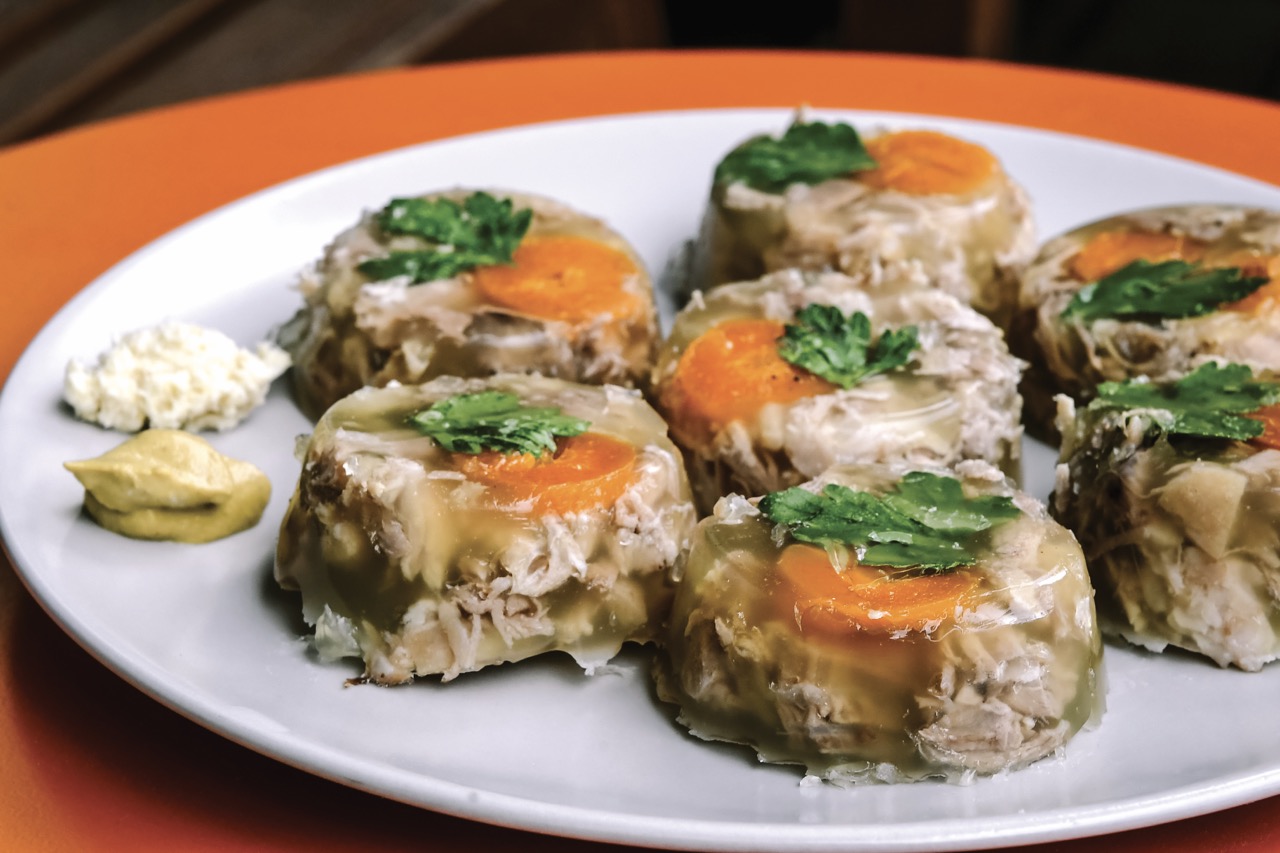
6. Place in a cold place to set. Once set, run a knife around the edges of the mould and turn out onto a plate. Serve with mustard, horseradish, and/or vinegar (optional).

NOTE FROM THE MUSEUM KITCHEN
You can also do the boiling in a pressure cooker to save time. For a mould, you can use metal muffin pans of various sizes.

Photo: Elīna Kursīte

Galerts_02
Galerts_03
Galerts_04
Galerts_05
Galerts_06

Ingrīda Hawke is an experienced cook in the Latvian community in Melbourne, Australia; she runs her own catering business, laying tables “Latvian style” for weddings, funerals, and other Latvian events.

Ingrīda makes pork aspic according to an inherited recipe: “I didn’t have it written down anywhere because I learned this recipe from my mum. I haven’t changed anything in it.” Ingrīda shares that her mum, Mirdza Ozoliņa, spent her summers in the countryside in Latvia when she was young: “One summer she was hosted in a home where the landlady had graduated from the Kaucminde School for the Domestic Arts. She learned a lot from her.” Ingrīda’s mum had several favourite cookbooks that had been published in Latvia before the war: “I inherited them from mum and turn to them for advice now that mum is no longer here,” says Ingrīda.

When it’s time to boil the pork hocks for pork aspic, Ingrīda visits specific butchers rather than the supermarket to buy the ingredients: “In Melbourne, I usually buy from Asian butchers when I am making pork aspic. They know exactly which cuts are needed; Australian butchers don’t know how to cut it right!”

Every now and then, Ingrīda observes people standing at the buffet table, looking at the pork aspic, unable to bring themselves to try it. She encourages them: “Go on, try it!” Ingrīda has a friend who has learned to make pork aspic, yet doesn’t eat it herself. But for those who do try it, “They love it. They eat it and say how good it is!”

ℹ️ How to watch with English subtitles: Turn on CC → Settings → Subtitles → Auto-translate → English