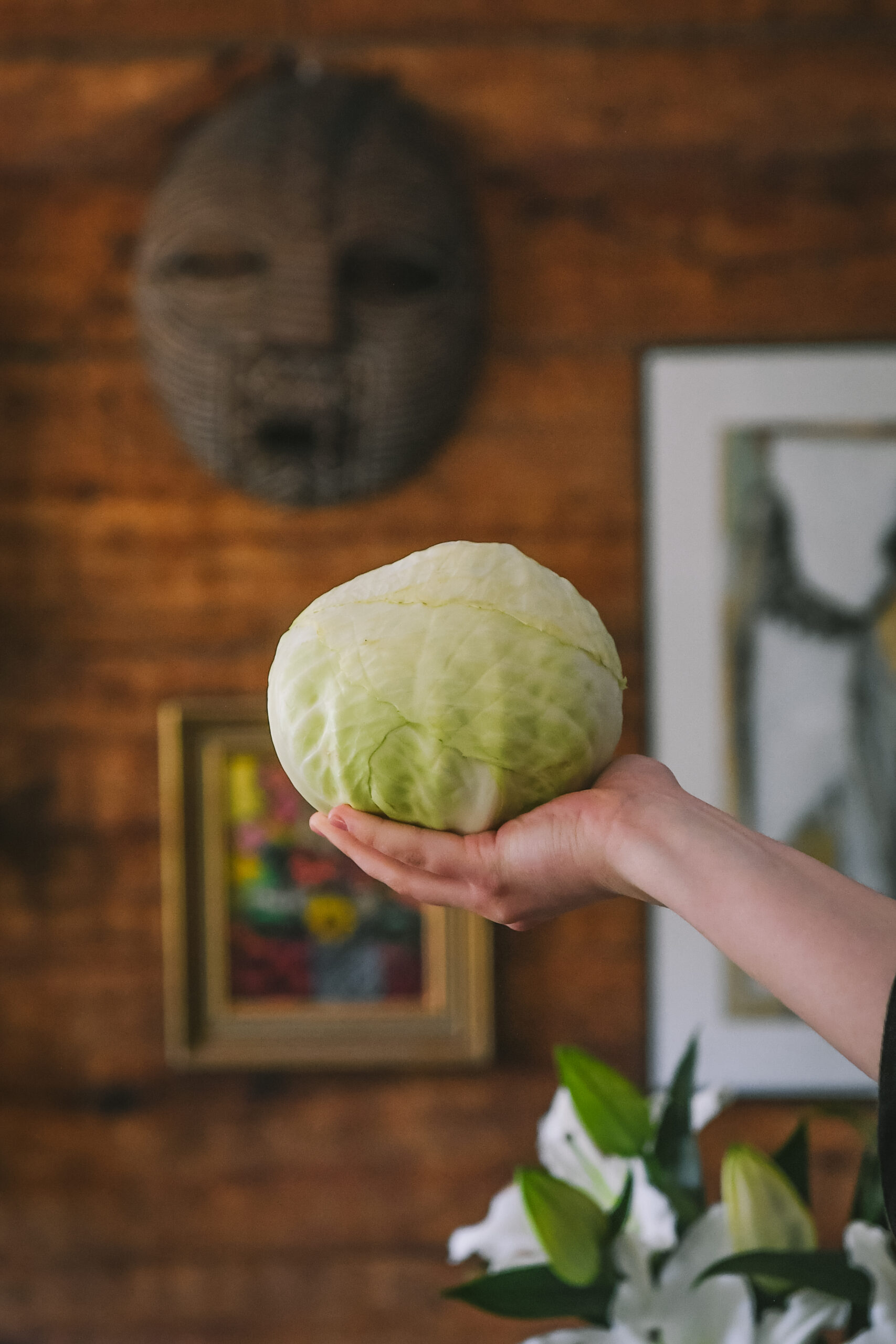
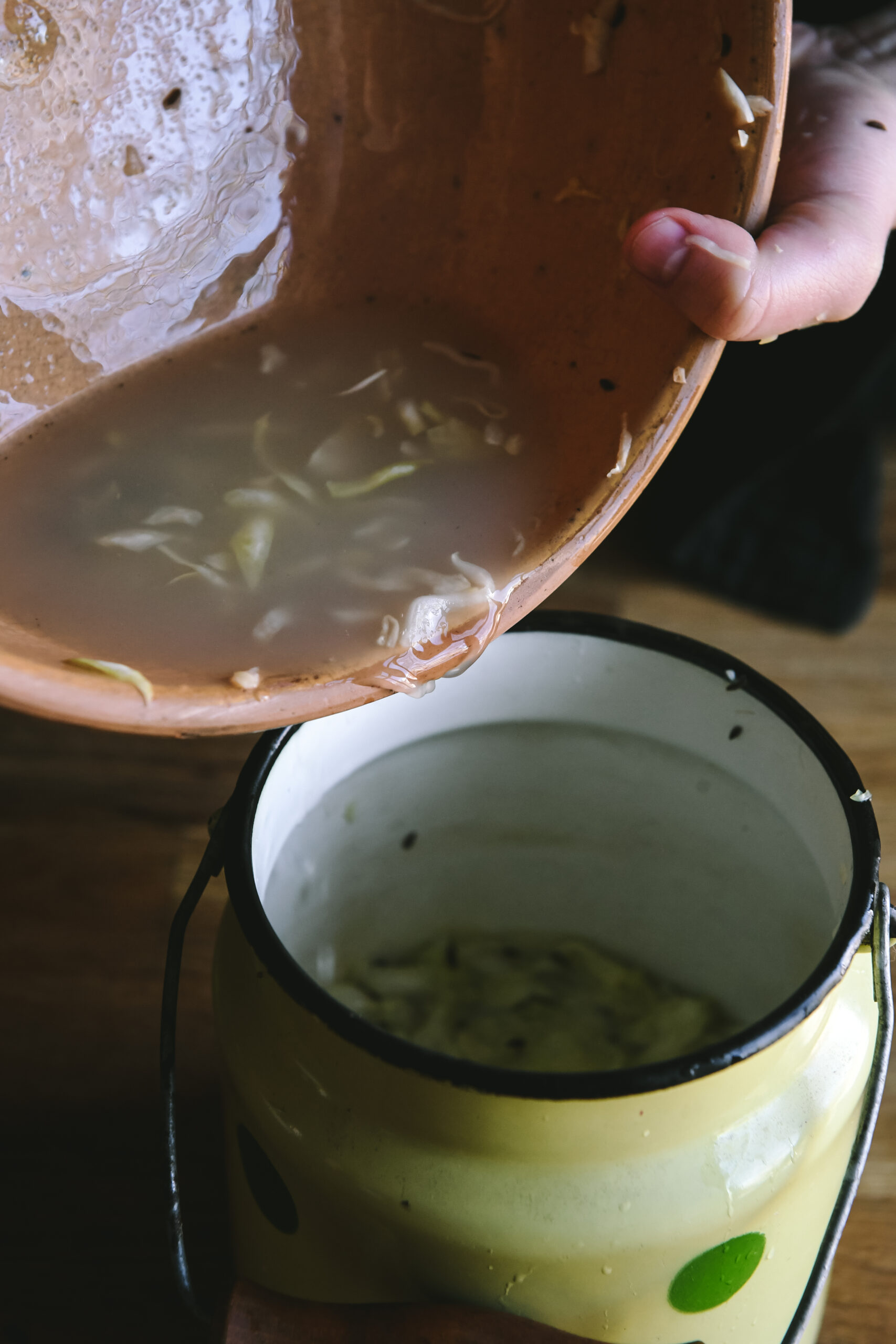

The Zichmanis family eat sauerkraut for lunch and dinner, both fresh and braised, served with potatoes and meat. Aija Zichmanis’ parents began fermenting sauerkraut in Canada in the 1960s. As they grew older, Aija and her husband Klāvs took over sauerkraut making from her parents, along with their large wooden barrel. Every autumn they organised sauerkraut-making working bees (talkas) with snacks and drinks, involving a wide circle of relatives and friends. Today, the tradition is carried on by the next generation, and Aija’s Canadian son-in-law, Brad, has been crowned “the sauerkraut king”.
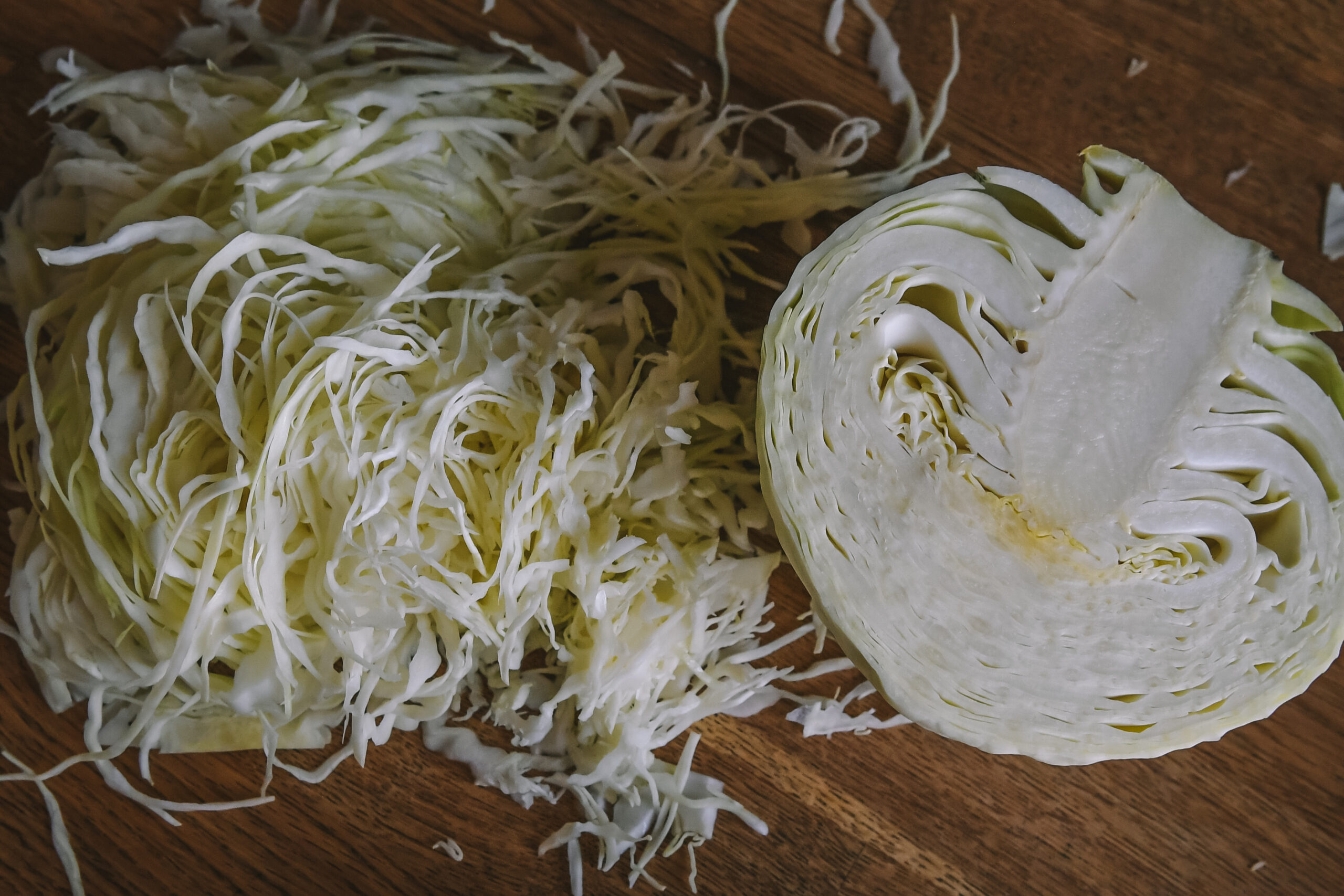
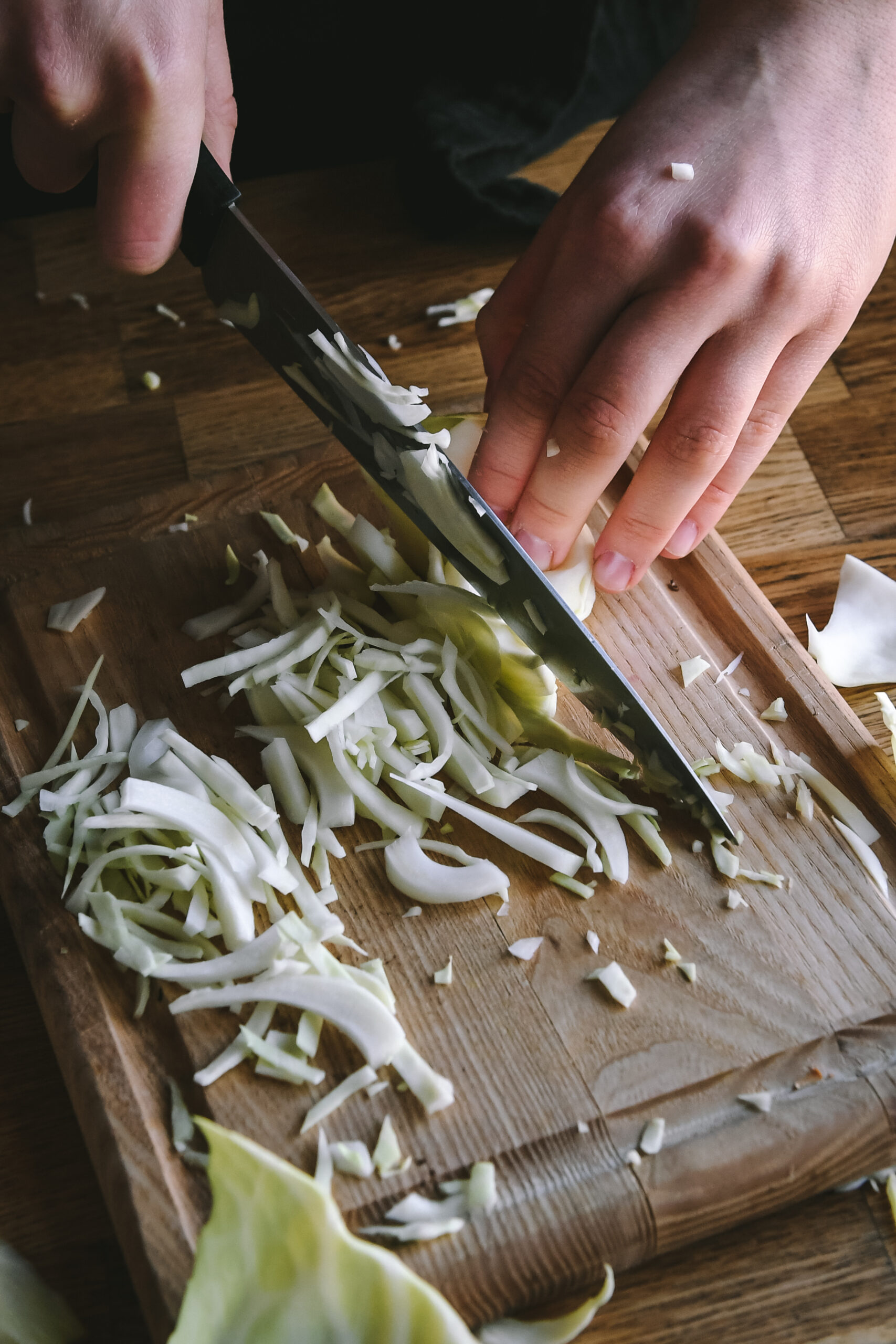
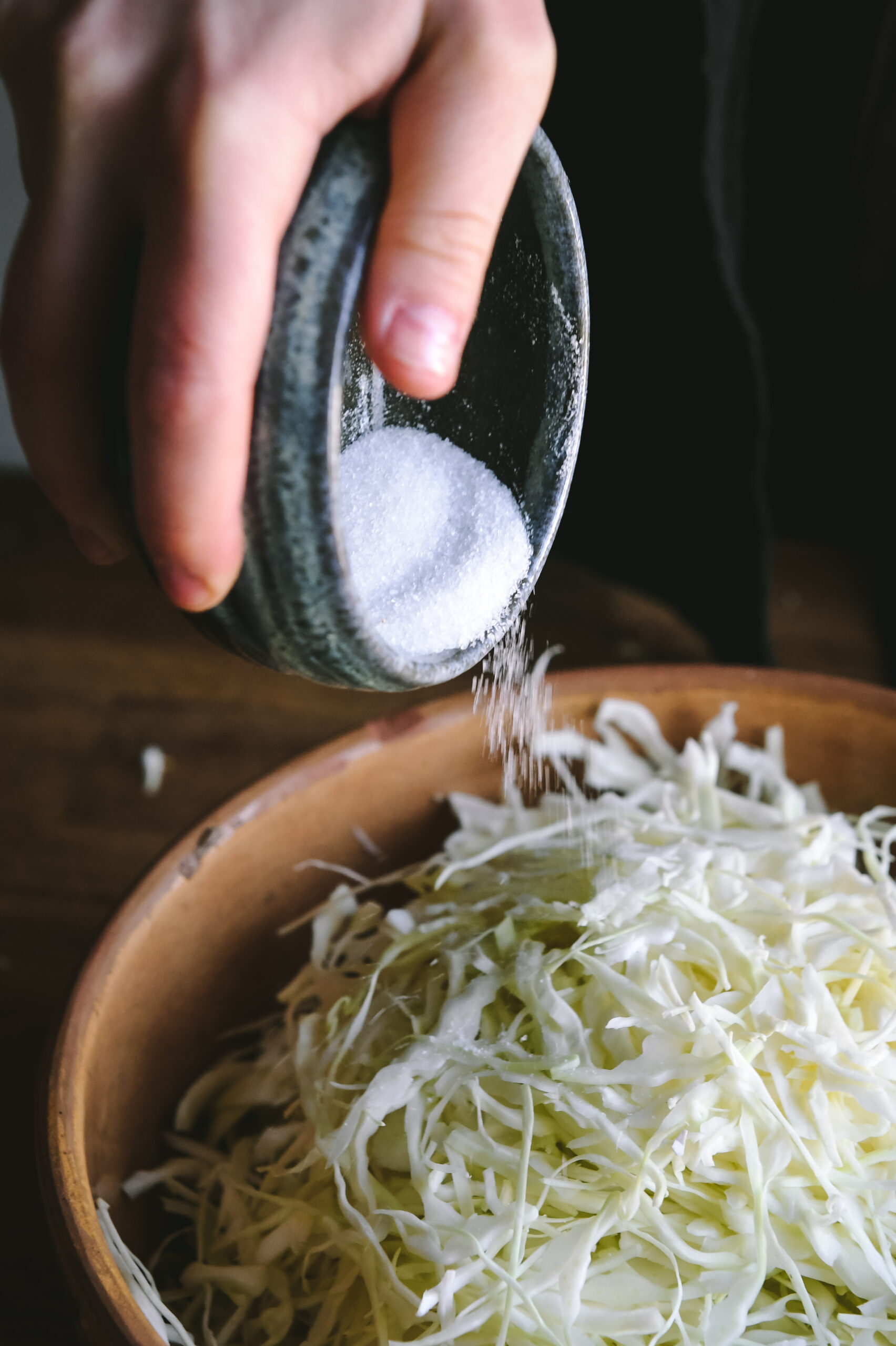
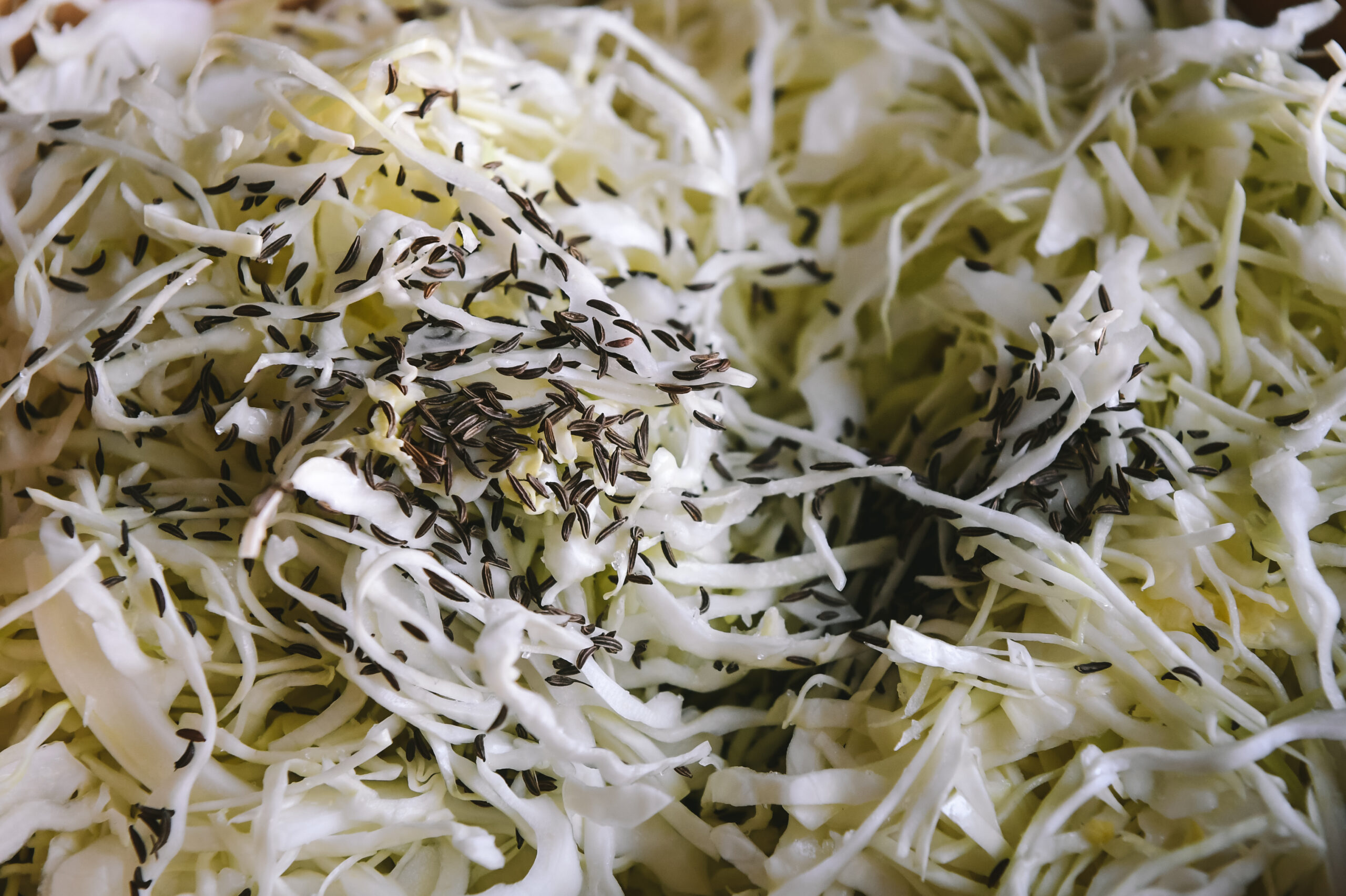
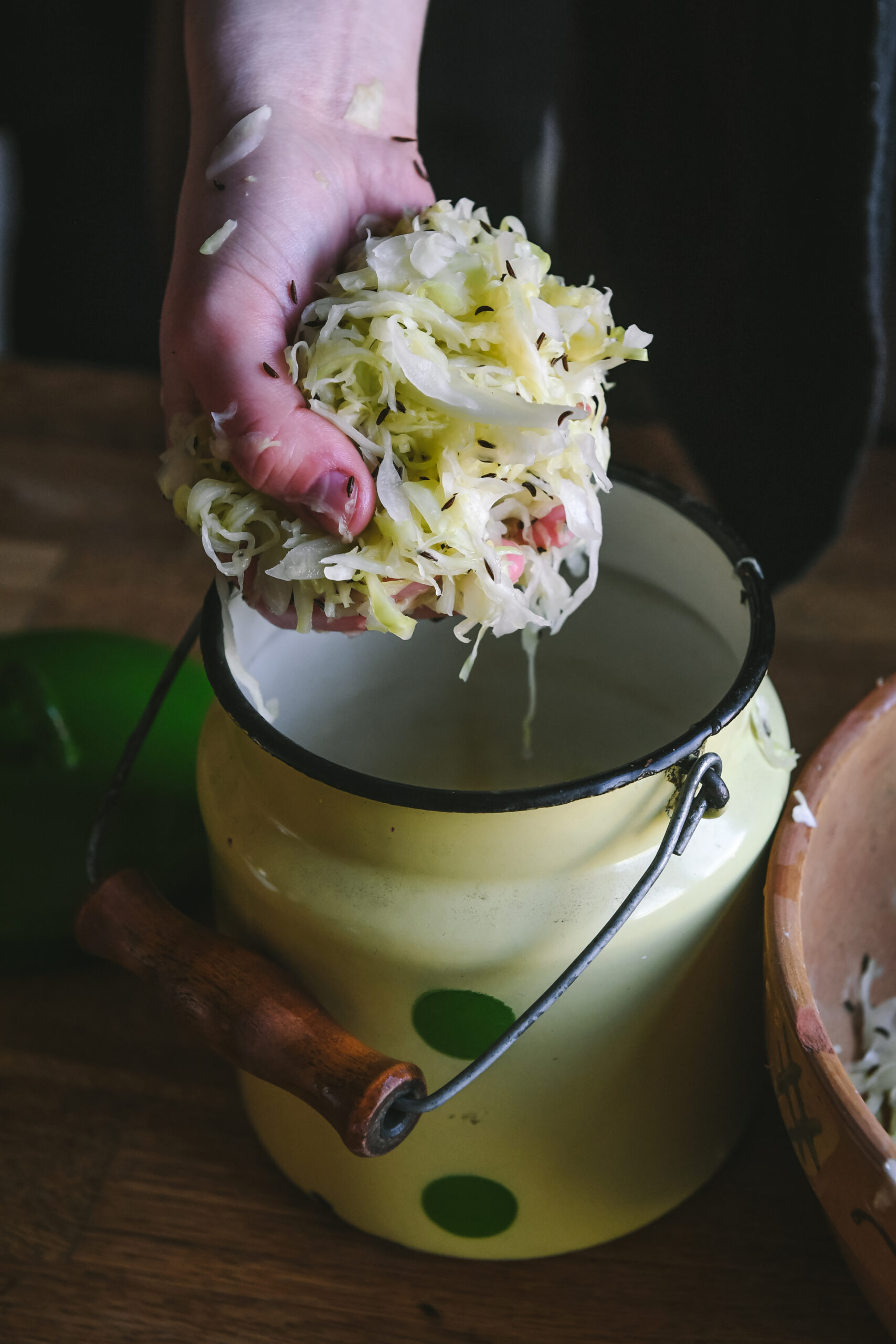
Aija recalls how sauerkraut was made during her grandmother’s time: “Grandma had a large coring knife placed next to her bench, along with a big bowl. She peeled off the outer leaves of the cabbage heads and placed them at the very bottom of the barrel so that the cabbage juice wouldn’t ruin the barrel for next year.” Then she let others peel off outer leaves and cut the heads into pieces. Someone took turns chopping the cabbage heads, someone stood at the shredder, someone sprinkled salt now and then, and someone pounded it all down, delighting in how juicy the cabbage became with each new batch, until the barrel was finally full.
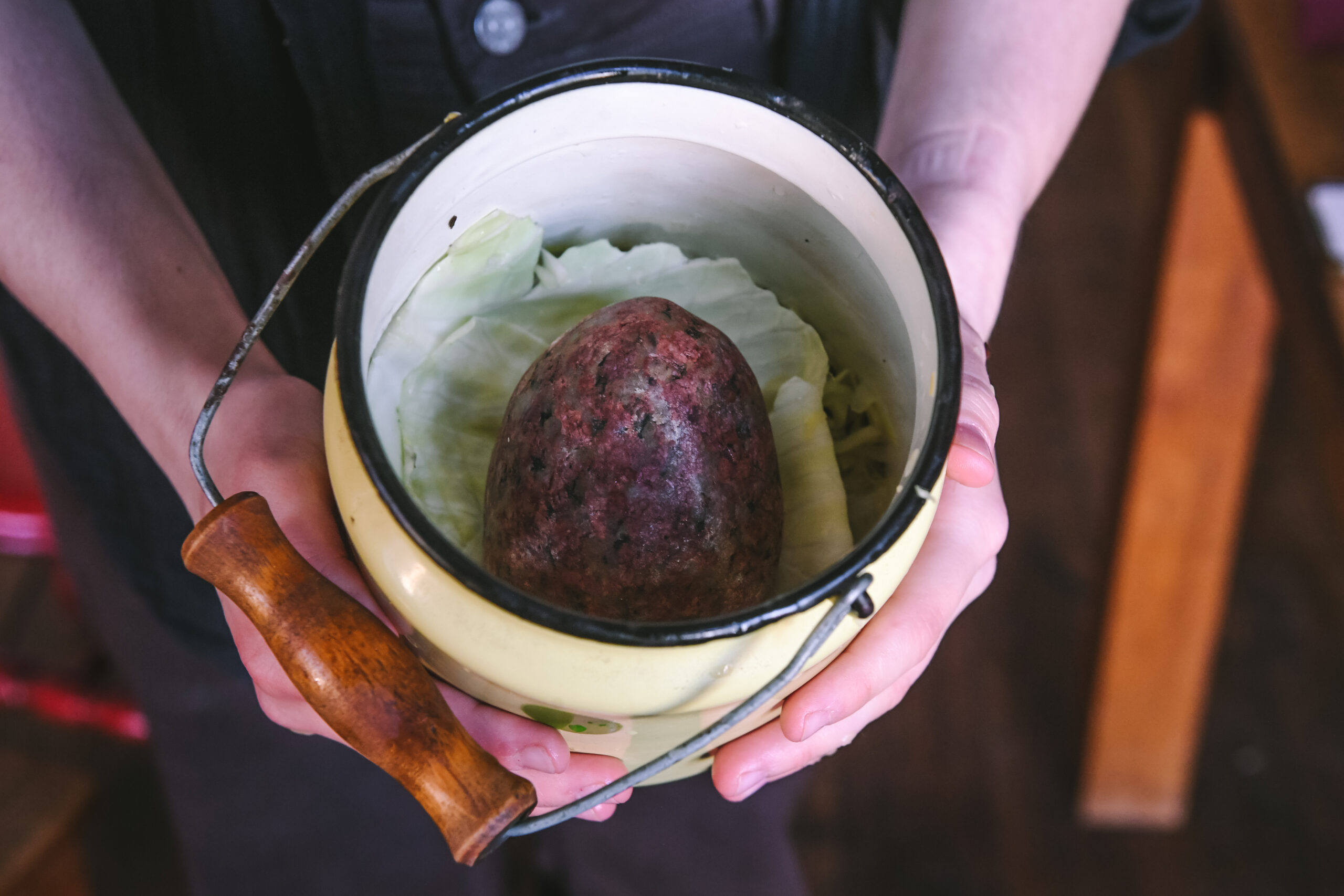
Afterward, they put a lid on the barrel and placed “a big, old rock on top, which presses the lid down and prevents air from getting in during the fermentation process. And then a white sheet over everything!” Aija shares. Her parents used to follow the phases of the moon, believing they affected the cabbage’s fermentation and flavour. Nowadays, when making sauerkraut, the Zichmanis family doesn’t pay attention to this traditional knowledge: “Our sauerkraut always turns out delicious, no matter the phase of the moon!”
When the sauerkraut is ready, everyone gathers together again, packs the sauerkraut into freezer bags, divides it among families, and stores it frozen. “We give our sauerkraut to friends, for the Christmas meal at the Latvian school, to Canadian neighbours, and also to a Korean friend of ours who really loves ‘Latvian kimchi’!” says Aija.