

Piparkūkas in Romania (Laura Sarkane)
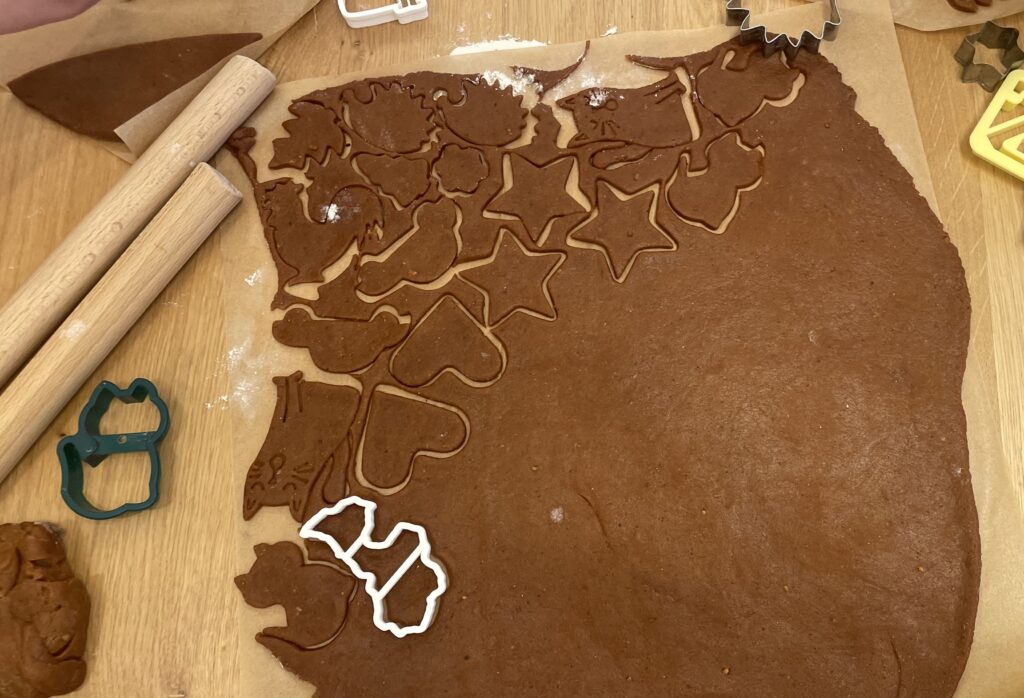
Laura: My husband, while learning Latvian, tried to say speķa pīrāgi (bacon buns), but it just wouldn’t come out right, and the best he managed in the end was — piranhas.
Crystallised ginger piparkūkas (Maija Liiv)
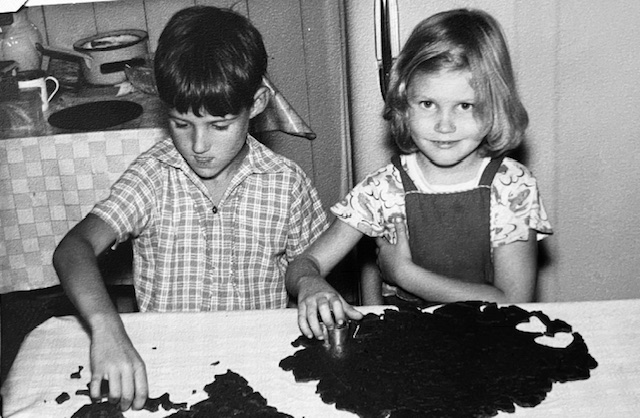
My mother Lauma taught me to make piparkukas when I was a little girl, and I still make them now that I am 75.
I was born in Brisbane, Australia, in December 1950, and lived there all my life until moving 100km north to the Sunshine Coast in 2016.
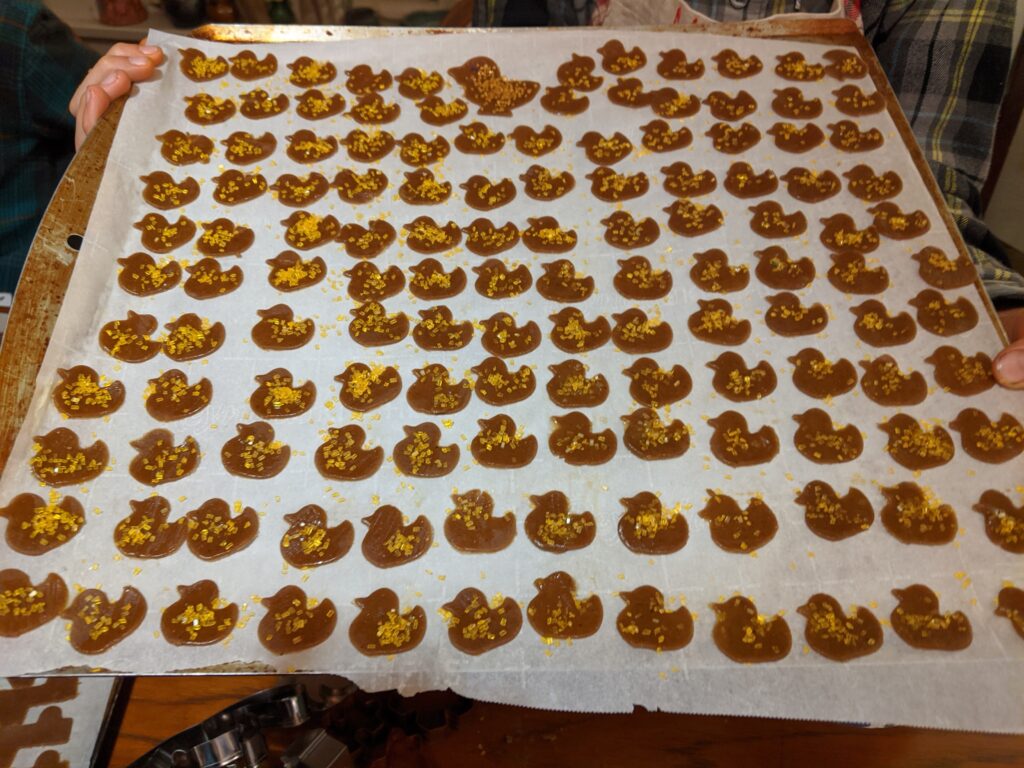
I still use my mother’s piparkuka recipe, with only a couple of variations. Where my mother used Golden Syrup, I now sometimes use Treacle and brown sugar. We always used to put a slivered almond in the centre of each piparkuka, like generations of my family in Latvia have always done, but now that we live in a ginger-growing area (Buderim) we are placing a small piece of crystallised ginger in the centre of each piparkuka, and find it delicious.
Latvian School of Chicago piparkūku working bee
Watch how a piparkūku working bee takes place at the Latvian School of Chicago! Participants share their experiences, the meaning and importance of piparkūkas, as well as what they like most about piparkūkas…
One recipe in three versions (Ilma Wilkinson)
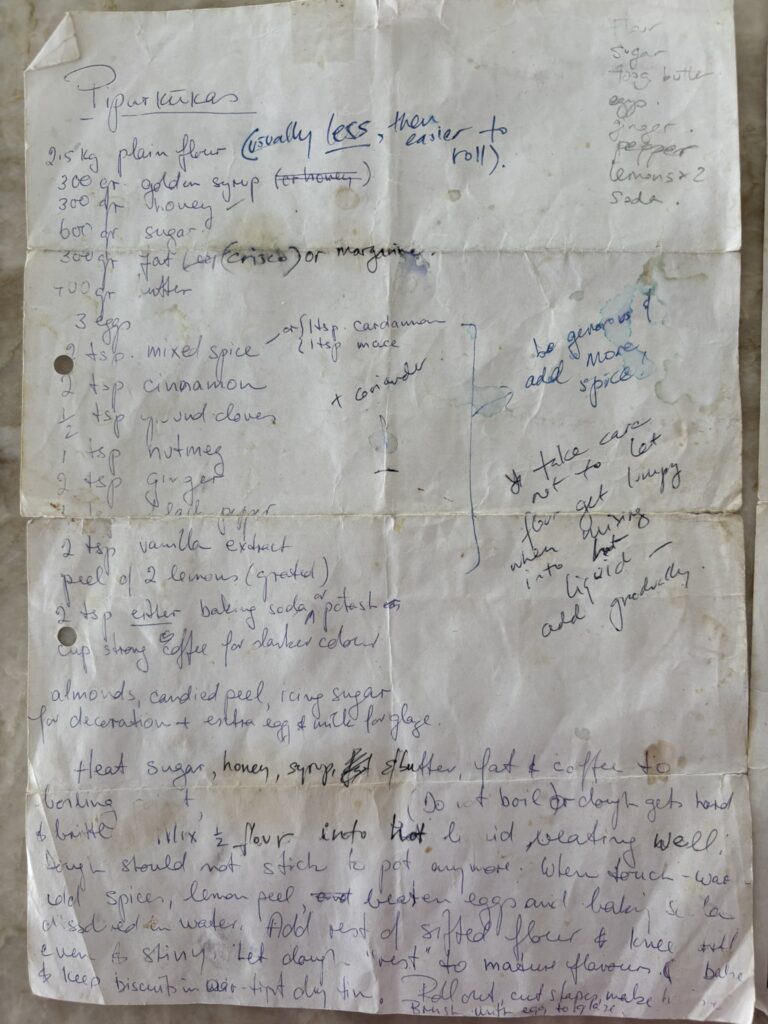
Ilma explains: “The basis of the recipe comes from M. Krone-Balduma’s cookbook Everyday and Holiday Table: A Handbook for the Latvian Homemaker (Daugava: Stockholm, 1956). My mother received that book as a gift from her own mother for Christmas in 1964 (my parents’ first Christmas as a married couple). We don’t follow the recipe to the letter and we change a few things (what kind of fat to use, or syrup, and I always use considerably more spices than written—2–3 times more).”
The photographs show three versions of this recipe: the first, copied from Krone-Balduma’s cookbook and sent by fax to Ilma—who at the time was in Shanghai—from her sister’s office in Brisbane, Australia. The second is Ilma’s mother Māra’s handwritten version of the recipe, translated into English, with Ilma’s own notes added. The third is a version of the recipe published in the cookbook produced by Ilma’s sons’ kindergarten in English. It mentions that one kindergarten family used this dough to make the base for a cheesecake!
The decorating process takes seven hours (Anita Kupcis-Clifford)
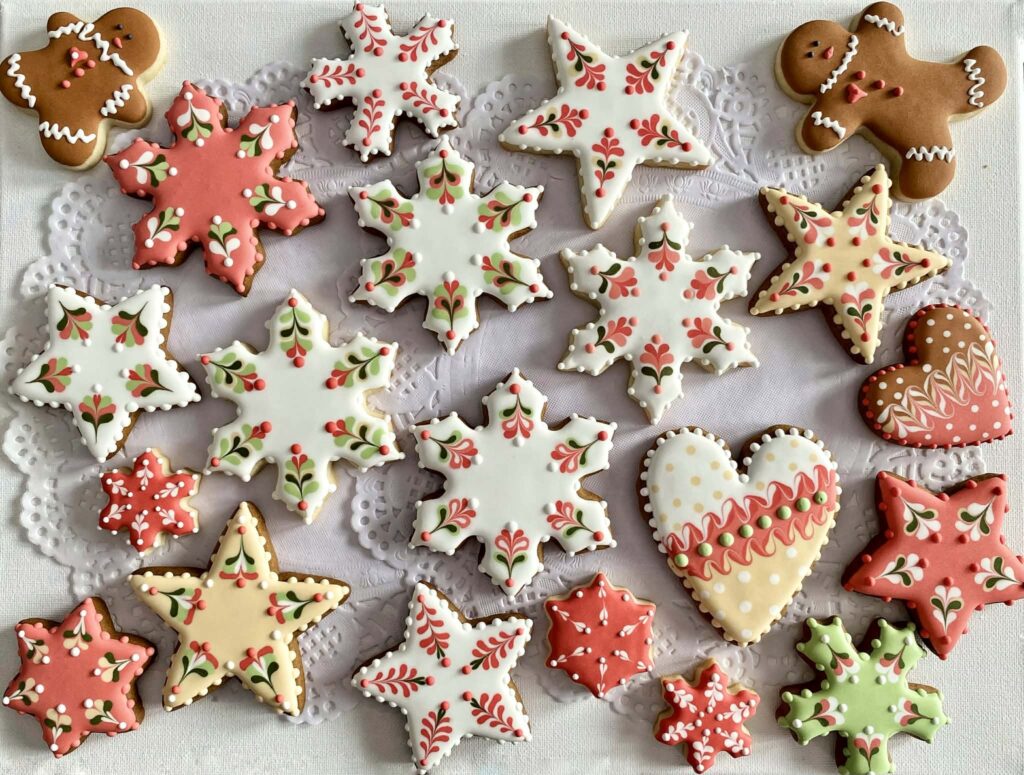
Anita writes: “After seeing some videos of cookies being decorated I was intrigued. That was seven years ago and since then I have decorated many cookies. My sense of design for my cookies might be attributed to my years of embroidery, specifically Latvian designs.
My piparkukas are different from my mom’s, hers were rolled very thinly and glazed with egg yolk. I recall when my mother would come for visits with a suitcase full of piparkukas, pirags and pounds of butter. I started making both when my mother was no longer able to do it.”
I remember mountains of piparkūkas! (Māra Goldsmith)
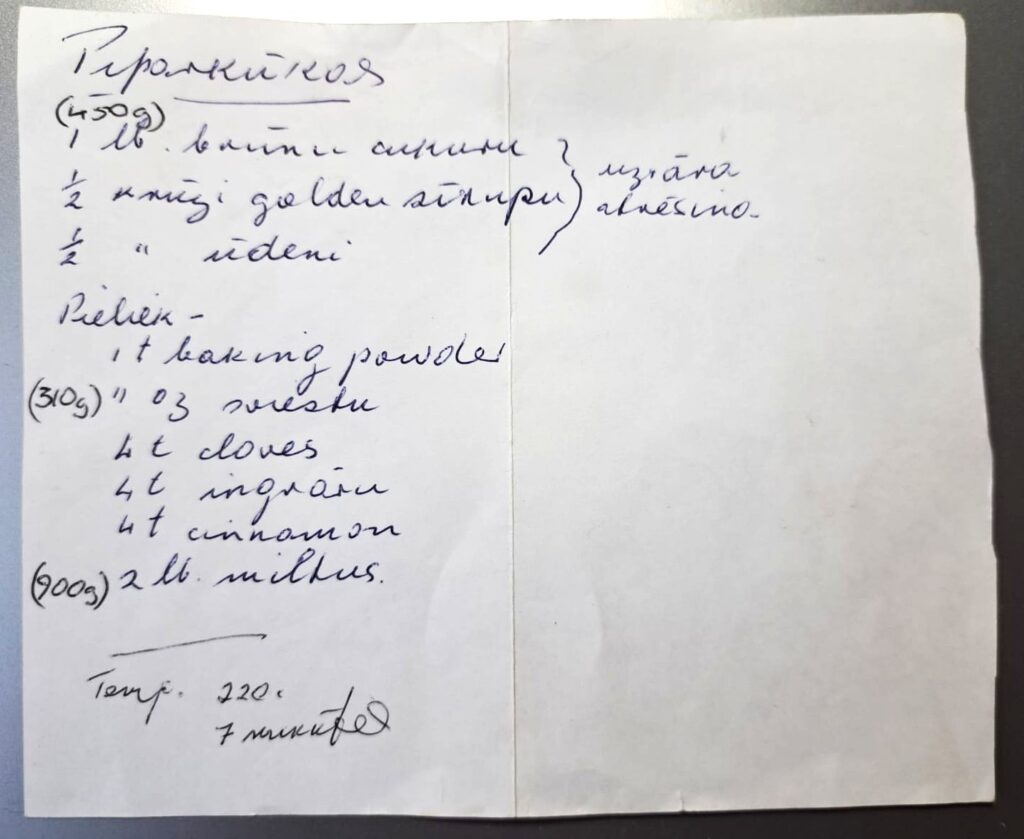
My mother first baked this recipe before 1951. I remember how she and her friend, in the heat of the Australian summer, would spend hours rolling out the dough, cutting it, and baking batch after batch so there would be enough gingerbread for both families to give to colleagues, teachers, and friends. I still recall the enormous mountains of gingerbread that covered almost the entire kitchen counter!
We still bake them every year, though now in smaller quantities—just enough for us to enjoy.
These gingerbread cookies are fragrant, dark brown, and wonderfully crisp.
There must be 12 different dishes on the Christmas table! (Inga Čulkstēna)
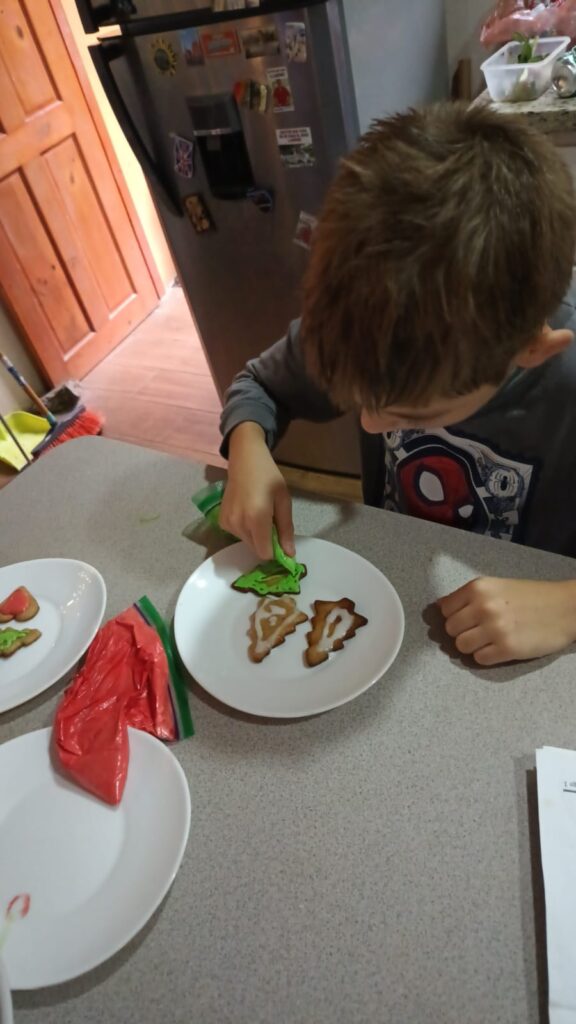
Inga, who now lives in Costa Rica, bakes piparkūkas and pīrāgi every year together with her sons. She talks about her experience searching for ingredients that are not always easy to find in Costa Rica, and fondly remembers her family’s Christmas traditions from her childhood.
The secret ingredient is faith (Inga Lucāns)
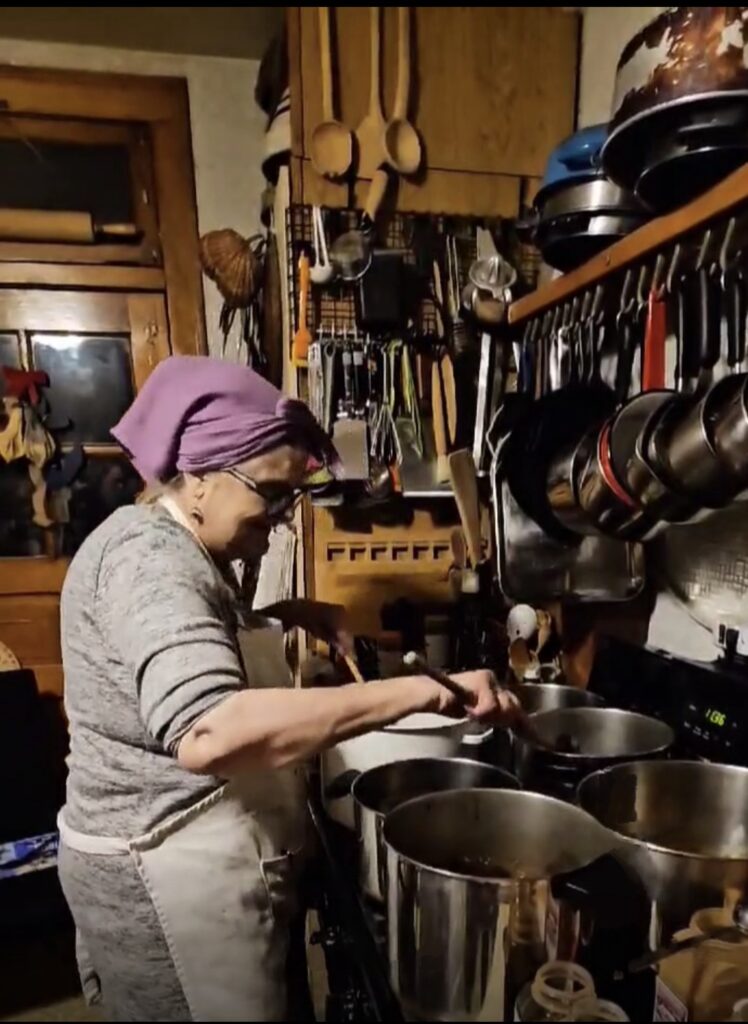
Inga shares her many years of experience in baking piparkūkas and pīrāgi. She believes that there are no secrets to making pīrāgi, people shouldn’t be afraid to give it a try, because it’s really not that difficult. However, when it comes to piparkūkas, the secret ingredient, according to Inga, is faith in the dough!
Piparkūku camps in Italy (Ilze Atardo)
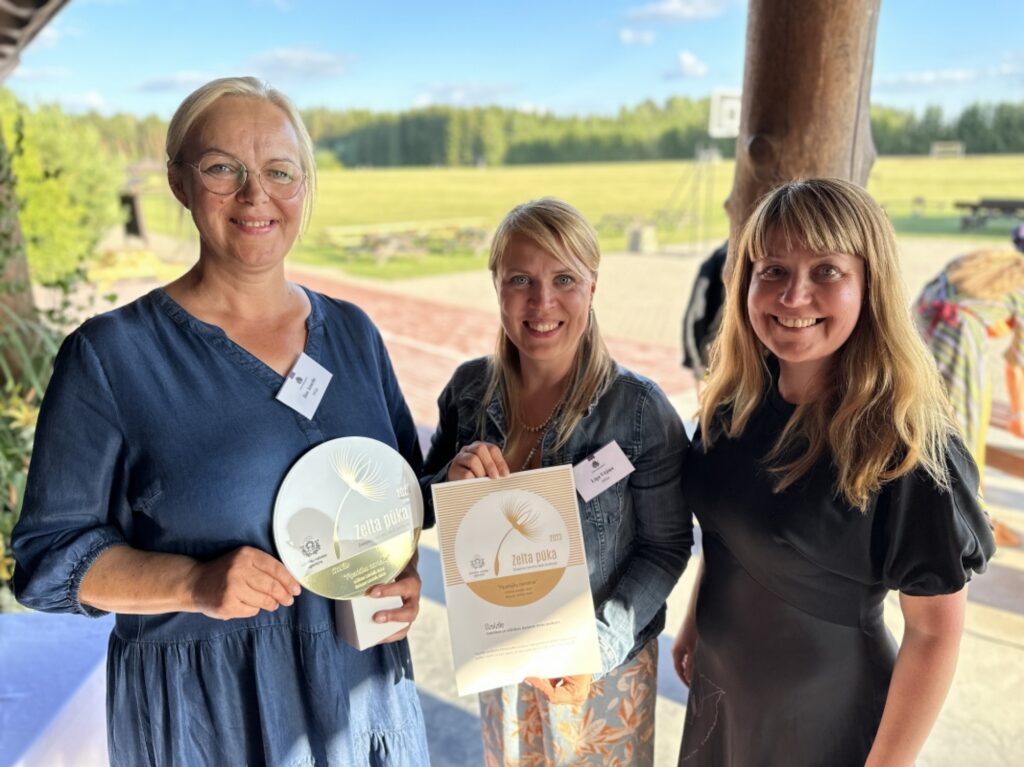
For Ilze, piparkūkas has always been a part of Christmas. Now, living in Italy, she organizes piparkūku camps that bring together other Latvians living in Italy, as well as participants from Luxembourg and Germany. For three days they bake, cook food, eat, dance, sing, and simply enjoy being together. In 2023, Ilze received the “Zelta pūka” award for her piparkūka camp.