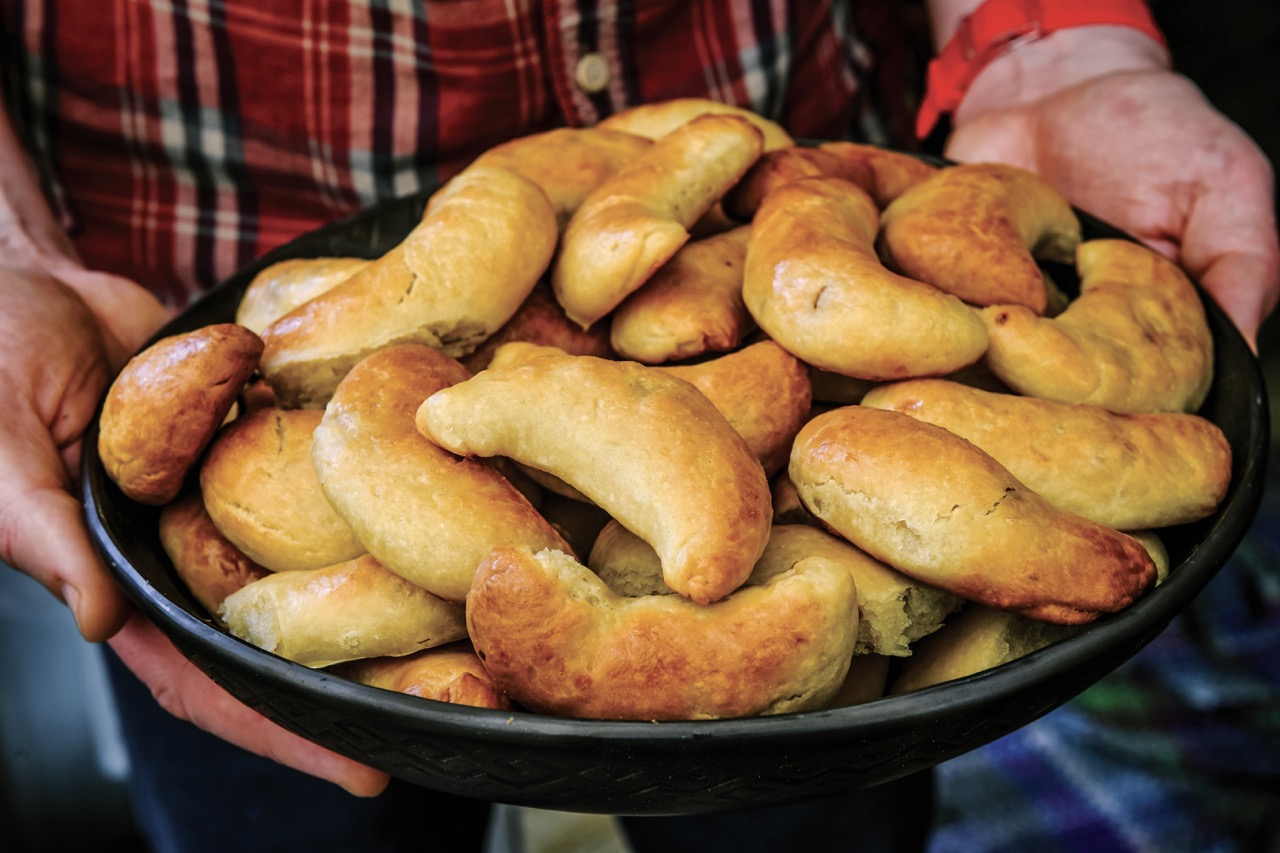
Bacon pīrāgi (Aivars Sinka)
Sulgrave, UK
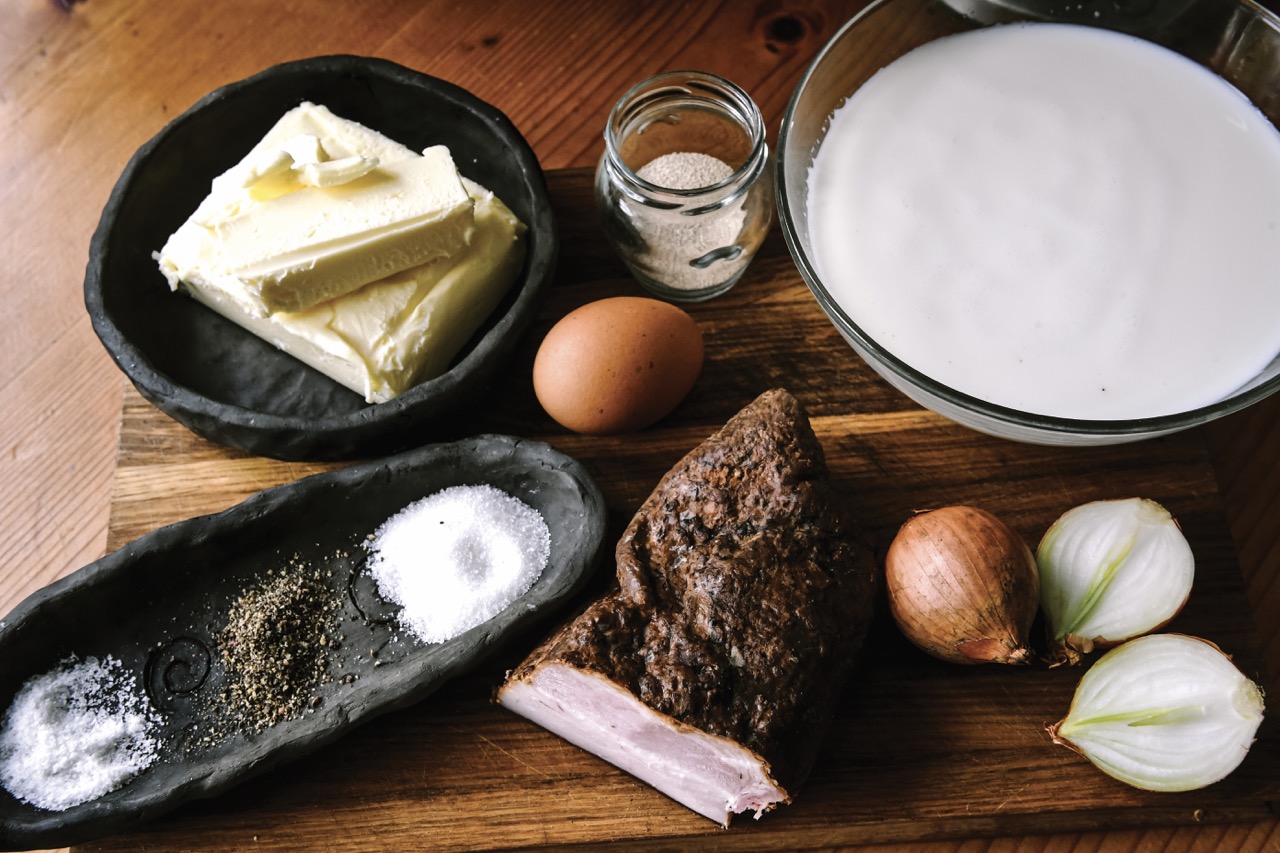
FILLING INGREDIENTS
450 g smoked bacon / cured pork belly
1 medium onion
Salt and ground black pepper to taste
DOUGH INGREDIENTS
~900 g high-gluten / high-protein wheat flour (Strong Flour, Type 550, or Manitoba flour)
55 g fresh yeast (or 3 tsp dry yeast)
2 tsp sugar
1 tsp salt
225 g butter
570 ml (2⅓ cups) milk
1 egg (for glazing)
PREPARATION
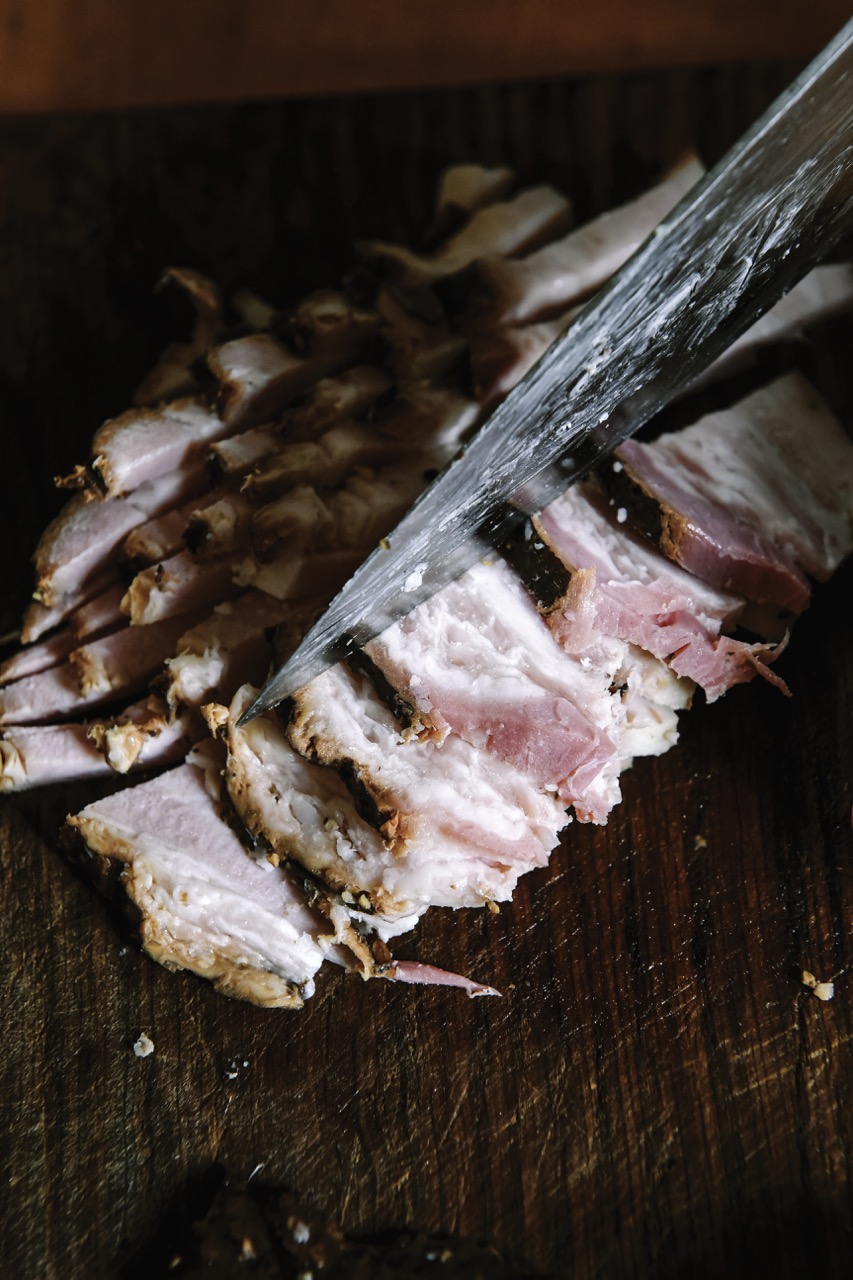
1. Prepare the filling: Finely chop the onion and bacon, add salt and pepper to taste, mix well, and place the filling in the refrigerator.
2. Prepare the liquids: In 1 cup (250 ml) of warm milk, stir in the yeast and sugar until activated and visibly bubbling. Melt the butter in another 1 cup (250 ml) of milk, add salt, let cool slightly, then add the remaining milk. Pour into a large bowl and combine with the activated yeast mixture.
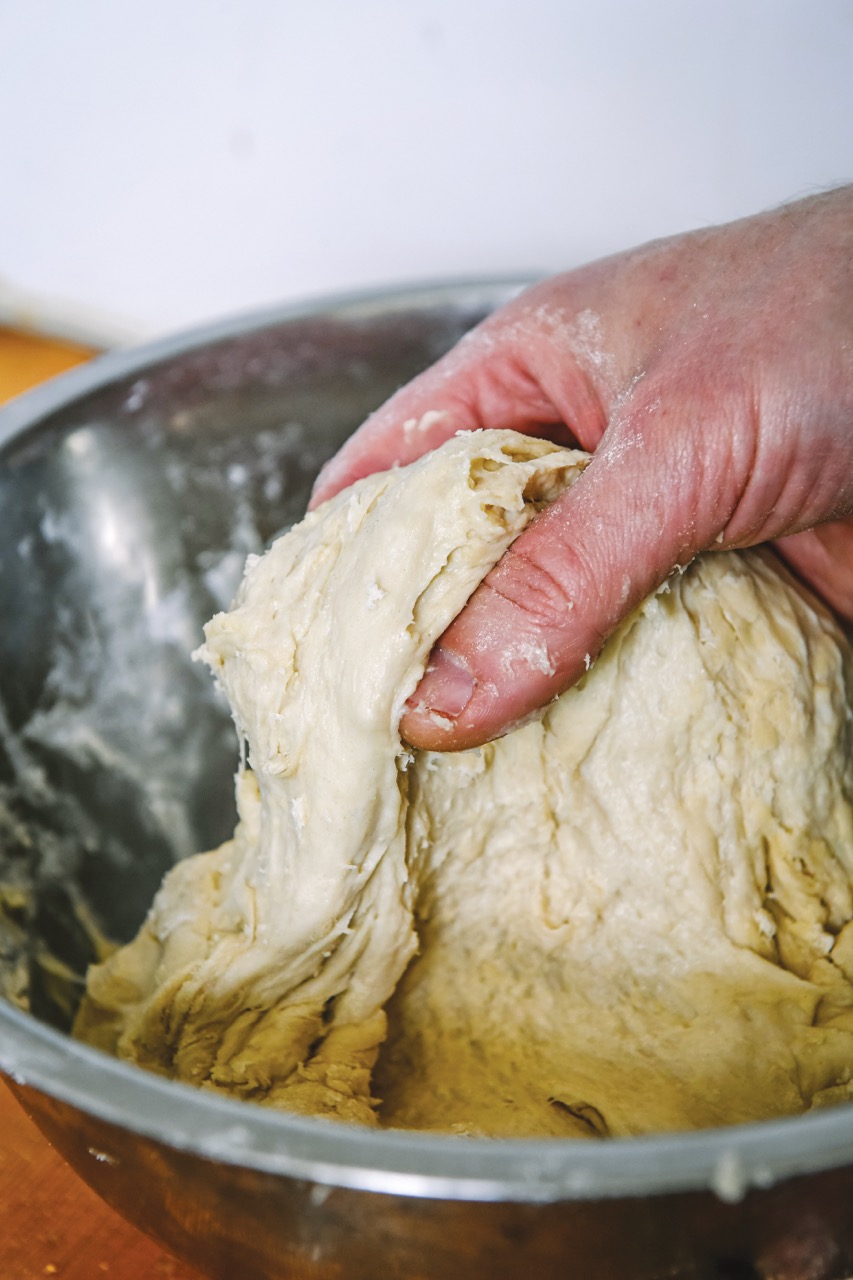
3. Knead the dough: Sift part of the flour into the bowl, mixing first with a spoon, then by hand. Gradually add more flour, kneading until the dough no longer sticks to your hands and becomes soft and elastic. Be careful not to add too much flour, or the dough will become stiff. Continue kneading, cover the bowl with a tea towel, place in a warm spot, and let rise until doubled in size – usually up to 1 hour.
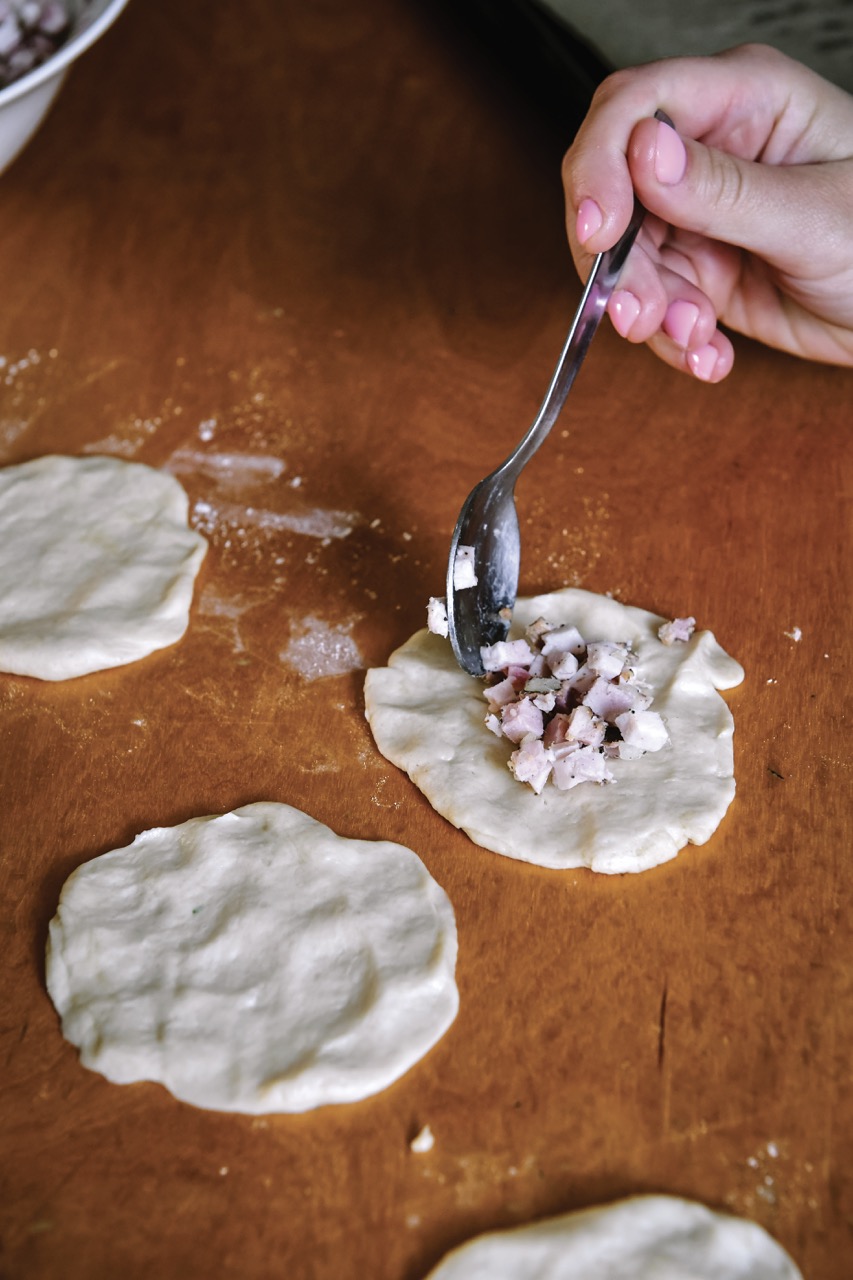
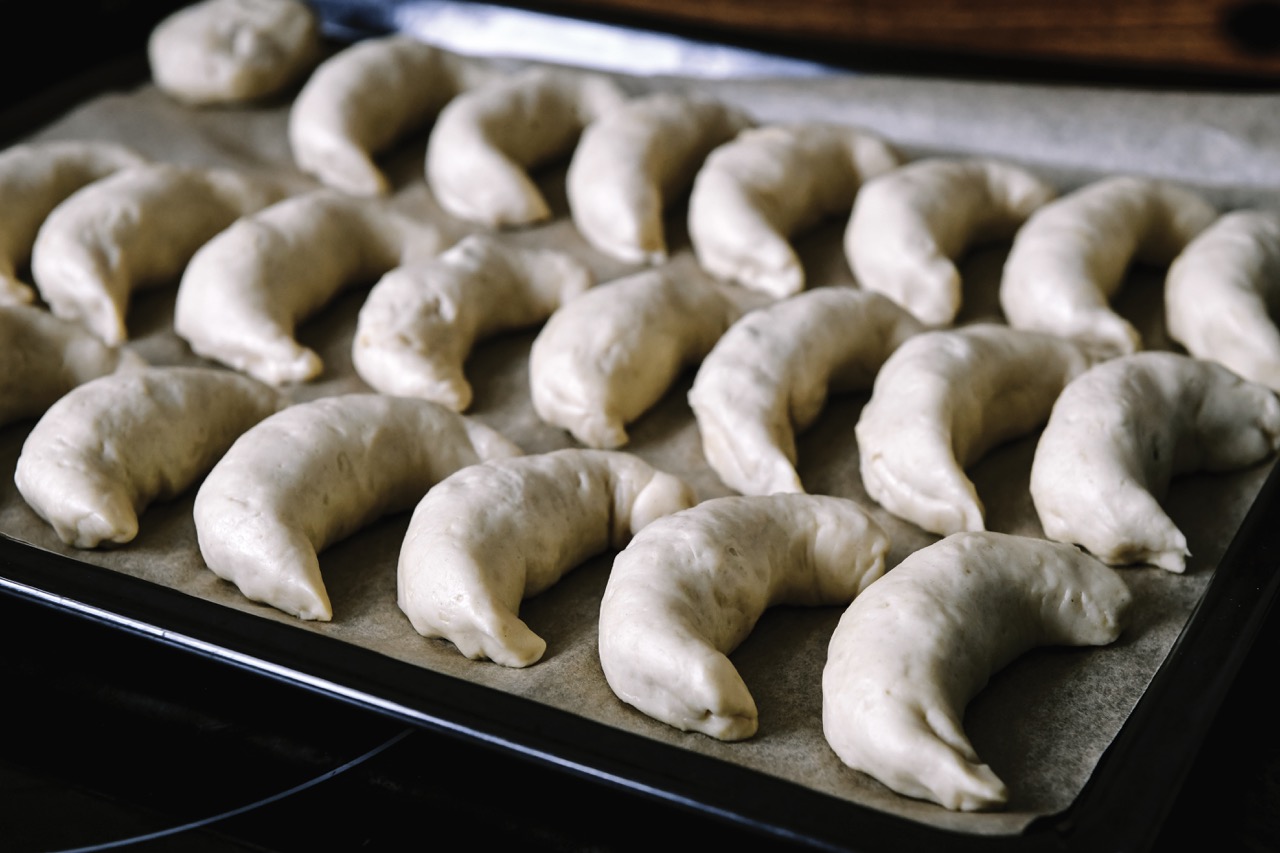
4. Shape: Roll the dough into a long log and cut into equal, walnut-sized pieces. Remove the bacon filling from the refrigerator. Flatten a piece of dough in your palm, place a teaspoon of filling in the centre, fold the top edge over, and pinch the edges firmly closed with your thumbs.
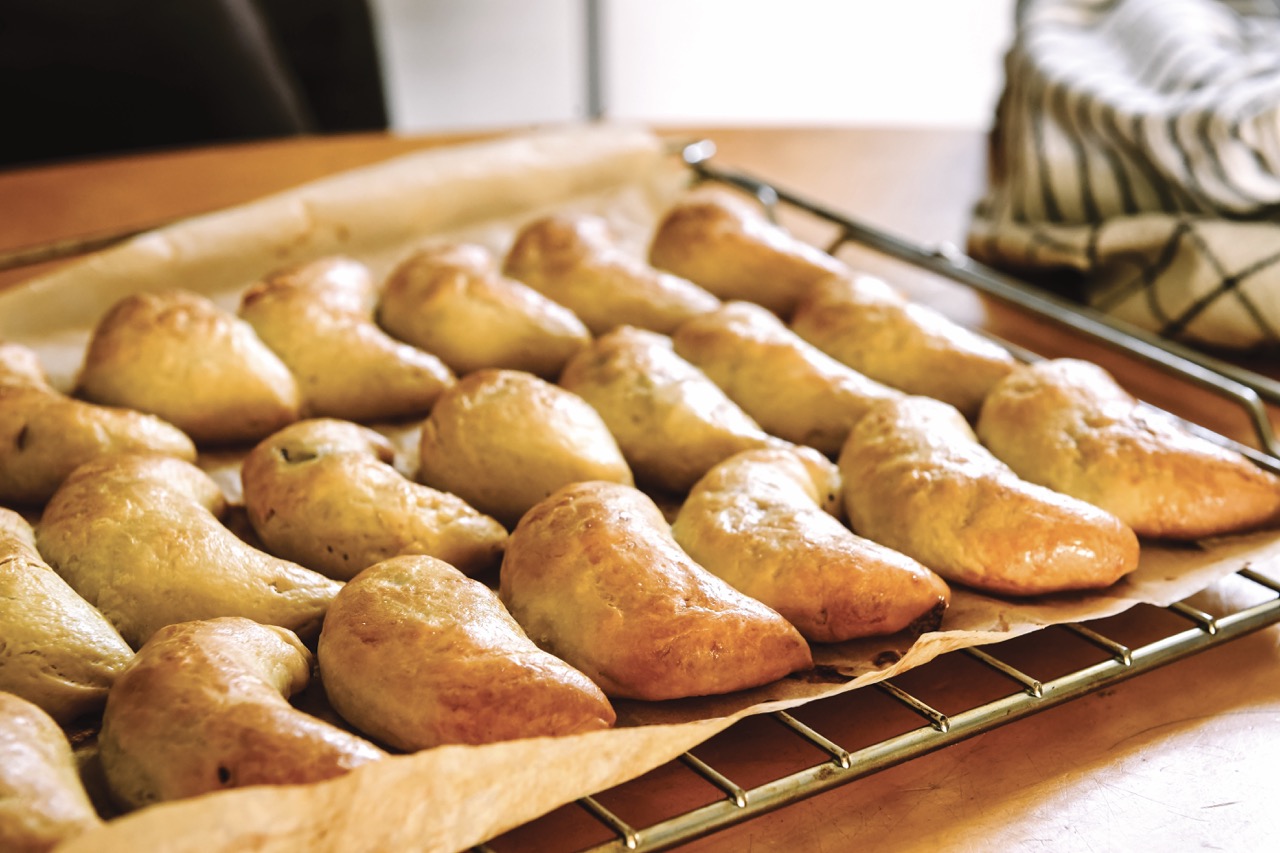
5. Bake: Place the pīrāgi seam-side down on a greased baking sheet or parchment paper. Preheat the oven to maximum temperature (the same as for baking bread). Beat the egg with a little water or milk and carefully brush each roll. Bake for 10–15 minutes until golden brown. Transfer to a cooling rack and cover with a kitchen towel for 10 minutes. The pīrāgi can be safely frozen as soon as they have cooled completely.
NOTE FROM THE MUSEUM KITCHEN
We recommend using high-protein/strong flour as suggested so that the dough remains elastic and holds its shape well. Take extra care not to overbake the pīrāgi, so they do not become hard.
Photo: Elīna Kursīte.


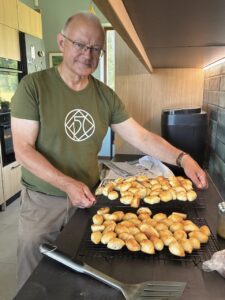
Aivars, who was born and raised in the UK but now lives in Latvia, bakes his pīrāgi using his mother Milda Sinka’s recipe. “It’s very likely that her mother baked them the same way. It took me a long time to get the pīrāgi right. I had to eat quite a few along the way,” says Aivars.
Aivars’ childhood memories are tied to the long drives to Latvian school, with the whole car smelling of pīrāgi: “Mom always brought pīrāgi to Latvian school and baked them for events. Whenever there were family gatherings, we always had pīrāgi.”
Aivars’ wife, Nicola, is English, and they raised three daughters – Elīze, Anna and Māra. “I used to bake a lot of pīrāgi. It felt important to me that my daughters understood how Latvian food differs from English food. I often put a pīrāgs in the girls’ school lunchboxes,” Aivars shares. The daughters’ teachers also developed a taste for them, and he even wrote down the recipe in English because “quite often, English acquaintances wanted to try baking pīrāgi too.”
There is a difference between Latvian and English pīrāgi. “Latvians use smoked meat, while in England we use bacon, which has to be cooked first. The flavours are different, but both are good,” says Aivars.
Aivars always has pīrāgi at home: “Pīrāgi freeze really well. I usually have about 50 in the freezer so they can be warmed up at any moment!”
