NOTE FROM THE MUSEUM KITCHEN
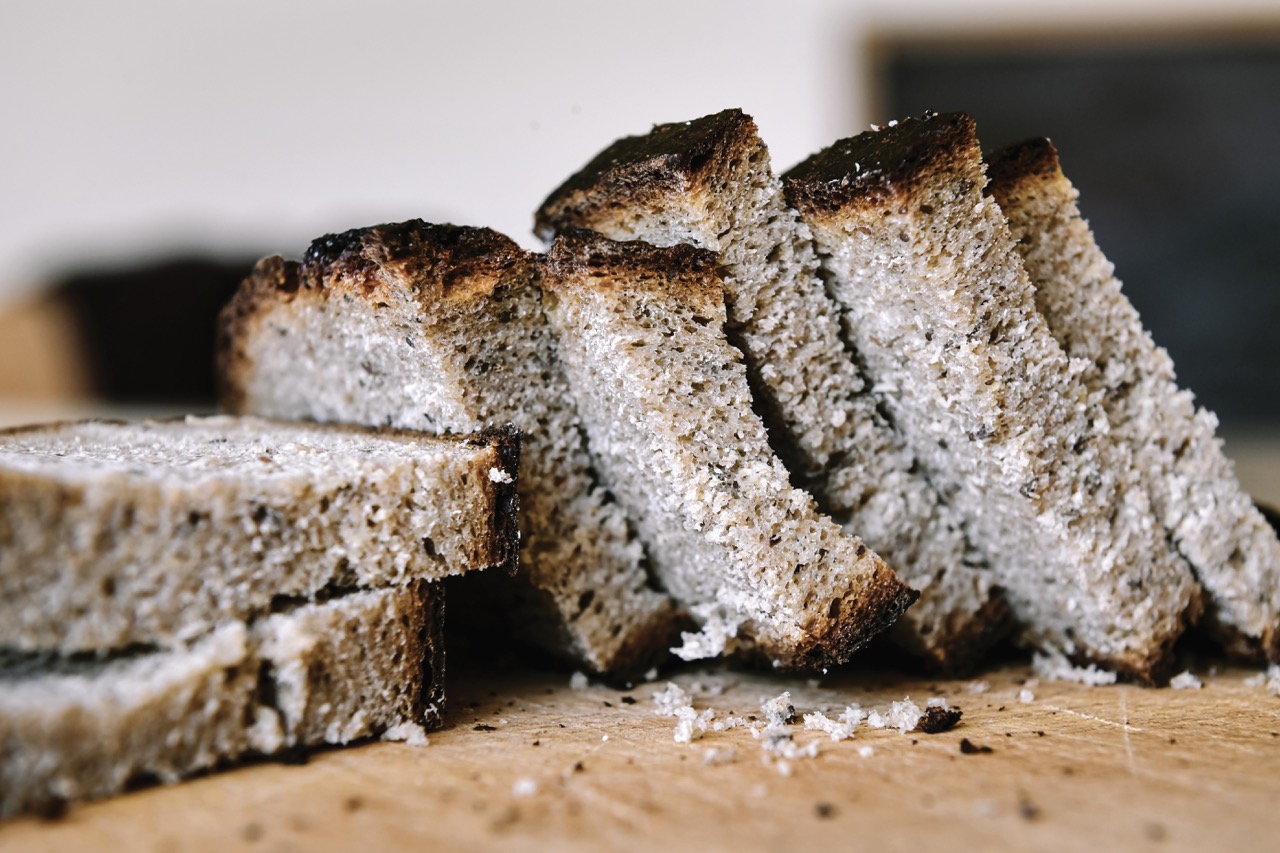
Important – if baking with a fan-forced (convection) oven, set the temperature 20°C lower. If desired, add 1–2 teaspoons of salt to the dough. Allow the bread to cool completely for several hours before slicing.
ABOUT BREAD STARTER
If bread starter is unavailable, you can make your own. Natural starter is made from rye flour and water, usually over 4 to 5 days. On day 1, mix equal parts rye flour and warm water (e.g., 2 tbsp each) in a warm place in a loosely covered container. Over the next three days, “feed” the starter daily by adding a little flour and water, and stir. On day 5, small bubbles and a sour aroma will appear – the starter is ready for breadmaking. Keep it in the refrigerator and feed it once a week with a little flour and water. Bring it to room temperature before baking until it becomes active and bubbly.

Modris bakes bread following the recipe of his mother, Ilze Pukulis. “My mother was a fantastic cook of her native Latvian cuisine,” says Modris.
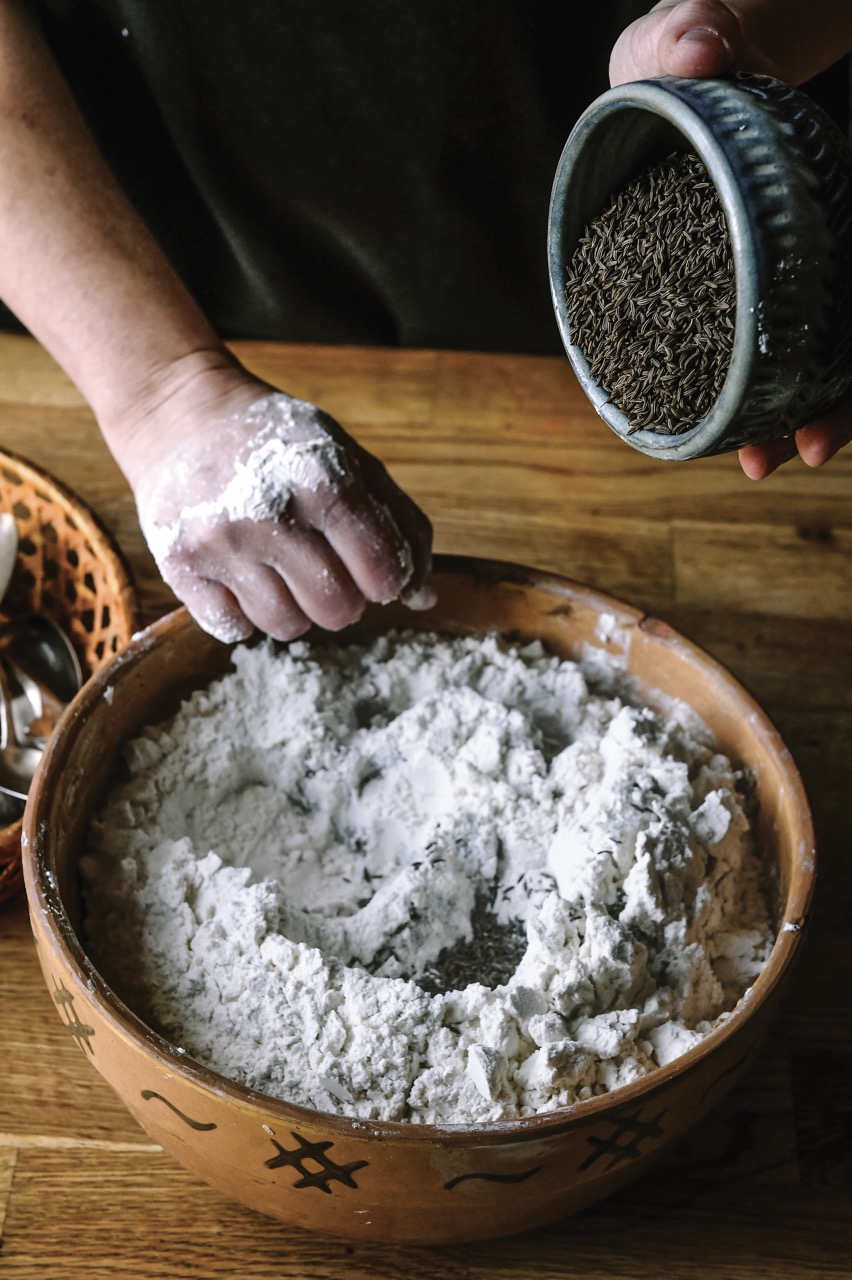
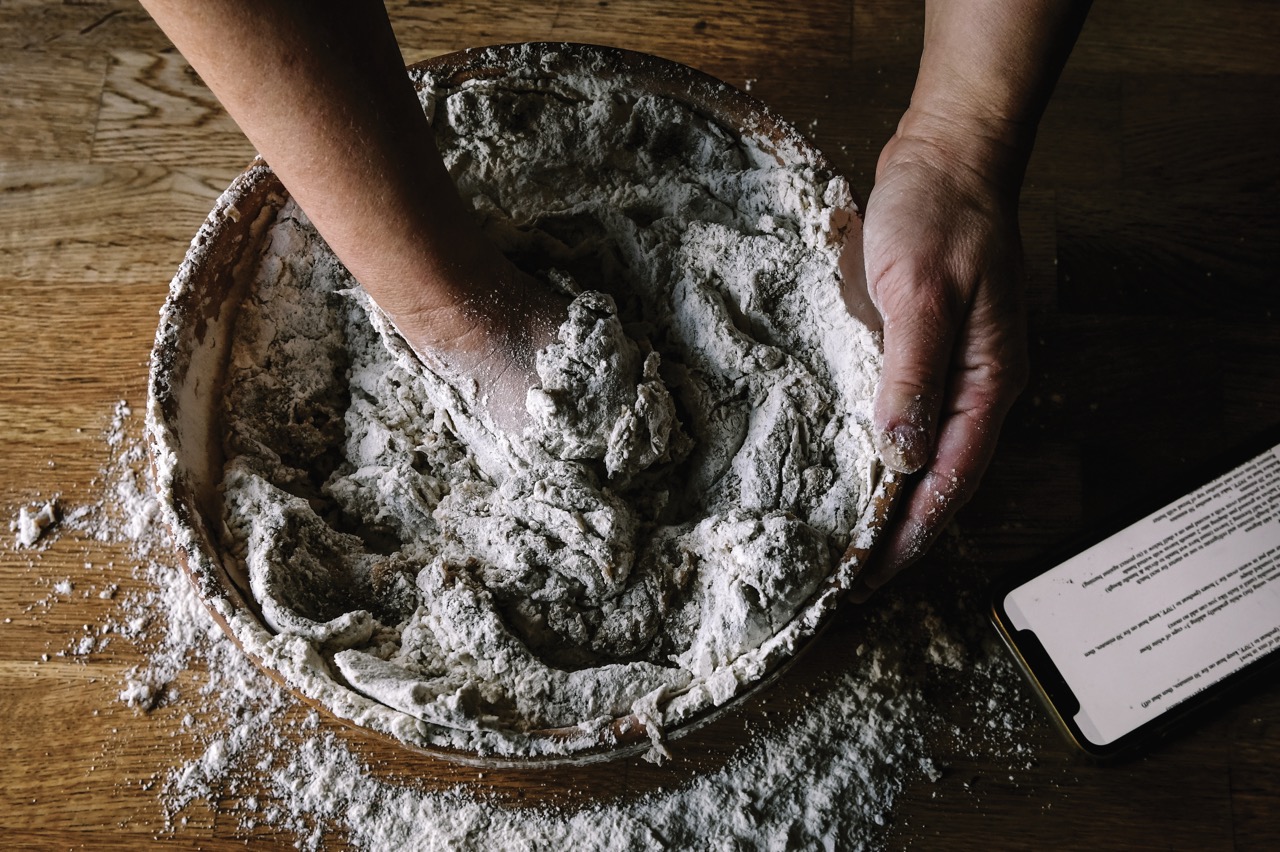
When Modris – or Mods, as his sisters affectionately call him – left for college at the age of 17, he decided shortly before leaving that he wanted to learn how to bake bread himself. “I had tried other versions of Latvian bread made by my parents’ friends, but none were as good as my mother’s bread. As far as I know, she never had written recipes – she prepared everything from memory, and yet the bread tasted the same every single time,” Modris recalls.
So Modris watched his mother prepare bread over two days. “At times I stopped her to measure how much of an ingredient she was adding. While my mother worked, I took notes,” says Modris.
The family always ate his mother’s bread for breakfast “with a slice of cheese or salami on top, and for dinner with whatever soup Mom had prepared. However, my personal favourite was bread topped with my father’s smoked eel,” Modris remembers.