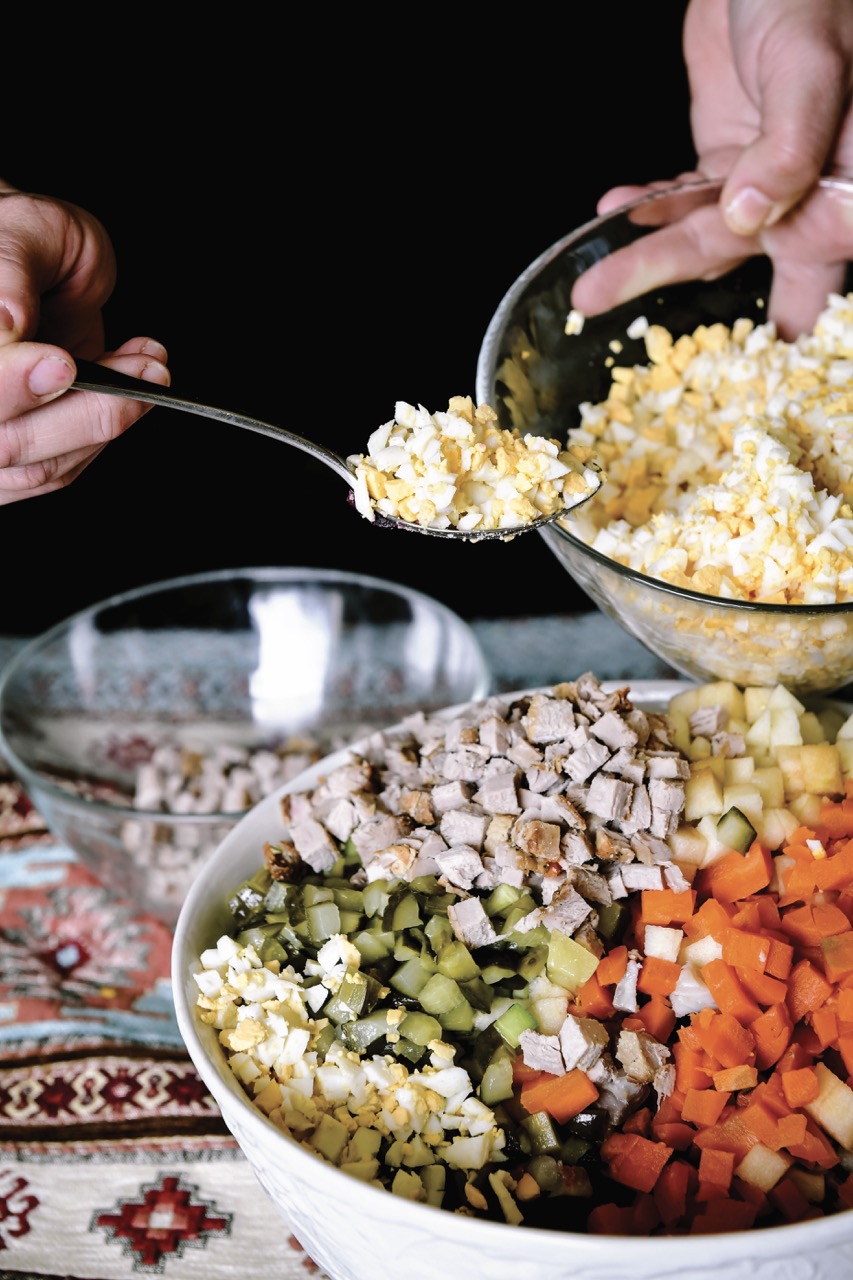
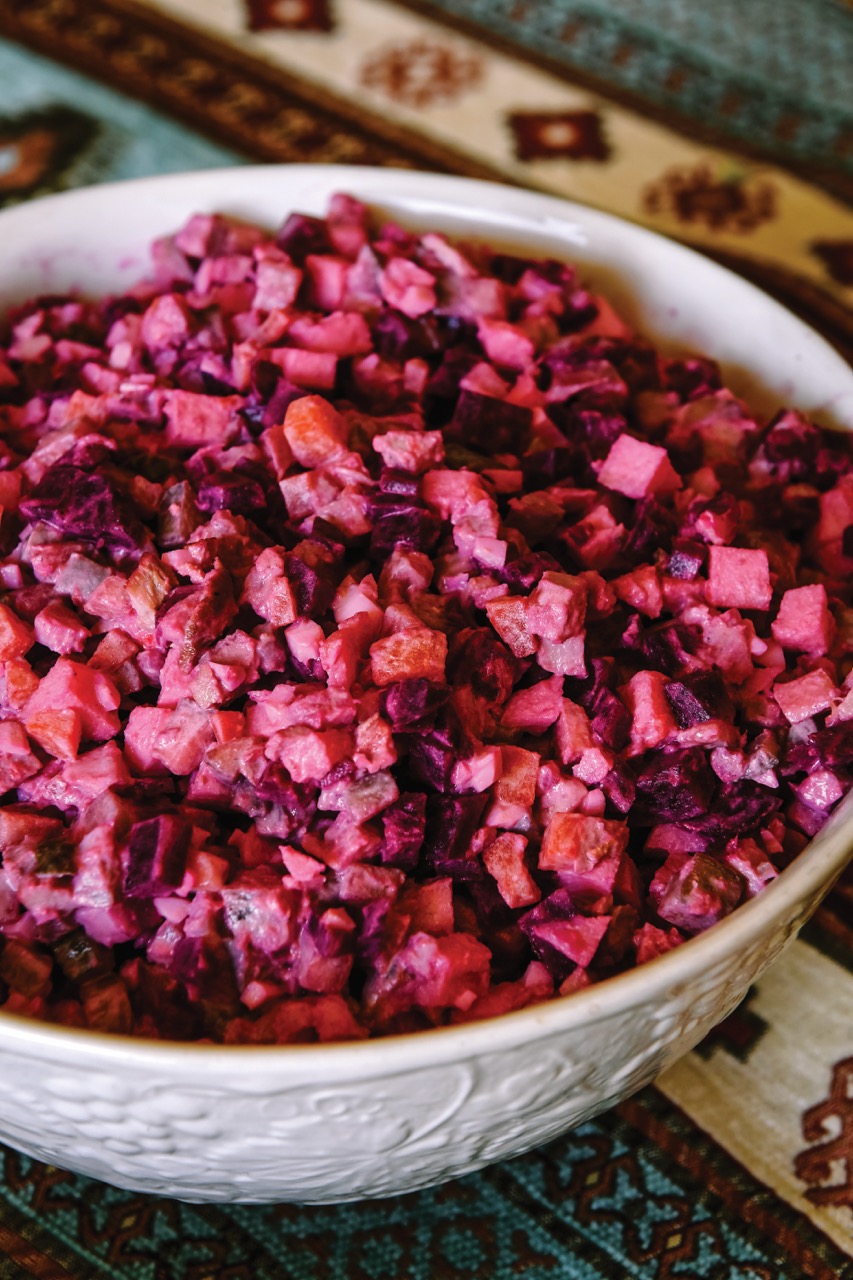
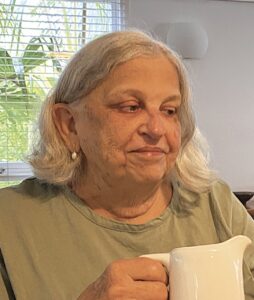
 Inta Gertnere makes rasols following a recipe she inherited from her grandmother, Milda Veidis. After arriving in Brisbane, Australia, in the early 1950s, the Veidis family settled near the city centre. Three generations lived together in an old wooden cottage – Andrejs and Milda Veidis, their children, son-in-law, and grandchildren.
Inta remembers her grandmother, who went by the nickname Kundziņš, as “the key, heart, and core of the home – in constant motion in her tiny kitchen between the stove, table, and refrigerator.” On weekdays, each family member was busy with their own routines, but on Sundays, everyone gathered around the big dining table to enjoy a dinner prepared by Kundziņš. She often served roast chicken and rasols.
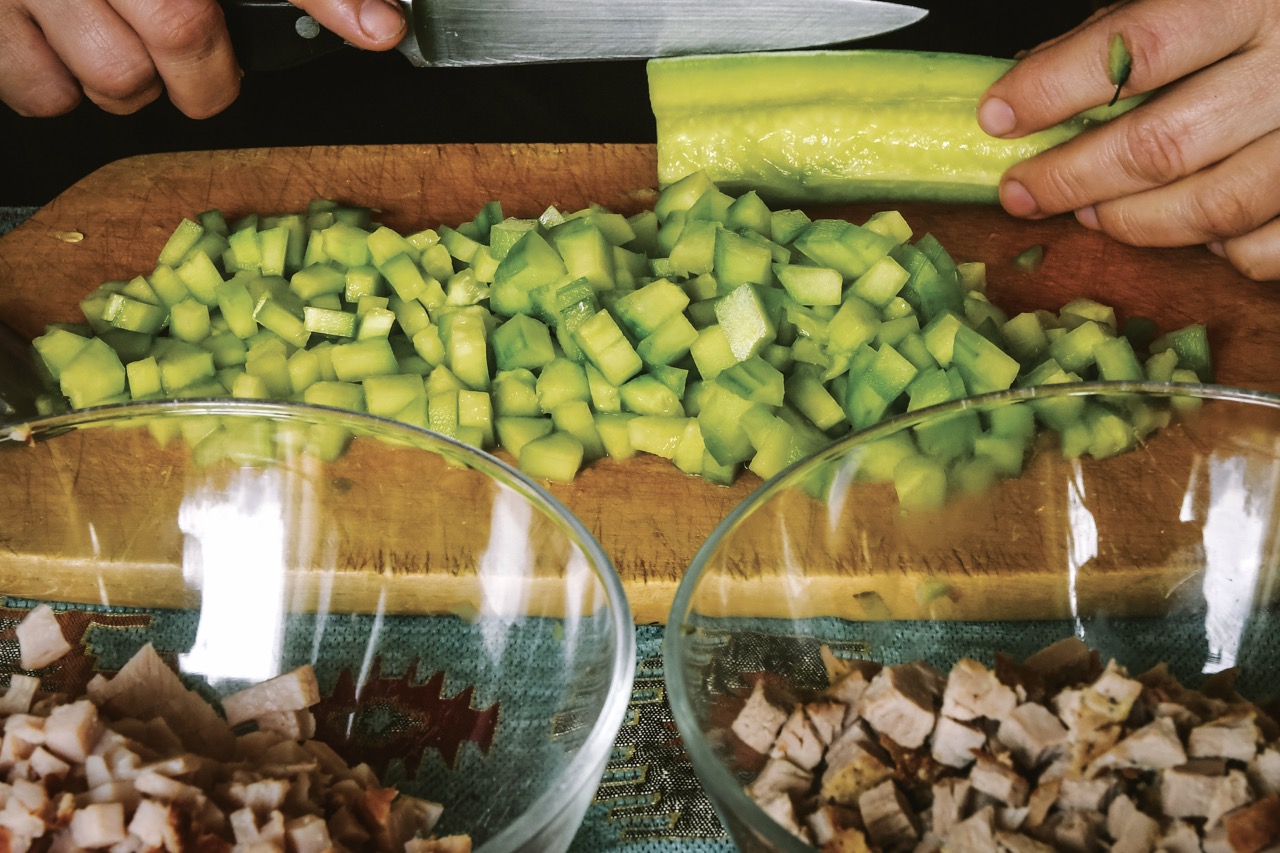
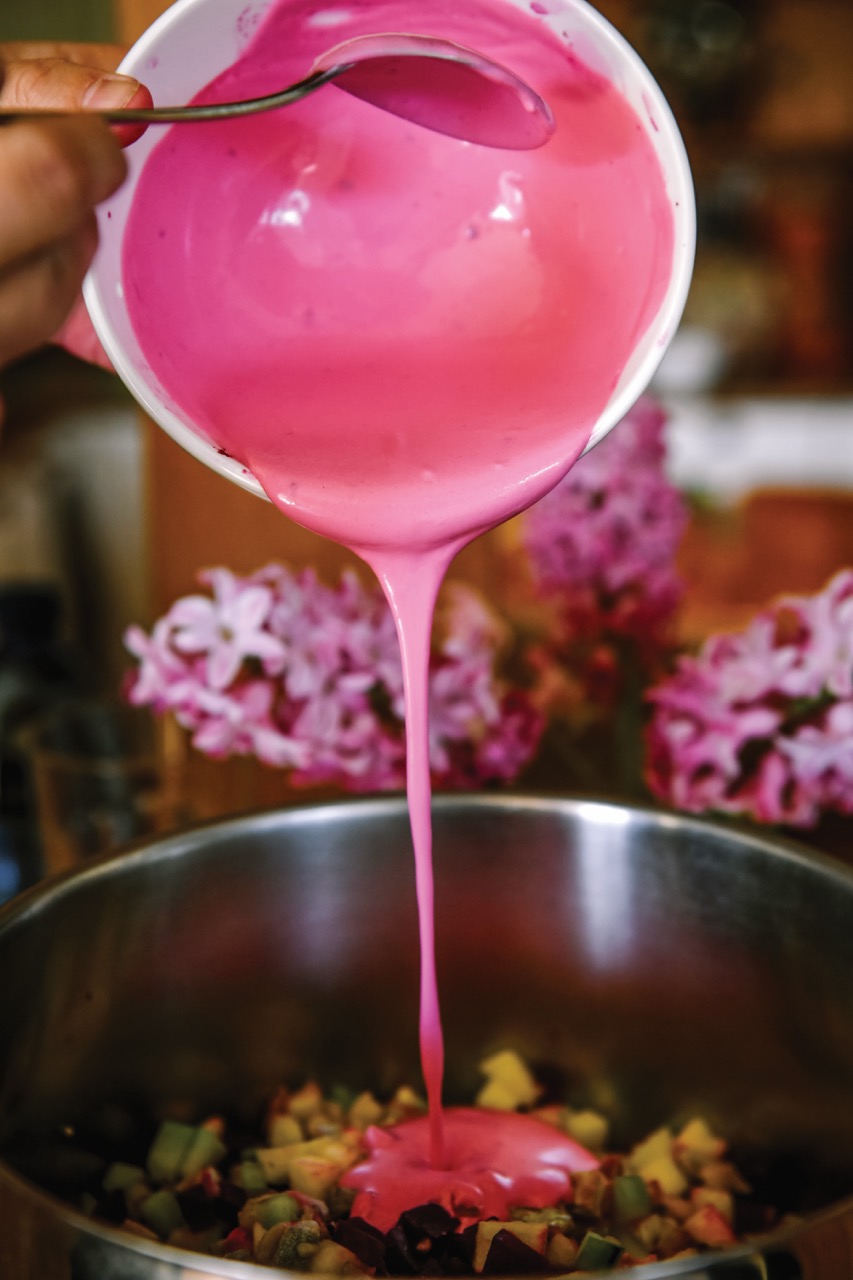
Milda’s – or Kundziņš’ – rasols recipe stands out because it contains no potatoes, which are usually the foundation of this salad. Inta recalls that the rasols was always mixed and served in a large white porcelain bowl, while the dressing was mixed in a white pitcher – both of which Inta still uses today when making rasols.